


The plant-based by-product diets for the mass-rearing of Acheta domesticus and Gryllus bimaculatus
- PMID: 31246993
- PMCID: PMC6597079
- DOI: 10.1371/journal.pone.0218830
The plant-based by-product diets for the mass-rearing of Acheta domesticus and Gryllus bimaculatus
Abstract
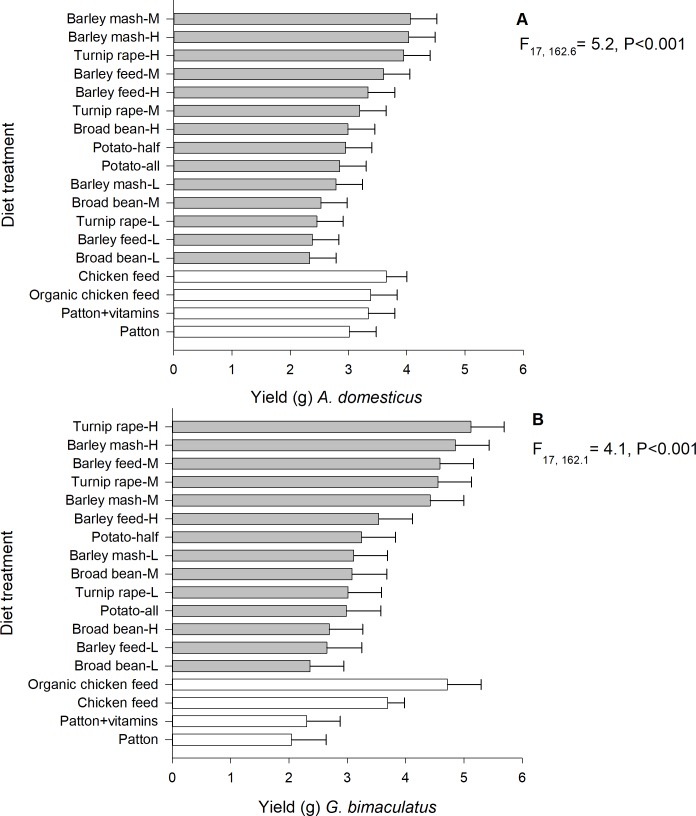
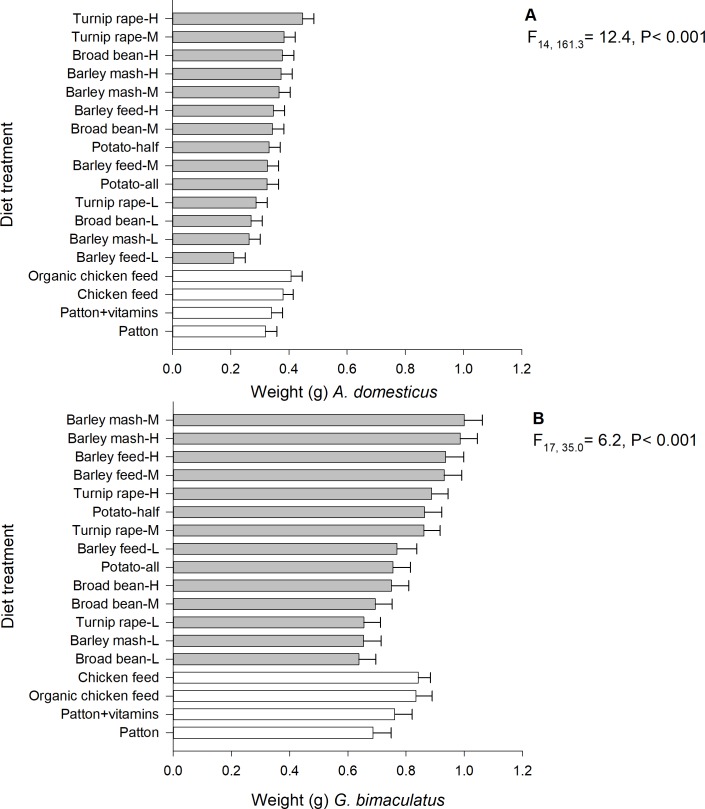
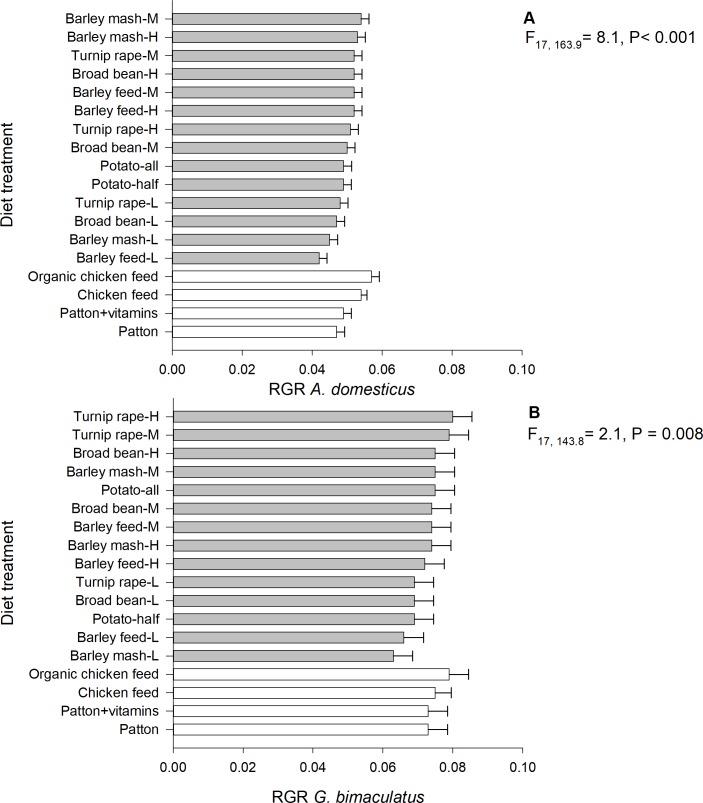
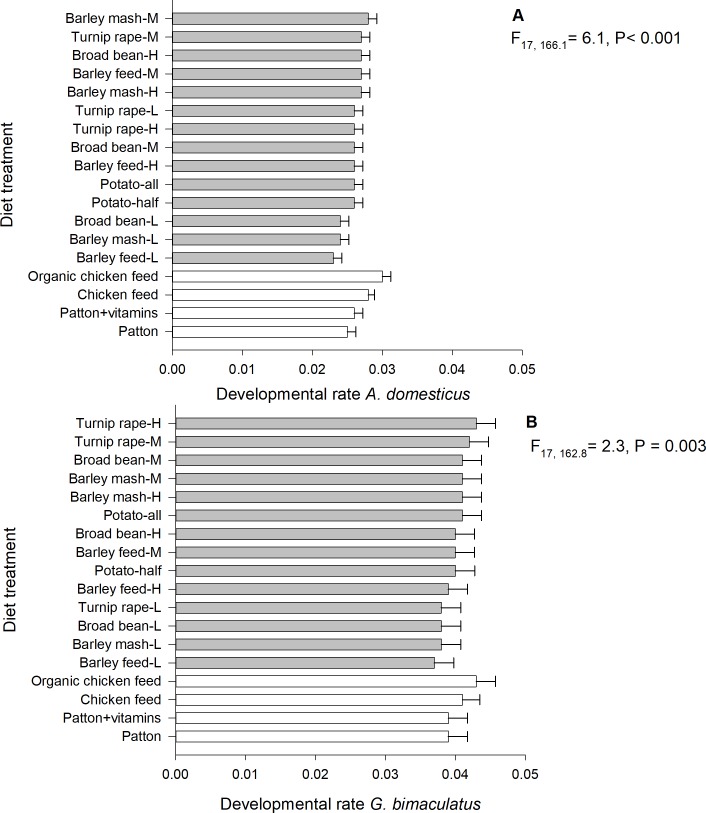
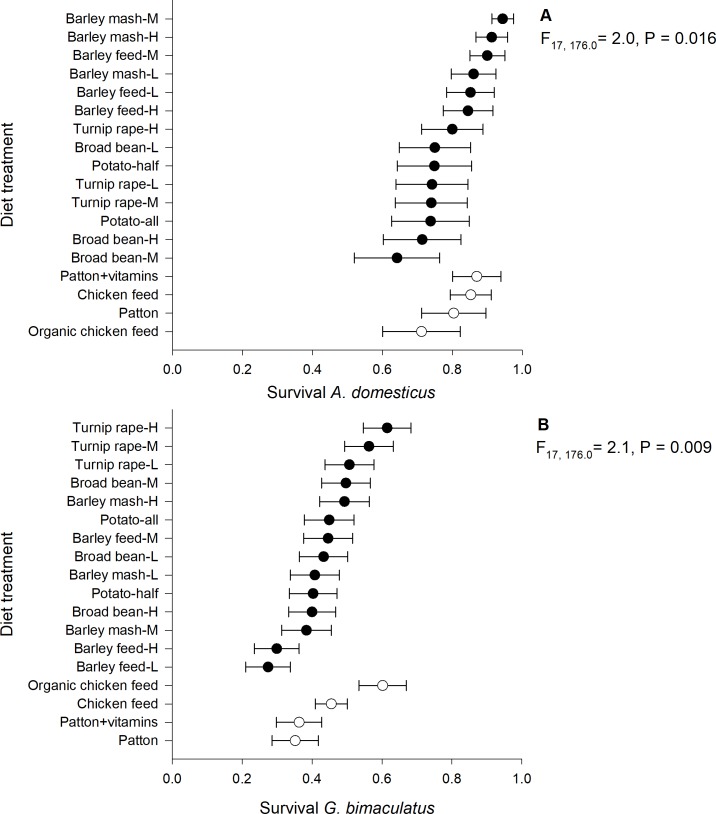
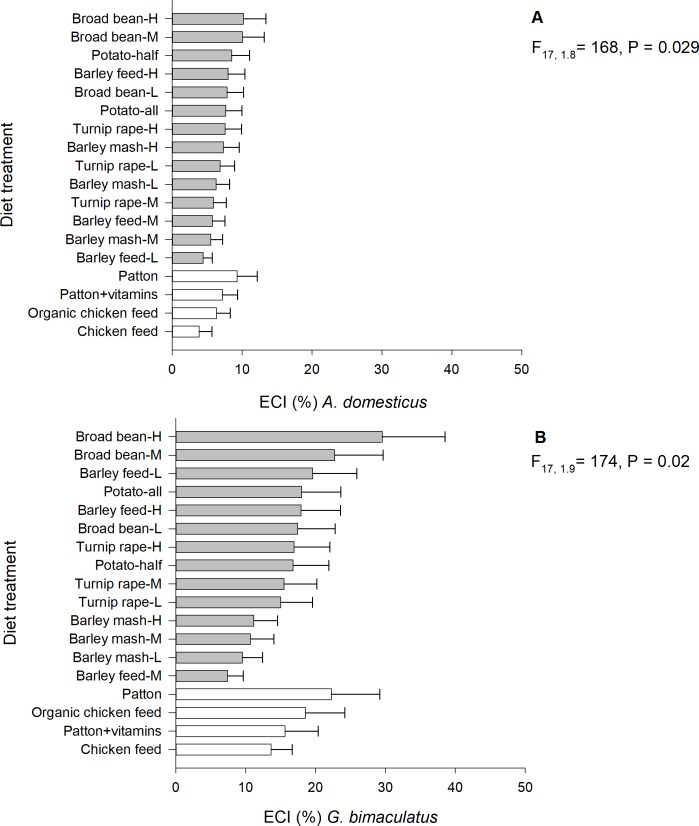
Edible insect rearing could provide one alternative for protein production by having a smaller environmental impact than traditional livestock farming due to insects' ability to convert organic side streams. Currently, the insect rearing industry utilizes soybeans as a major source of protein in the feeds. Protein-rich by-products of food industry could be used to replace them in insect feeds, but it is not known if they also meet the insects' nutritional requirements. Our study evaluated the growth performance of two widely used edible cricket species, Acheta domesticus and Gryllus bimaculatus (Orthoptera: Gryllidae), on 18 experimental diets. The experimental diets included commercial chicken feeds and cricket diets, where soybean was partly and completely replaced with by-products from food industry: potato protein, barley mash, barley feed, compressed leftover of turnip rape and mix of broad bean and pea on three levels of protein. We found that the high- and medium-protein turnip rape and barley mash diets produced the highest yield and an increase in all performance variables. Overall, the high- and medium-protein diets produced the highest yield, growth and fastest development. Our results showed that by-products of food industry could be utilized as a part of the cricket feeds and thus advance the goals of circular economy.
Conflict of interest statement
The authors have declared that no competing interests exist.
Figures
References
-
- United Nations. Water and food security. 2014. Available from: http://www.un.org/waterforlifedecade/food_security.shtml (accessed 12 December 2018).
-
- Nellemann C, MacDevette M, Manders T, Eickhout B, Svihus B, Gerdien Prins A. The environmental food crisis: The environment’s role in averting future food crises: a UNEP rapid response assessment. Arendal; 2009.
-
- FAO. The future of food and agriculture–Trends and challenges. Rome; 2017.
Publication types
MeSH terms
Substances
LinkOut - more resources
Full Text Sources
