


Cellular Senescence and Iron Dyshomeostasis in Alzheimer's Disease
- PMID: 31248150
- PMCID: PMC6630536
- DOI: 10.3390/ph12020093
Cellular Senescence and Iron Dyshomeostasis in Alzheimer's Disease
Abstract
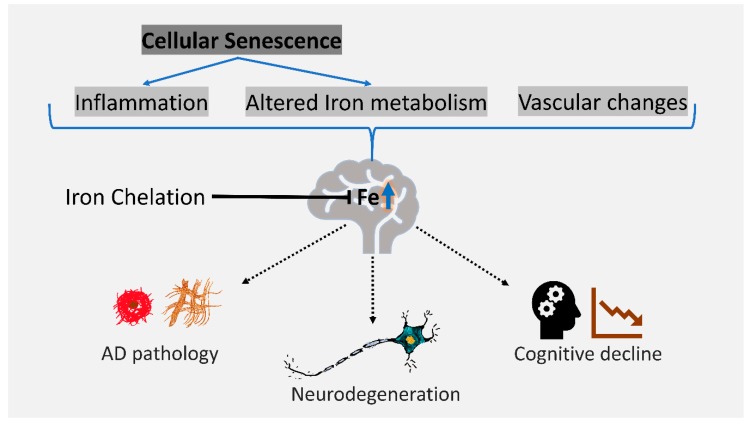
Iron dyshomeostasis is a feature of Alzheimer's disease (AD). The impact of iron on AD is attributed to its interactions with the central proteins of AD pathology (amyloid precursor protein and tau) and/or through the iron-mediated generation of prooxidant molecules (e.g., hydroxyl radicals). However, the source of iron accumulation in pathologically relevant regions of the brain and its contribution to AD remains unclear. One likely contributor to iron accumulation is the age-associated increase in tissue-resident senescent cells that drive inflammation and contribute to various pathologies associated with advanced age. Iron accumulation predisposes ageing tissue to oxidative stress that can lead to cellular dysfunction and to iron-dependent cell death modalities (e.g., ferroptosis). Further, elevated brain iron is associated with the progression of AD and cognitive decline. Elevated brain iron presents a feature of AD that may be modified pharmacologically to mitigate the effects of age/senescence-associated iron dyshomeostasis and improve disease outcome.
Keywords: Alzheimer’s disease; chelators; ferroptosis; iron homeostasis; senescence.
Conflict of interest statement
A.I.B. is a shareholder in Prana Biotechnology Ltd., Cogstate Ltd., Brighton Biotech LLC, Grunbiotics Pty Ltd., Eucalyptus Pty Ltd., and Mesoblast Ltd. He is a paid consultant for, and has a profit share interest in, Collaborative Medicinal Development Pty Ltd.
Figures
References
-
- Biogen and Eisai to Discontinue Phase 3 Engage and Emerge Trials of Aducanumab in Alzheimer’s Disease. [(accessed on 24 April 2019)]; Available online: http://investors.Biogen.Com/news-releases/news-release-details/biogen-an....
Publication types
Grants and funding
LinkOut - more resources
Full Text Sources
