


Effects of hydrogen-rich water bath on visceral fat and skin blotch, with boiling-resistant hydrogen bubbles
- PMID: 31249254
- PMCID: PMC6607864
- DOI: 10.4103/2045-9912.260647
Effects of hydrogen-rich water bath on visceral fat and skin blotch, with boiling-resistant hydrogen bubbles
Abstract
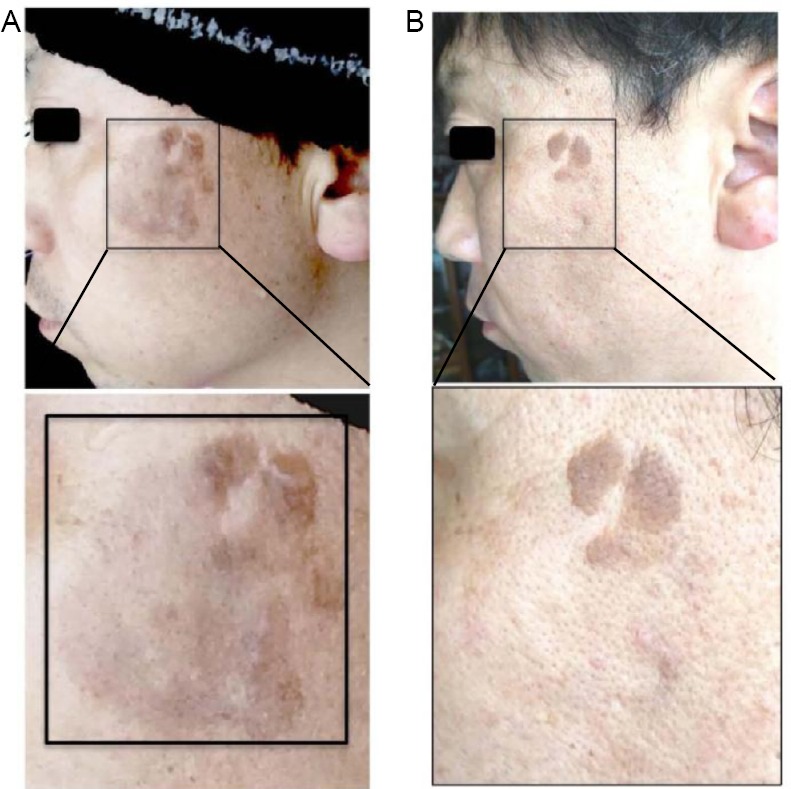
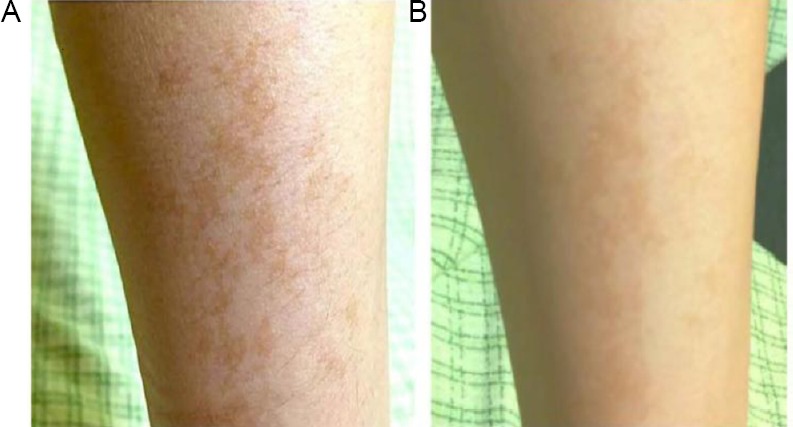
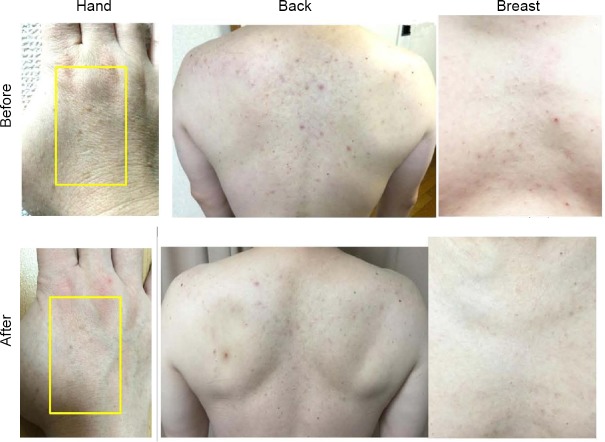
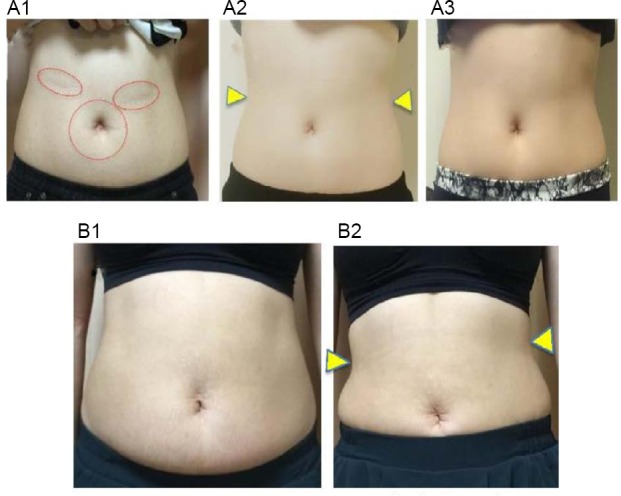
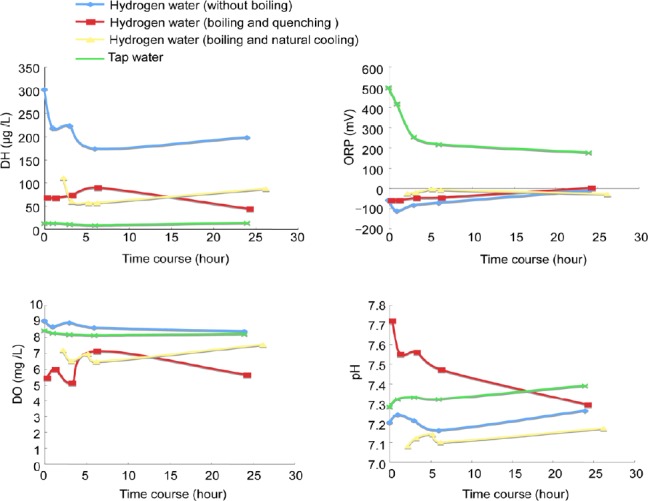
Hydrogen-dissolved water has been shown to improve diverse oxidation stress-related diseases, which drove us to examine effects of hydrogen-rich water on oxidation stress-related skin troubles and lipid-metabolism markers. The purpose of this study is whether the dissolved hydrogen in hydrogen-rich water was kept even after boiling, and whether hydrogen-bath utilization improves cosmetic effects such as skin-blotch repression and the visceral-fat-based slimming effects. The subjects were two men and two women, aged 48, 43, 42, and 41 years (n = 4). They took warm (41°C) water bath of dissolved hydrogen 300-310 μg/L (< 10 μg/L for normal water) for 10-minute once daily for 1-6 months, followed by examination of skin blotch, visceral fat, and cholesterol and glucose metabolisms. The dissolved hydrogen concentration was measured after 15-minute boiling and the subsequent cooling naturally. The wide-ranging, dense, and irregularly shaped skin blotches became markedly smaller and thinner, assumedly through reductive bleaching of melanin and lipofuscin and promotion of dermal cell renewal by the hydrogen-rich warm water. Ultrasonic resonance-based analysis on the abdominal cross-section revealed that the visceral fat area decreased from 47 to 36 cm[2], and the abdominal circumference decreased from 91 to 82 cm, in the two female subjects bathing in hydrogen-water. After 6-month hydrogen-water bathing, the low-density lipoprotein cholesterol level was decreased by 16.2% and the fasting blood glucose level increased by 13.6% in the blood of a female subject. Before boiling, the dissolved hydrogen and an oxidation-reduced potential were 300 μg/L and -115 mV, respectively. Dissolved hydrogen was retained at 300-175 μg/L and 200 μg/L, even 1-6 hours and 24 hours, respectively, after boiling. Therefore, a hydrogen-rich water-bath apparatus can electrolytically generate abundant boiling-resistant hydrogen bubbles, improving visceral fat and blotches on the skin. The study was approved by the Medical Ethics Committee of the Japanese Center for Anti-Aging Medical Sciences and that was officially authenticated by the Hiroshima Prefecture Government of Japan (approval number 15C1) in 2016.
Keywords: bath apparatus; cosmetic effects; hydrogen-rich water; metabolic markers; reactive oxygen species; skin blotches; slimming effects; visceral fat area.
Conflict of interest statement
None
Figures
References
-
- Saitoh Y, Harata Y, Mizuhashi F, Nakajima M, Miwa N. Biological safety of neutral-pH hydrogen-enriched electrolyzed water upon mutagenicity, genotoxicity and subchronic oral toxicity. Toxicol Ind Health. 2010;26:203–216. - PubMed
-
- Saitoh Y, Okayasu H, Xiao L, Harata Y, Miwa N. Neutral pH hydrogen-enriched electrolyzed water achieves tumor-preferential clonal growth inhibition over normal cells and tumor invasion inhibition concurrently with intracellular oxidant repression. Oncol Res. 2008;17:247–255. - PubMed
-
- Asada R, Kageyama K, Tanaka H, et al. Antitumor effects of nano-bubble hydrogen-dissolved water are enhanced by coexistent platinum colloid and the combined hyperthermia with apoptosis-like cell death. Oncol Rep. 2010;24:1463–1470. - PubMed
-
- Kato S, Saitoh Y, Iwai K, Miwa N. Hydrogen-rich electrolyzed warm water represses wrinkle formation against UVA ray together with type-I collagen production and oxidative-stress diminishment in fibroblasts and cell-injury prevention in keratinocytes. J Photochem Photobiol B. 2012;106:24–33. - PubMed
-
- Kato S, Hokama R, Okayasu H, Saitoh Y, Iwai K, Miwa N. Colloidal platinum in hydrogen-rich water exhibits radical-scavenging activity and improves blood fluidity. J Nanosci Nanotechnol. 2012;12:4019–4027. - PubMed
Publication types
MeSH terms
Substances
LinkOut - more resources
Full Text Sources
Other Literature Sources
