


The intersectional risk environment of people who use drugs
- PMID: 31254965
- PMCID: PMC6719791
- DOI: 10.1016/j.socscimed.2019.112384
The intersectional risk environment of people who use drugs
Abstract
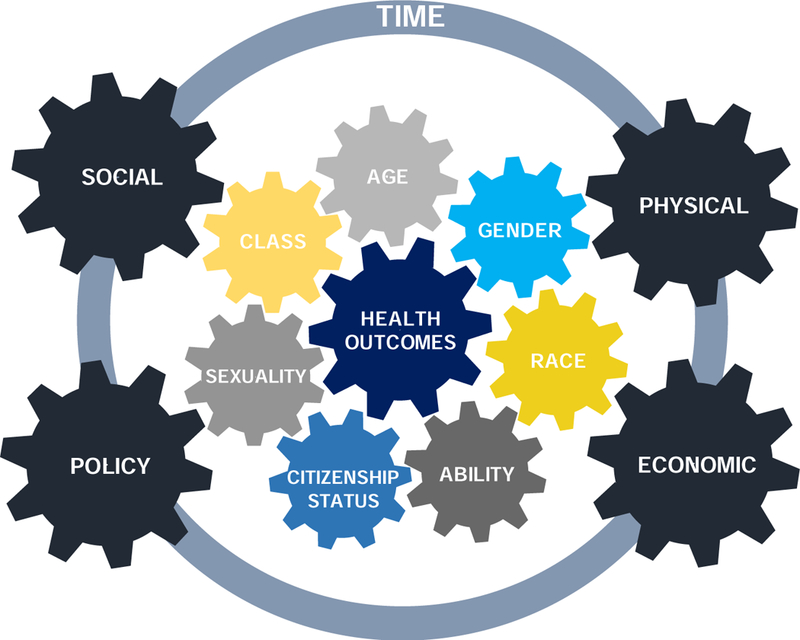
Current conceptual models for examining the production of risk and harm (e.g. syndemics, 'risk environment') in substance use research have been fundamental in emphasizing broader environmental factors that shape health outcomes for people who use drugs (PWUD). However, the application of these frameworks in ways that highlight nuance and complexity has remained challenging, with much of this research focusing on select social positions (e.g. race, gender) and social-structural factors (e.g. poverty, drug policies). It is crucial that we move to better accounting for these relations in the context of substance use research to enhance equity in research and ensure understanding of diverse and complex needs. Building on the risk environment framework and complementary approaches, this article introduces the 'intersectional risk environment' as an approach to understanding the interconnected ways that social locations converge within the risk environment to produce or mitigate drug-related outcomes. This framework integrates a relational intersectional lens to examine how differential outcomes across populations of PWUD are produced in relation to social location and processes operating across social-structural dimensions. In doing so, the intersectional risk environment highlights how outcomes are products of processes and relations that are embodied, reflected, and challenged while situated within social, historical, and geographic contexts. Incorporating this framework into future research may improve understandings of health outcomes for PWUD and better orient structural interventions and public health approaches to address differential risks and experiences of PWUD.
Keywords: Health inequities; Health outcomes; Intersectionality; Risk environment; Substance use.
Copyright © 2019 Elsevier Ltd. All rights reserved.
Conflict of interest statement
Figures
References
-
- Allan B, & Smylie J (2015). First Peoples, second class treatment: the role of racism in the health and well being of Indigenous peoples in Canada Toronto.
-
- Balsam K, Huang B, Fieland K, Simoni J, & Walters K (2004). Culture, trauma, and wellness: a comparison of heterosexual and lesbian, gay, bisexual, and two-spirit Native Americans. Cultur Divers Ethnic Minor Psychol, 10(3), 287–301. - PubMed
-
- Bauer GR (2014). Incorporating intersectionality theory into population health research methodology: challenges and the potential to advance health equity. Soc Sci Med, 110, 10–17. - PubMed
Publication types
MeSH terms
Grants and funding
LinkOut - more resources
Full Text Sources
Medical
