Serum biomarkers and outcomes in patients with moderate COPD: a substudy of the randomised SUMMIT trial
- PMID: 31258919
- PMCID: PMC6561388
- DOI: 10.1136/bmjresp-2019-000431
Serum biomarkers and outcomes in patients with moderate COPD: a substudy of the randomised SUMMIT trial
Abstract
Rationale: Systemic levels of C reactive protein (CRP), surfactant protein D (SPD), fibrinogen, soluble receptor of activated glycogen end-product (sRAGE) and club cell protein 16 (CC-16) have been associated with chronic obstructive pulmonary disease (COPD) outcomes. However, they require validation in different cohorts.
Objectives: Relate systemic levels of those proteins to forced expiratory volume in 1 s (FEV1) decline, exacerbations, hospitalisations and mortality in COPD patients (FEV1 of ≥50 and ≤70% predicted) and heightened cardiovascular risk in a substudy of the Study to Understand Mortality and MorbidITy trial.
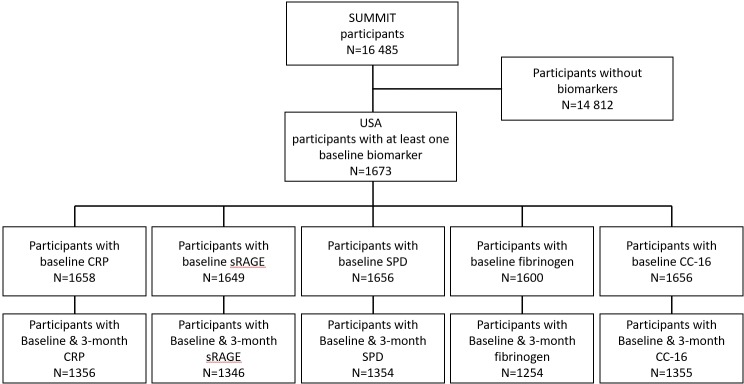
Methods: Participants were randomised to daily inhalations of placebo, vilanterol 25 µg (VI), fluticasone furoate 100 µg (FF) or their combination (VI 25/FF 100) and followed quarterly until 1000 deaths in the overall 16 485 participants occurred. Biomarker blood samples were available from 1673 patients. The FEV1 decline (mL/year), COPD exacerbations, hospitalisations and death were determined. Associations between biomarker levels and outcomes were adjusted by age and gender.
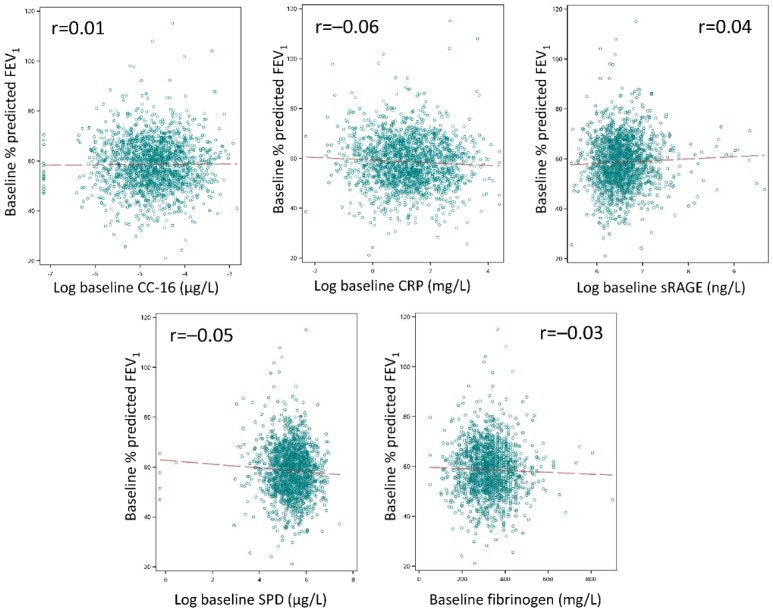
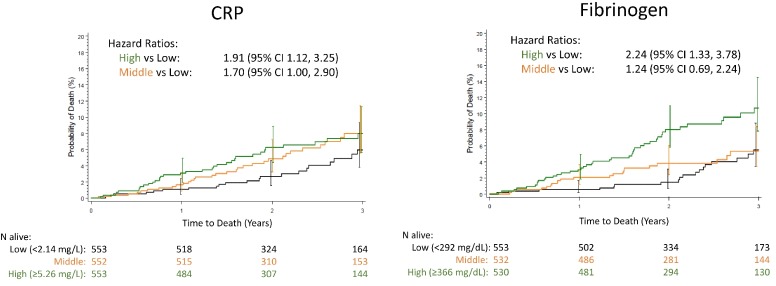
Results: Systemic levels of CC-16, CRP, sRAGE, SPD and fibrinogen did not relate to baseline FEV1, FEV1 decline, exacerbations or hospitalisations. Fibrinogen and CRP were related to mortality over a median follow-up of 2.3 years. Only the CC-16 changed with study therapy (VI, FF and FF/VI, p<0.01) at 3 months.
Conclusions: In COPD, systemic levels of CC-16, CRP, sRAGE, SPD and fibrinogen were not associated with FEV1 decline, exacerbations or hospitalisations. These results cast doubts about the clinical usefulness of the systemic levels of these proteins as surrogate markers of these COPD outcomes. The study confirms that CRP and fibrinogen are associated with increased risk of death in patients with COPD.
Trial registration number: NCT01313676.
Keywords: Lung function decline; biomarkers; chronic obstructive pulmonary disease; mortality.
Conflict of interest statement
Competing interests: None declared.
Figures
References
Publication types
MeSH terms
Substances
Associated data
Grants and funding
LinkOut - more resources
Full Text Sources
Medical
Research Materials
Miscellaneous