


Recommendations on telestroke in Europe
- PMID: 31259258
- PMCID: PMC6591763
- DOI: 10.1177/2396987318806718
Recommendations on telestroke in Europe
Abstract
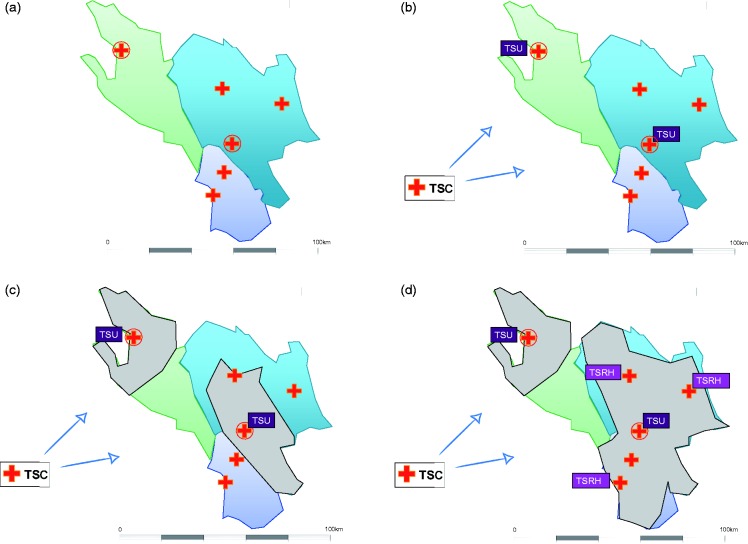
Lack of stroke specialists determines that many European rural areas remain underserved. Use of telemedicine in stroke care has shown to be safe, increase use of evidence-based therapy and enable coverage of large areas of low population density. The aim of this article is to summarise the following recommendations of the Telestroke Committee of the European Stroke Organisation on the setup of telestroke networks in Europe: Hospitals participating in telestroke networks should be chosen according to criteria that include population density, transportation distance, geographic specifics and in-hospital infrastructure and professional resources. Three hospital categories are identified to be part of a hub-and-spoke network: (1) the Telemedicine Stroke Centre (an European Stroke Organisation stroke centre or equivalent with specific infrastructure and setup for network and telemedicine support), (2) the telemedicine-assisted stroke Unit (equivalent to an European Stroke Organisation stroke unit but without 24 h onsite stroke expertise) and (3) the telemedicine-assisted stroke ready hospital (only covering hyperacute treatment in the emergency department and transferring all patients for further treatment).
Keywords: Telemedicine; network; remote area; stroke; stroke care system; telestroke.
Figures

References
-
- Levine SR, Gorman M. Telestroke : the application of telemedicine for stroke. Stroke 1999; 30: 464–469. - PubMed
-
- Audebert HJ, Kukla C, Vatankhah B, et al. Comparison of tissue plasminogen activator administration management between Telestroke Network hospitals and academic stroke centers: the Telemedical Pilot Project for Integrative Stroke Care in Bavaria/Germany. Stroke 2006; 37: 1822–1827. - PubMed
-
- Wang S, Gross H, Lee SB, et al. Remote evaluation of acute ischemic stroke in rural community hospitals in Georgia. Stroke 2004; 35: 1763–1768. - PubMed
-
- Carmen Jiménez M, Tur S, Legarda I, et al. The application of telemedicine for stroke in the Balearic Islands: the Balearic Telestroke project. Rev Neurol 2012; 154: 31–40. - PubMed
-
- Arnao V, Popovic N, Caso V. How is stroke care organised in Europe? Presse Med 2016; 45: e399–e408. - PubMed
LinkOut - more resources
Full Text Sources
