Metronomic Chemotherapy for Children in Low- and Middle-Income Countries: Survey of Current Practices and Opinions of Pediatric Oncologists
- PMID: 31260397
- PMCID: PMC6613668
- DOI: 10.1200/JGO.18.00244
Metronomic Chemotherapy for Children in Low- and Middle-Income Countries: Survey of Current Practices and Opinions of Pediatric Oncologists
Abstract
Purpose: Low- and middle-income countries (LMICs) experience the burden of 80% of new childhood cancer cases worldwide, with cure rates as low as 10% in some countries. Metronomics combines frequent administrations of low-dose chemotherapy with drug repurposing, which consists of using already-approved drugs for new medical applications. With wide availability, limited costs, and little infrastructure needs, metronomics can be part of constraint-adapted regimens in these resource-limited settings-with the understanding that metronomics shall not be a substitute for standard treatments when available and doable. Our study aims to describe the experience, practices, opinions, and needs in metronomics of physicians working in LMICs.
Methods: An online questionnaire was sent to more than 1,200 physicians in pediatric oncology networks in LMICs. Items included the type of center, physician's demographics, experience in pediatric oncology, and experience with current knowledge of metronomics. Opinions and perspectives were explored using multiple-answer and open questions.
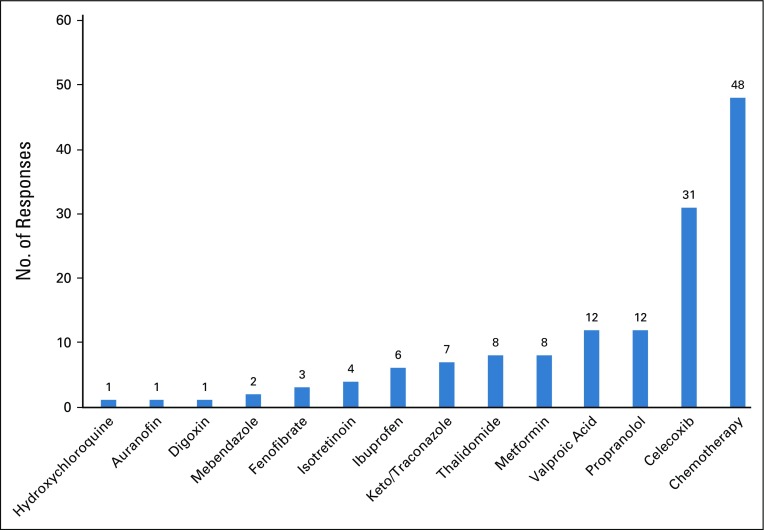
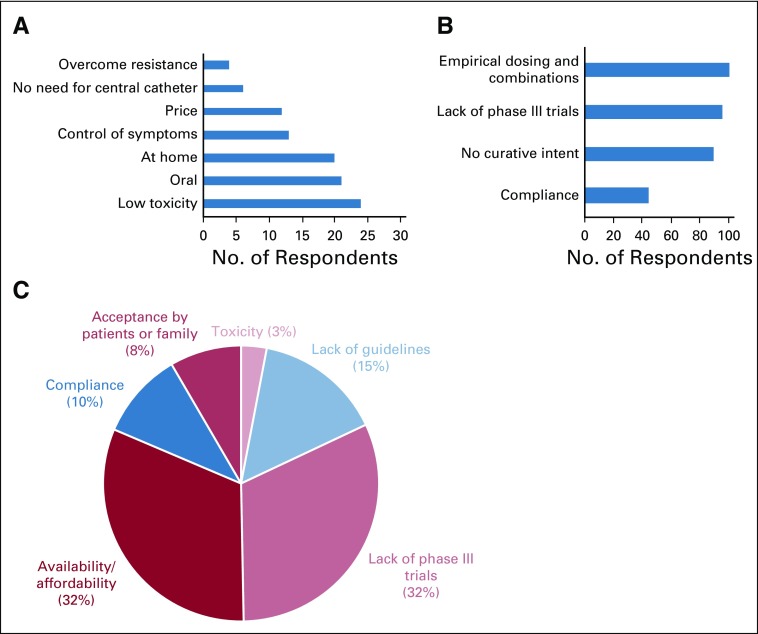
Results: Of physicians, 17% responded. Of respondents, 54.9% declared that they had already used a metronomic regimen. The most frequently cited repositioned drugs were celecoxib (44%) followed by propranolol and valproic acid (17%). Respondents highlighted the advantages of outpatient use (20%) and expected low toxicity (24%). In considering the drawbacks of metronomics, 47% of responses highlighted the lack of scientific evidence or guidelines, 33% the availability or affordability of drugs, and 18% the problem of acceptance or compliance. Of physicians, 79% believed that use of metronomics will spread in LMICs in the near future and 98% of them were willing to participate in international metronomic protocols or registries.
Conclusion: Metronomics is already used in LMICs and is a potential answer to unmet needs in pediatric oncology. There is room for improvement in the availability of drugs and a necessity to develop collaborative protocols and research to generate level A evidence.
Conflict of interest statement
Manickavallie Vaithilingum
Chi-Kong Li
Prabhat Malik
Guillermo Chantada
Nicolas André
No other potential conflicts of interest were reported.
Figures
References
-
- World Bank World Bank Open Data. https://data.worldbank.org
-
- Magrath I, Steliarova-Foucher E, Epelman S, et al. Paediatric cancer in low-income and middle-income countries. Lancet Oncol. 2013;14:e104–e116. - PubMed
MeSH terms
Substances
LinkOut - more resources
Full Text Sources