


Interventions Based on Mind-Body Therapies for the Improvement of Attention-Deficit/Hyperactivity Disorder Symptoms in Youth: A Systematic Review
- PMID: 31262094
- PMCID: PMC6680862
- DOI: 10.3390/medicina55070325
Interventions Based on Mind-Body Therapies for the Improvement of Attention-Deficit/Hyperactivity Disorder Symptoms in Youth: A Systematic Review
Abstract
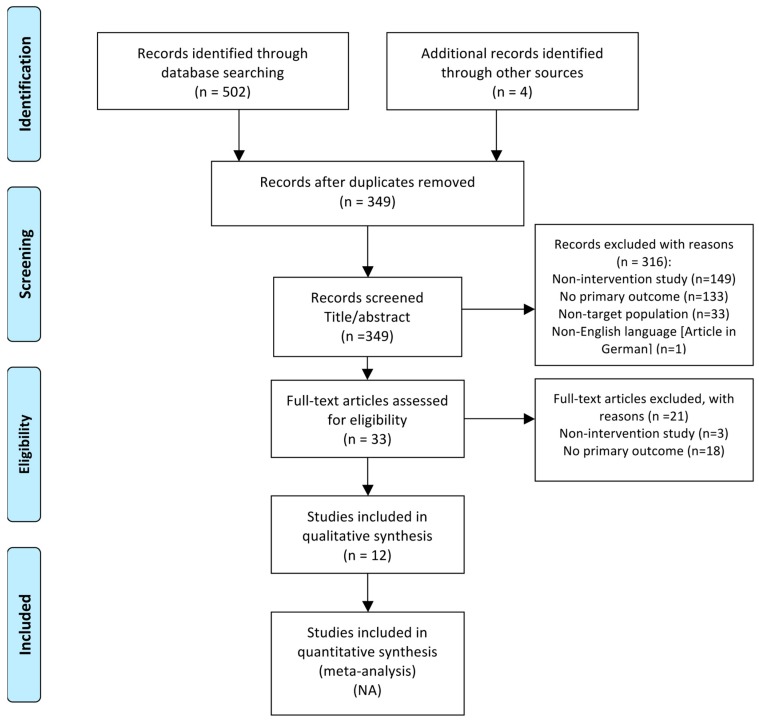
Background and objectives: Attention-deficit/hyperactivity disorder (ADHD) is one of the most common psychiatric disorders in children and adolescents. Mind-body therapies (MBTs) seem to be effective for improving health in different populations; however, whether a positive effect occurs in children and adolescents with ADHD is still controversial. The main aim of this systematic review was to analyse the interventions based on MBT aimed to improve the main ADHD symptoms in children and adolescents. Materials and Methods: A systematic review was conducted following the preferred reporting items for systematic reviews and meta-analyses (PRISMA) guidelines to identify MBT studies on children and adolescents (4-18 years) with a clinical diagnosis of ADHD. Study quality was evaluated by the NIH quality tool (U.S. National Institute of Health). Results: There were positive results in eleven out of twelve included studies regarding the effect of the MBT interventions on ADHD symptoms. With respect to ADHD symptoms, we observed differences across studies. In relation to the studies' quality, eleven studies were rated "poor" and one was rated as "fair". Conclusions: MBTs, such as yoga or mindfulness, could be positive strategies to mitigate ADHD symptoms in children and adolescents. However, further research with high-quality designs, with randomization, greater sample sizes, and more intensive supervised practice programs are needed.
Keywords: adolescents; attention-deficit/hyperactivity disorder symptom; children; mind–body therapies; relaxation therapy.
Conflict of interest statement
The authors declare no conflict of interest.
Figures
References
-
- Bird H.R. The Diagnostic Classification, Epidemiology and Crosscultural Validity of Adhd. In: Jensen P.C.J., editor. Attention Deficit Hyperactivity Disorder: State of the Science: Best Practices. Civic Research Institute; Kingston, NJ, USA: 2002.
-
- American Psychiatric Association . dsm-5. 5th ed. American Psychiatric Association; Arlington, TX, USA: 2013. Diagnostic and Statistical Manual of Mental Disorders.
Publication types
MeSH terms
LinkOut - more resources
Full Text Sources
Medical
