


Patient and Tumour Characteristics of Adult Head and Neck Soft Tissue Sarcomas: A Systematic Review and Meta-Analysis
- PMID: 31263380
- PMCID: PMC6556341
- DOI: 10.1155/2019/9725637
Patient and Tumour Characteristics of Adult Head and Neck Soft Tissue Sarcomas: A Systematic Review and Meta-Analysis
Abstract
Background: Head and neck soft tissue sarcomas (HNSTS) constitute a rare and heterogeneous cancer entity. Management remains a challenge due to the rarity and varied biological behaviour among various subtypes. This systematic review examines the characteristics of tumours and patients with HNSTS.
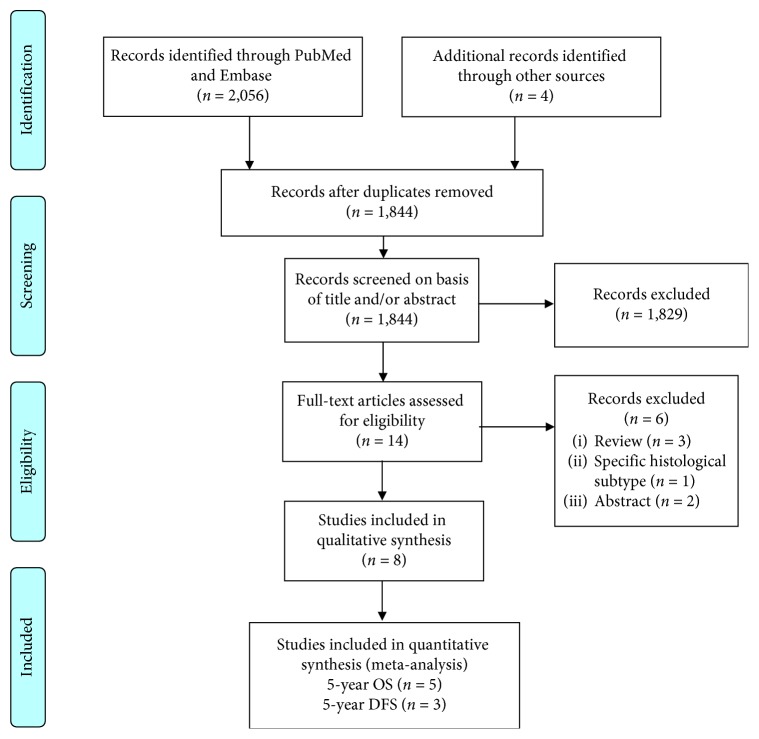
Materials and methods: A systematic literature review and meta-analysis were performed using the electronic databases PubMed and Embase. Eight eligible studies were identified, and 13 variables were extracted from each study including 5-year overall survival (OS) rate and 5-year disease-free survival (DFS) rate.
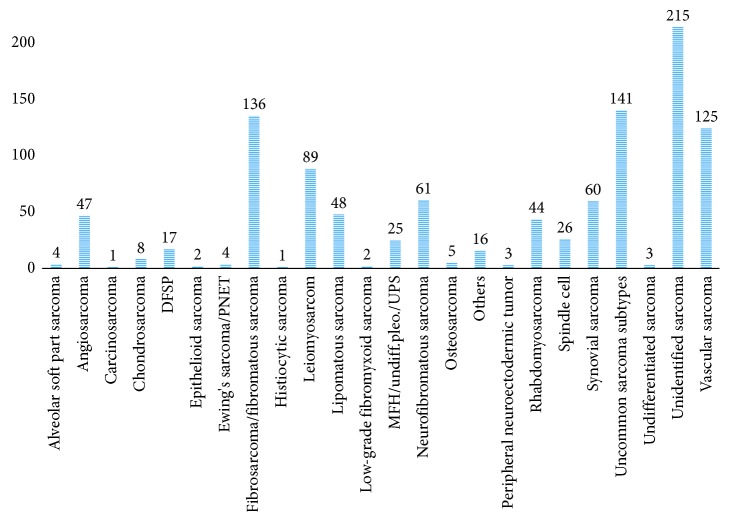
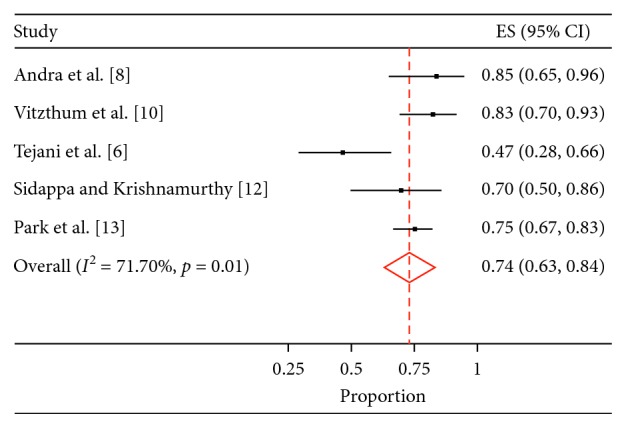
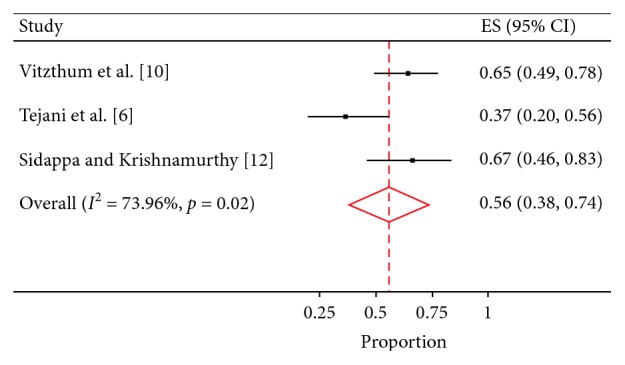
Results: We identified eight studies (n = 1,120 patients; 739 males (66%)) from six different countries). In total, 24 histological subtypes were found, and 20% of the sarcomas (n = 215) could not be subclassified. 607 sarcomas (57%) were <5 cm in diameter, and 945 sarcomas (84%) were grade 3. 1,059 patients (90%) underwent surgery. Estimated 5-year OS was 74% (95% CI; 0.63-0.84%) and 5-year DFS was 56% (95% CI; 38-74%).
Conclusion: HNSTS holds a relative poor prognosis possibly explained by the heterogeneity of the disease. Treatment of HNSTS has shown to be highly diverse, underlining the importance of uniformed treatment guidelines in order to achieve improved survival outcomes.
Figures
References
Publication types
LinkOut - more resources
Full Text Sources
