


Trisodium citrate 4% versus heparin as a catheter lock for non-tunneled hemodialysis catheters in critically ill patients: a multicenter, randomized clinical trial
- PMID: 31264073
- PMCID: PMC6603108
- DOI: 10.1186/s13613-019-0553-4
Trisodium citrate 4% versus heparin as a catheter lock for non-tunneled hemodialysis catheters in critically ill patients: a multicenter, randomized clinical trial
Abstract
Background: Non-tunneled hemodialysis catheters are currently used for critically ill patients with acute kidney injury requiring extracorporeal renal replacement therapy. Strategies to prevent catheter dysfunction and infection with catheter locks remain controversial.
Methods: In a multicenter, randomized, controlled, double-blind trial, we compared two strategies for catheter locking of non-tunneled hemodialysis catheters, namely trisodium citrate at 4% (intervention group) versus unfractionated heparin (control group), in patients aged 18 years or older admitted to the intensive care unit and in whom a first non-tunneled hemodialysis catheter was to be inserted by the jugular or femoral vein. The primary endpoint was length of event-free survival of the first non-tunneled hemodialysis catheter. Secondary endpoints were: rate of fibrinolysis, incidence of catheter dysfunction and incidence of catheter-related bloodstream infection (CRBSI), all per 1000 catheter-days; number of hemorrhagic events requiring transfusion, length of stay in intensive care and in hospital; 28-day mortality.
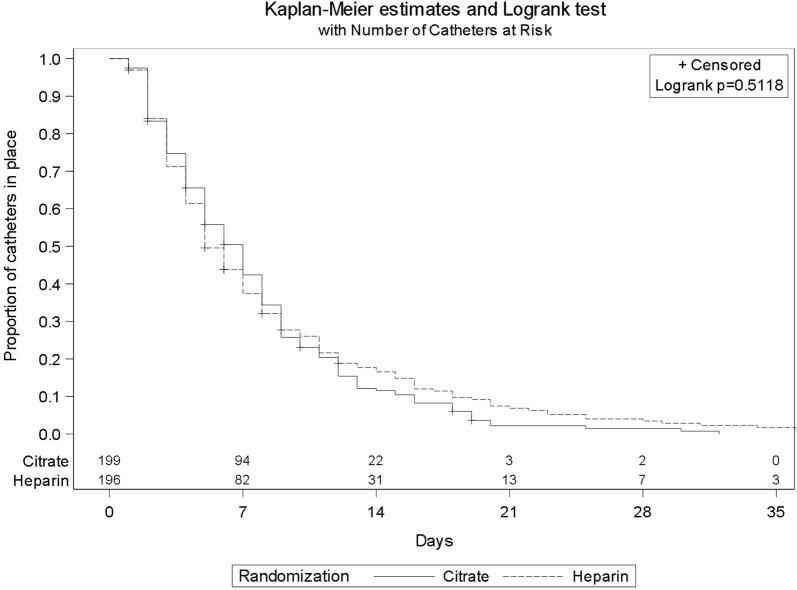
Results: Overall, 396 randomized patients completed the trial: 199 in the citrate group and 197 in the heparin group. There was no significant difference in baseline characteristics between groups. The duration of event-free survival of the first non-tunneled hemodialysis catheter was not significantly different between groups: 7 days (IQR 3-10) in the citrate group and 5 days (IQR 3-11) in the heparin group (p = 0.51). Rates of catheter thrombosis, CRBSI, and adverse events were not statistically different between groups.
Conclusions: In critically ill patients, there was no significant difference in the duration of event-free survival of the first non-tunneled hemodialysis catheter between trisodium citrate 4% and heparin as a locking solution. Catheter thrombosis, catheter-related infection, and adverse events were not statistically different between the two groups. Trial registration Registered with Clinicaltrials.gov under the number NCT01962116. Registered 14 October 2013.
Keywords: Acute renal failure; Catheters; Citra-Lock; Critical illness; Hemodialysis; Heparin.
Conflict of interest statement
The authors declare that they have no competing interests.
Figures

References
Associated data
Grants and funding
LinkOut - more resources
Full Text Sources
Medical
