


Discovery and preclinical characterization of [18F]PI-2620, a next-generation tau PET tracer for the assessment of tau pathology in Alzheimer's disease and other tauopathies
- PMID: 31264169
- PMCID: PMC6667408
- DOI: 10.1007/s00259-019-04397-2
Discovery and preclinical characterization of [18F]PI-2620, a next-generation tau PET tracer for the assessment of tau pathology in Alzheimer's disease and other tauopathies
Abstract
Purpose: Tau deposition is a key pathological feature of Alzheimer's disease (AD) and other neurodegenerative disorders. The spreading of tau neurofibrillary tangles across defined brain regions corresponds to the observed level of cognitive decline in AD. Positron-emission tomography (PET) has proved to be an important tool for the detection of amyloid-beta (Aβ) aggregates in the brain, and is currently being explored for detection of pathological misfolded tau in AD and other non-AD tauopathies. Several PET tracers targeting tau deposits have been discovered and tested in humans. Limitations have been reported, especially regarding their selectivity.
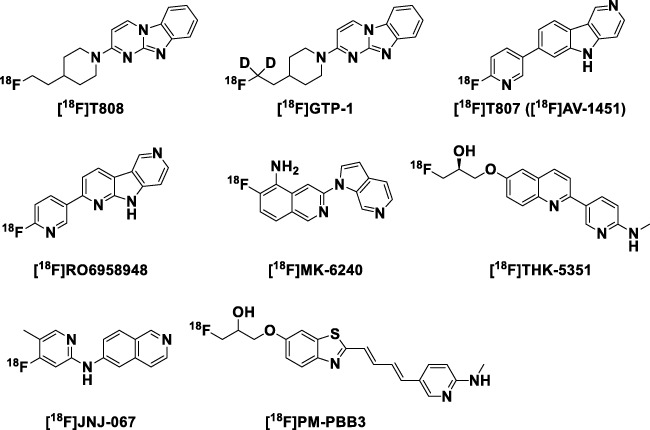
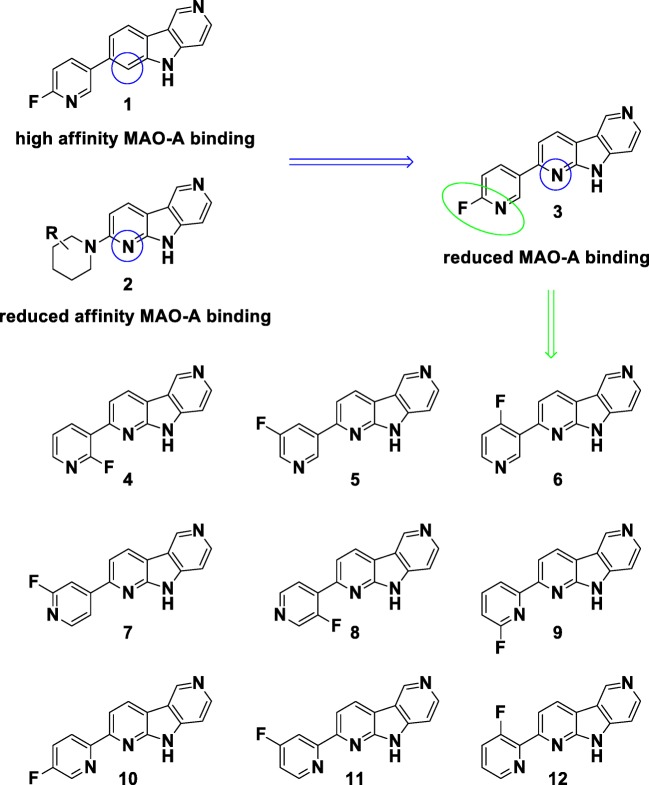
Methods: In our screening campaign we identified pyrrolo[2,3-b:4,5-c']dipyridine core structures with high affinity for aggregated tau. Further characterization showed that compounds containing this moiety had significantly reduced monoamine oxidase A (MAO-A) binding compared to pyrido[4,3-b]indole derivatives such as AV-1451.
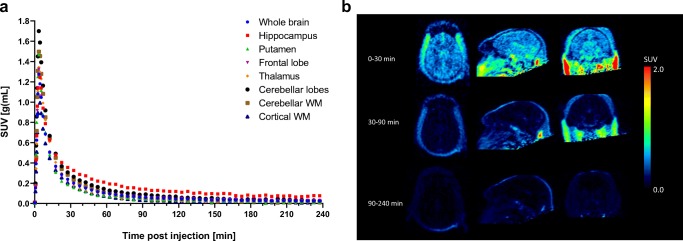
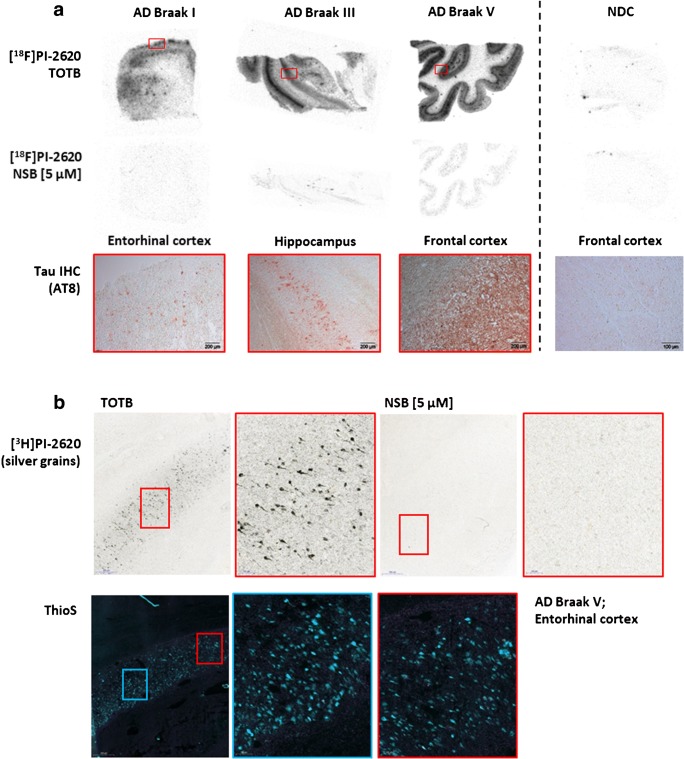
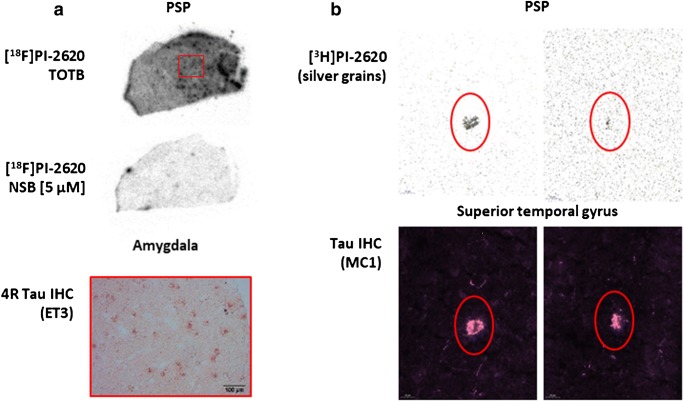
Results: Here we present preclinical data of all ten fluoropyridine regioisomers attached to the pyrrolo[2,3-b:4,5-c']dipyridine scaffold, revealing compounds 4 and 7 with superior properties. The lead candidate [18F]PI-2620 (compound 7) displayed high affinity for tau deposits in AD brain homogenate competition assays. Specific binding to pathological misfolded tau was further demonstrated by autoradiography on AD brain sections (Braak I-VI), Pick's disease and progressive supranuclear palsy (PSP) pathology, whereas no specific tracer binding was detected on brain slices from non-demented donors. In addition to its high affinity binding to tau aggregates, the compound showed excellent selectivity with no off-target binding to Aβ or MAO-A/B. Good brain uptake and fast washout were observed in healthy mice and non-human primates.
Conclusions: Therefore, [18F]PI-2620 was selected for clinical validation.
Keywords: AD; Alzheimer’s disease; Fluorine-18; PET; PET tracer; PI-2620; Positron-emission tomography; Tau; Tauopathies.
Conflict of interest statement
• Heiko Kroth is an employee of AC Immune and holds shares of AC Immune.
• Felix Oden is an employee of LMI.
• Jerome Molette is an employee of AC Immune and holds shares of AC Immune.
• Hanno Schieferstein has no conflict of interest.
• Francesca Capotosti is an employee of AC Immune.
• Andre Mueller is an employee of LMI.
• Mathias Berndt is an employee of LMI.
• Heribert Schmitt-Willich is an employee of LMI.
• Vincent Darmency is an employee of AC Immune.
• Emanuele Gabellieri is an employee of AC Immune and holds shares of AC Immune.
• Cédric Boudou is an employee of AC Immune and holds shares of AC Immune.
• Tanja Juergens is an employee of AC Immune.
• Yvan Varisco is an employee of AC Immune and holds shares of AC Immune.
• Efthymia Vokali is an employee of AC Immune.
• David Tadeusz Hickman is an employee of AC Immune and holds shares of AC Immune.
• Gilles Tamagnan has no conflict of interest.
• Andrea Pfeifer is an employee of AC Immune and holds shares of AC Immune.
• Ludger Dinkelborg is an employee of LMI.
• Andreas Muhs was an employee of AC Immune and holds shares of AC Immune.
• Andrew Wills Stephens is an employee of LMI.
Figures
References
MeSH terms
Substances
LinkOut - more resources
Full Text Sources
Other Literature Sources
Medical
Research Materials
Miscellaneous
