Contractile acto-myosin network on nuclear envelope remnants positions human chromosomes for mitosis
- PMID: 31264963
- PMCID: PMC6634967
- DOI: 10.7554/eLife.46902
Contractile acto-myosin network on nuclear envelope remnants positions human chromosomes for mitosis
Abstract
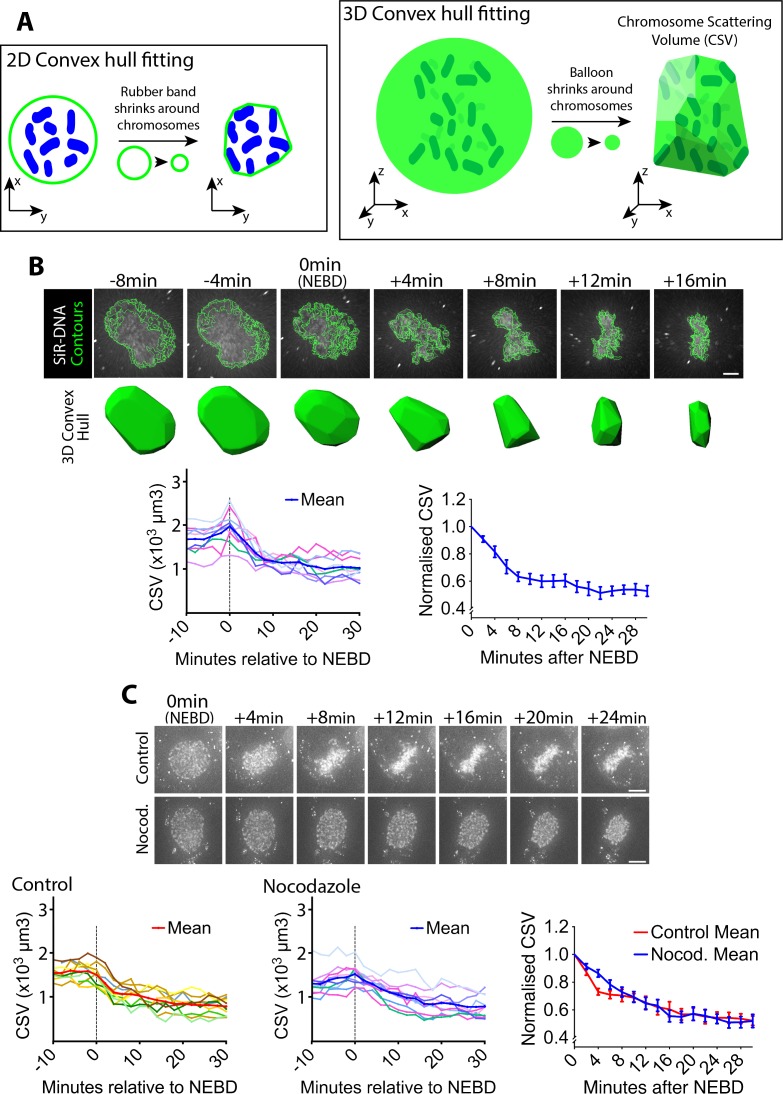
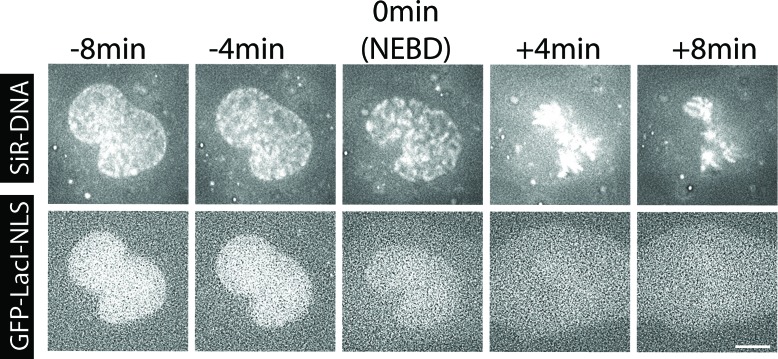
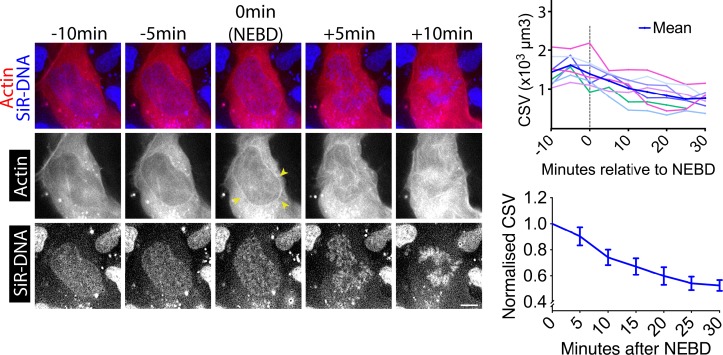
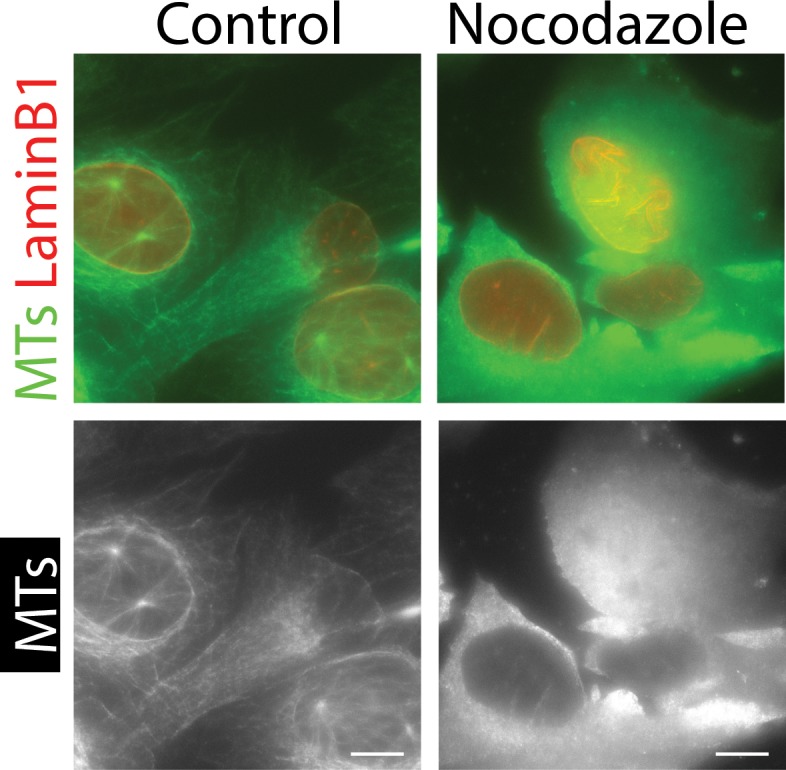
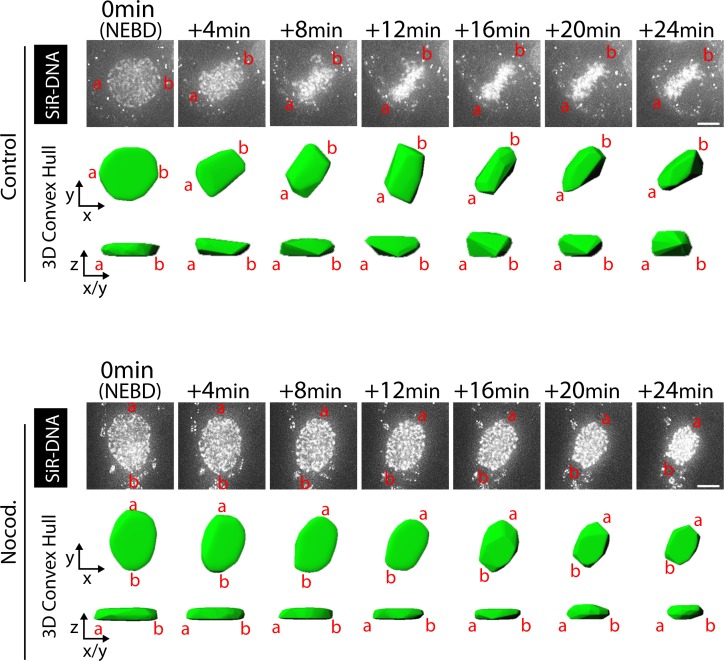
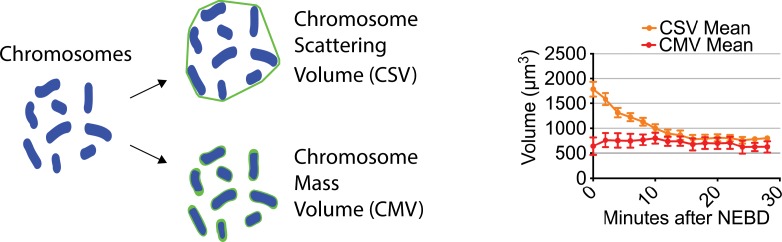
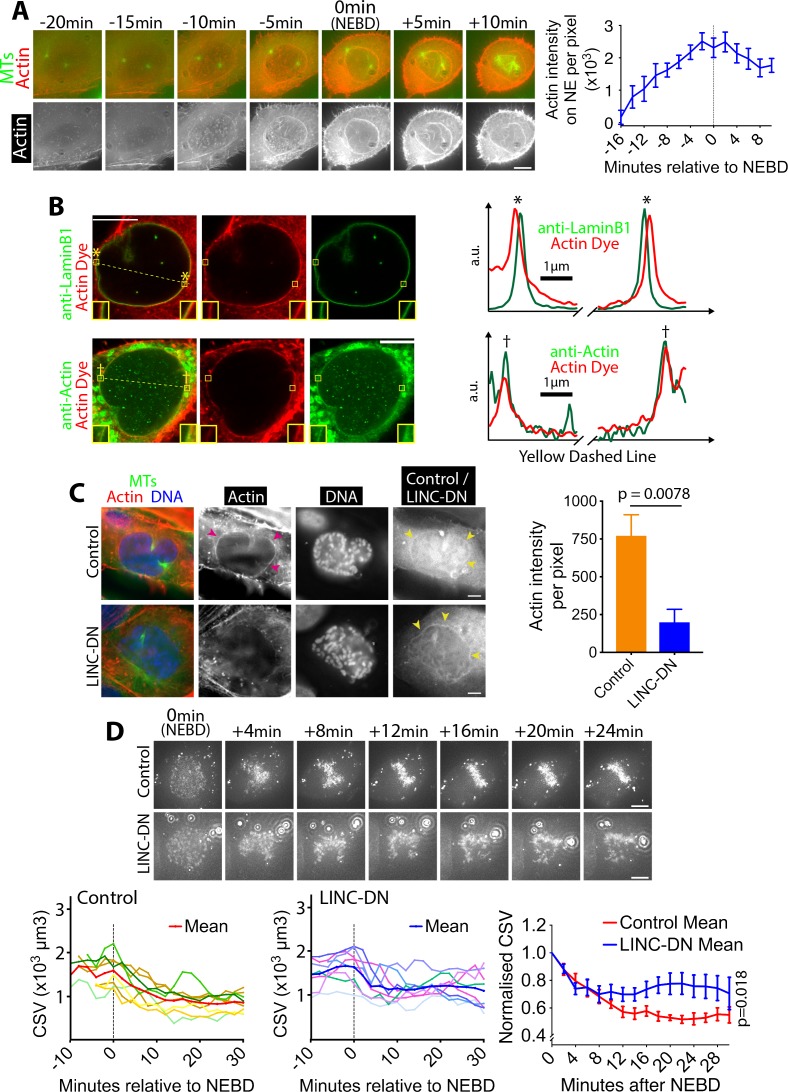
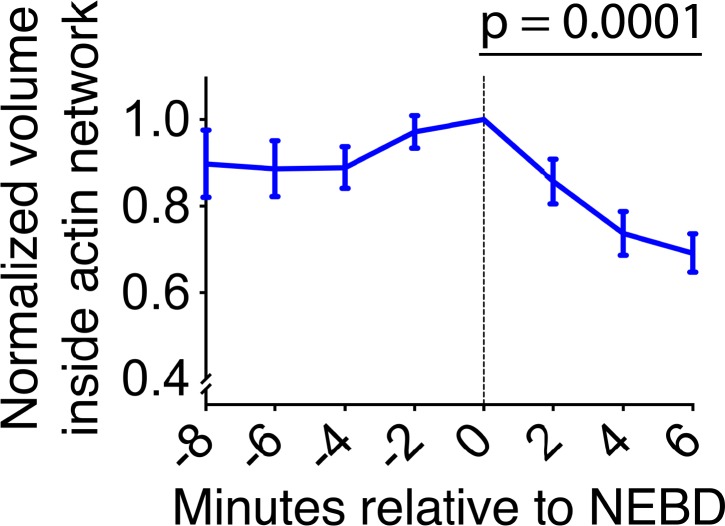
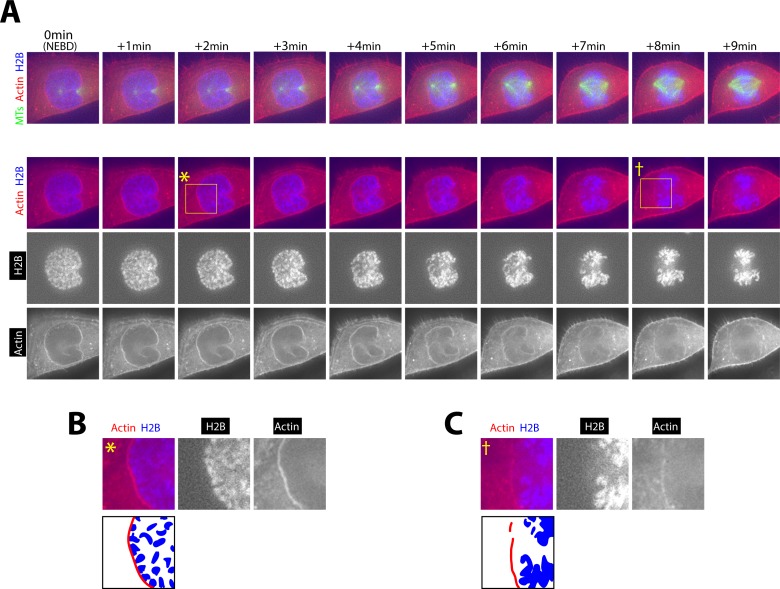
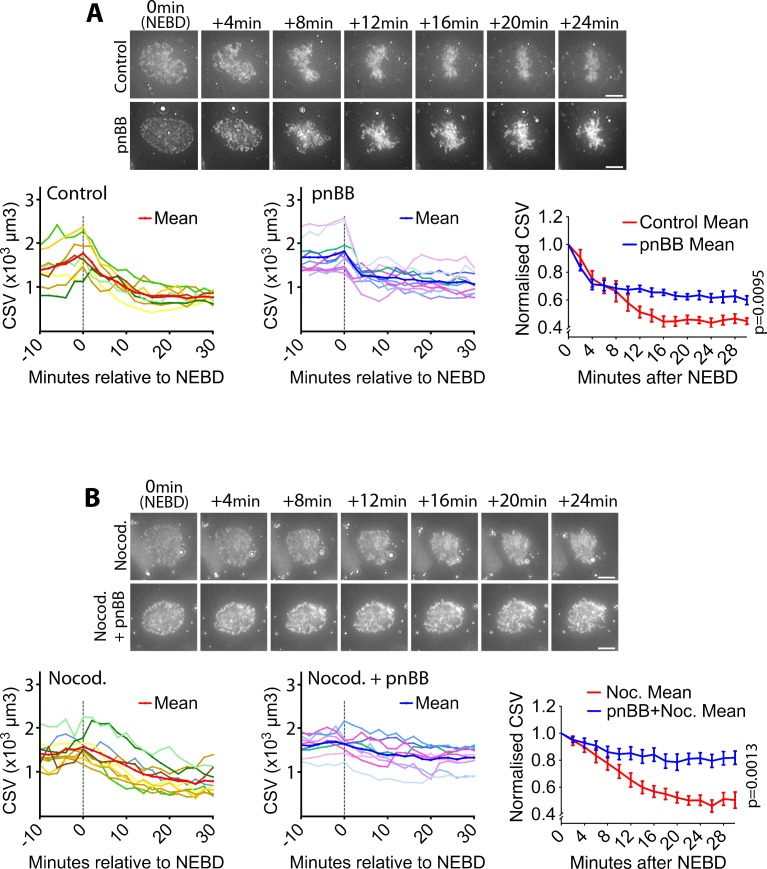
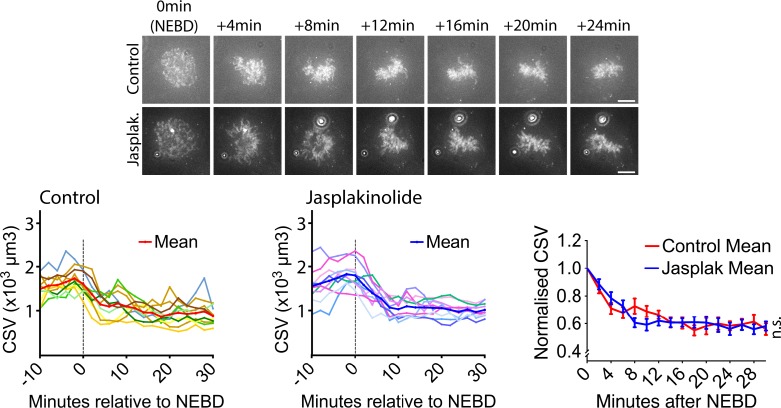
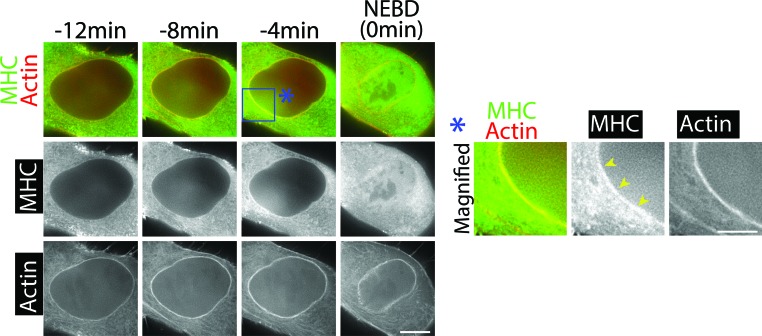
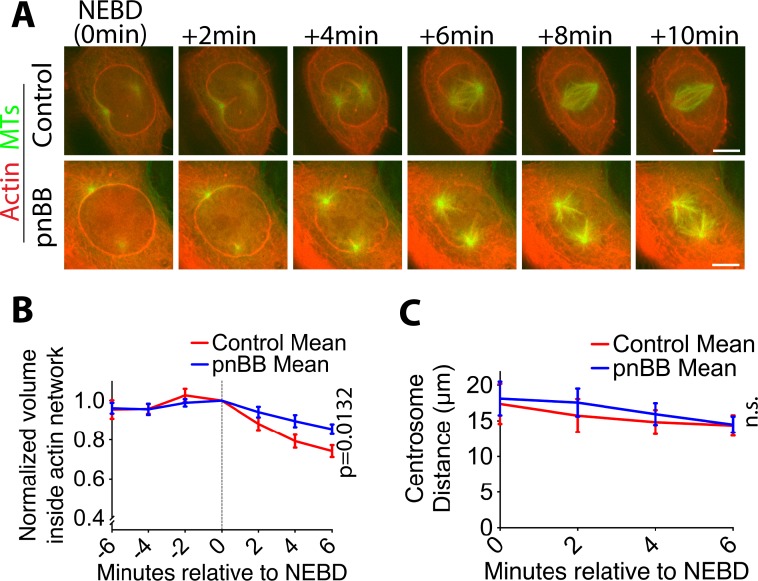
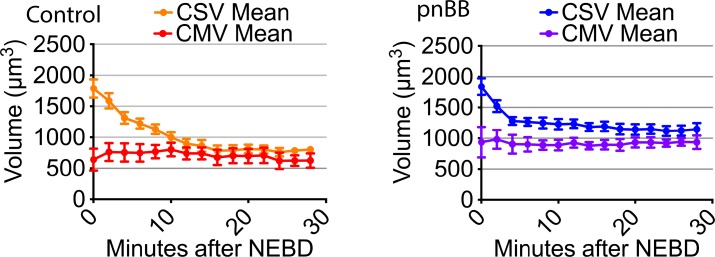
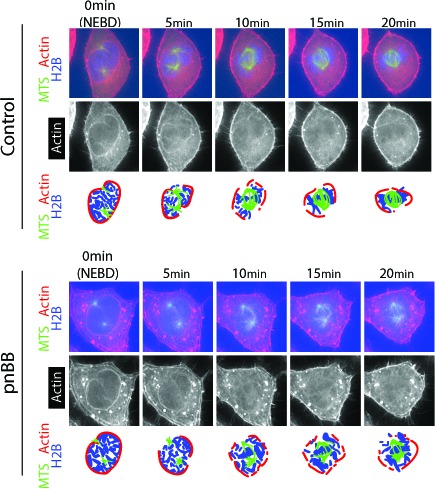
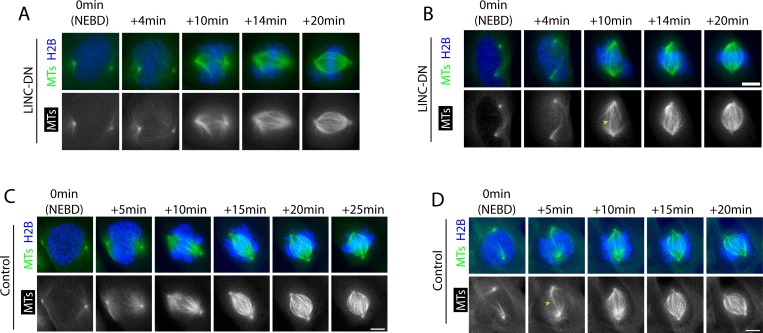
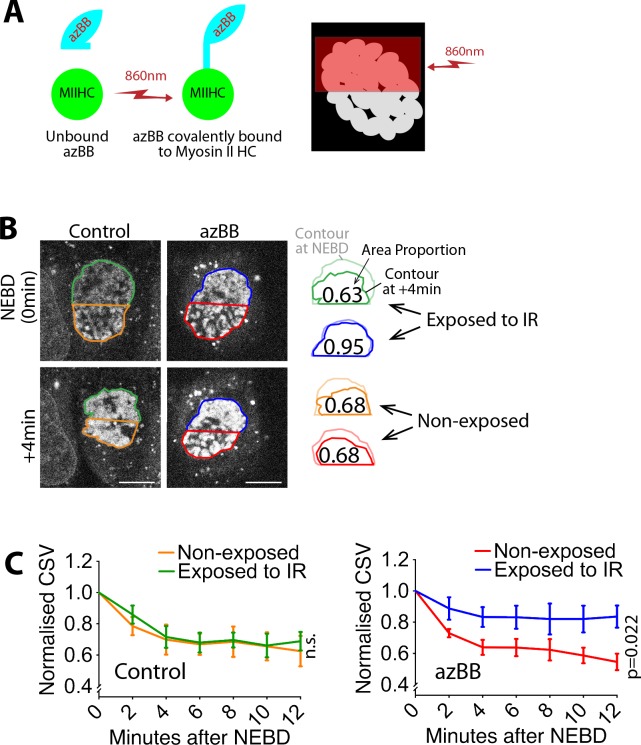
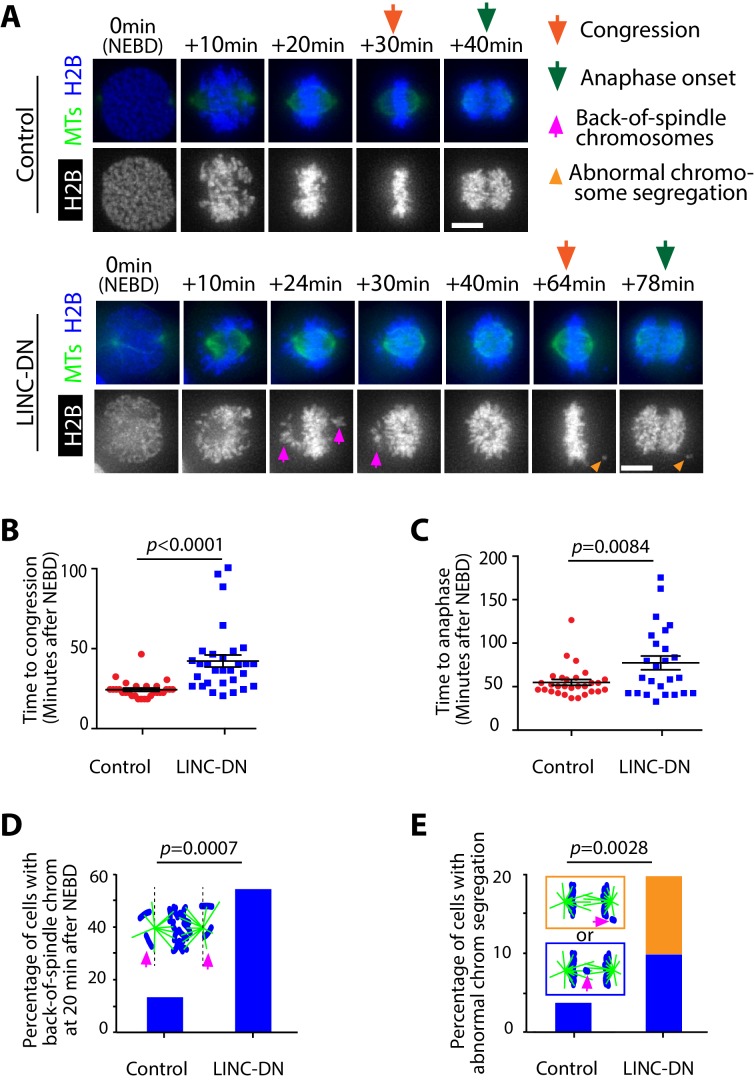
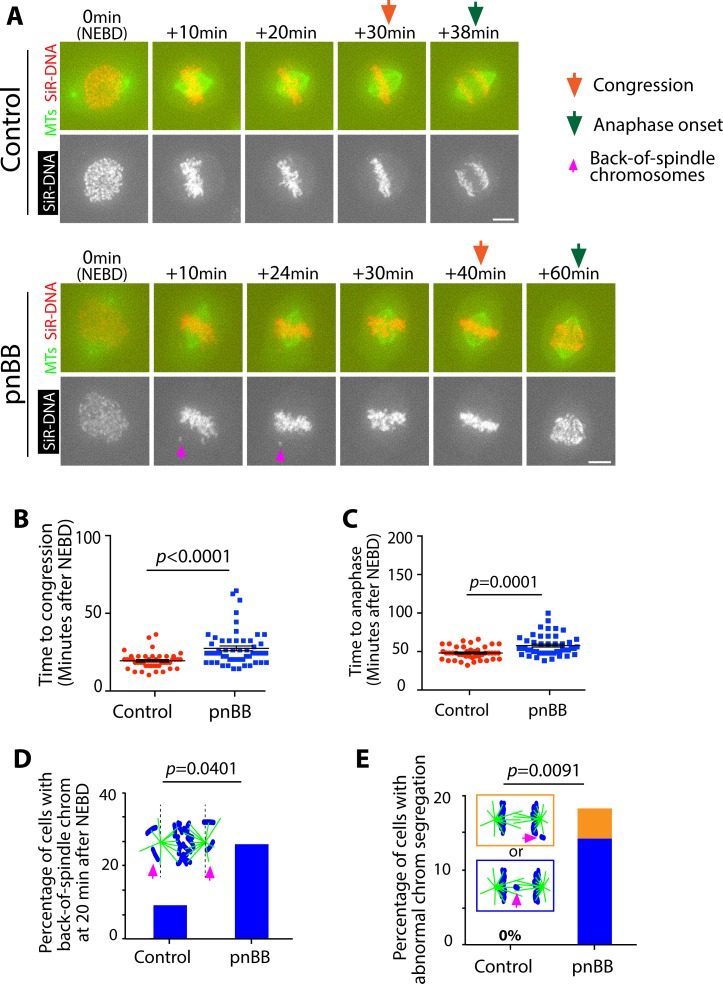
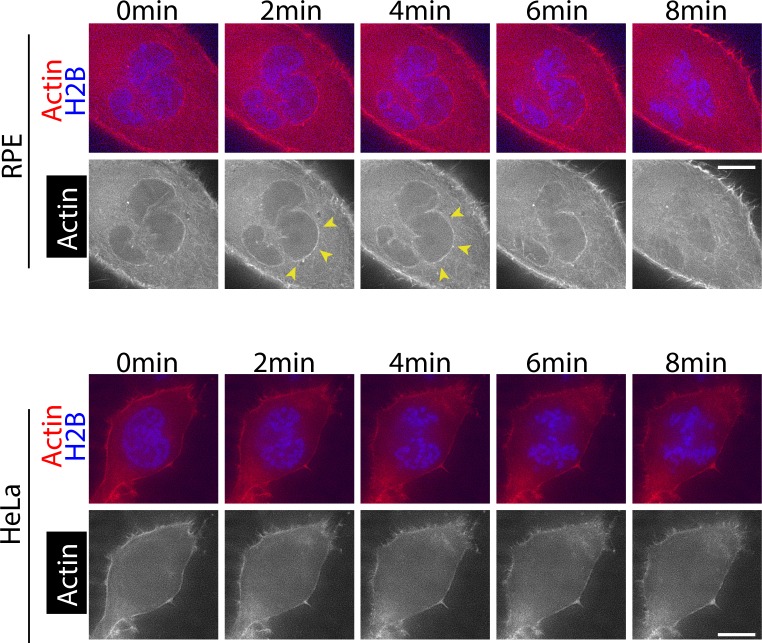
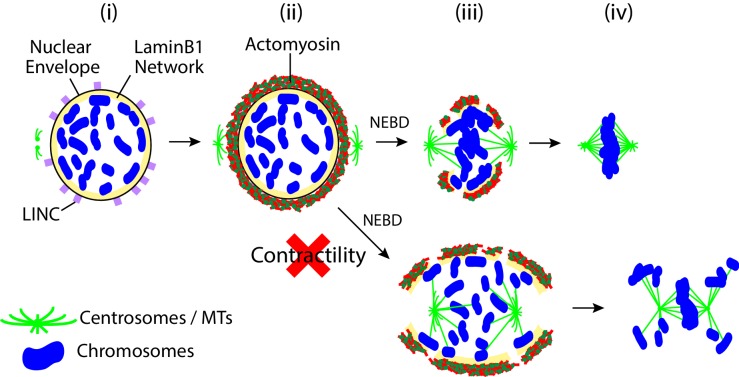
To ensure proper segregation during mitosis, chromosomes must be efficiently captured by spindle microtubules and subsequently aligned on the mitotic spindle. The efficacy of chromosome interaction with the spindle can be influenced by how widely chromosomes are scattered in space. Here, we quantify chromosome-scattering volume (CSV) and find that it is reduced soon after nuclear envelope breakdown (NEBD) in human cells. The CSV reduction occurs primarily independently of microtubules and is therefore not an outcome of interactions between chromosomes and the spindle. We find that, prior to NEBD, an acto-myosin network is assembled in a LINC complex-dependent manner on the cytoplasmic surface of the nuclear envelope. This acto-myosin network remains on nuclear envelope remnants soon after NEBD, and its myosin-II-mediated contraction reduces CSV and facilitates timely chromosome congression and correct segregation. Thus, we find a novel mechanism that positions chromosomes in early mitosis to ensure efficient and correct chromosome-spindle interactions.
Keywords: LINC complex; acto-myosin; cell biology; chromosomes; gene expression; human; human cells; mitotic spindle; nuclear envelope.
© 2019, Booth et al.
Conflict of interest statement
AB, ZY, JE, TS, GL, HH, TT No competing interests declared
Figures
References
-
- Georgatos SD, Pyrpasopoulou A, Theodoropoulos PA. Nuclear envelope breakdown in mammalian cells involves stepwise Lamina disassembly and microtubule-drive deformation of the nuclear membrane. Journal of Cell Science. 1997;110:2129–2140. - PubMed
Publication types
MeSH terms
Substances
Grants and funding
LinkOut - more resources
Full Text Sources
Other Literature Sources
Research Materials