


A randomized controlled trial to assess the potential efficacy, feasibility and acceptability of an m-health intervention targeting parents of school aged children to improve the nutritional quality of foods packed in the lunchbox 'SWAP IT'
- PMID: 31266506
- PMCID: PMC6604241
- DOI: 10.1186/s12966-019-0812-7
A randomized controlled trial to assess the potential efficacy, feasibility and acceptability of an m-health intervention targeting parents of school aged children to improve the nutritional quality of foods packed in the lunchbox 'SWAP IT'
Abstract
Background: Scalable interventions that improve the nutritional quality of foods in children's lunchboxes have considerable potential to improve child public health nutrition. This study assessed the potential efficacy, feasibility and acceptability of an m-health intervention, 'SWAP IT', to improve the energy and nutritional quality of foods packed in children's lunchboxes.
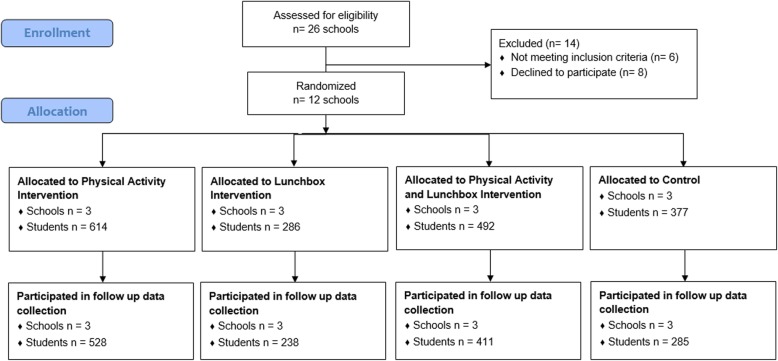
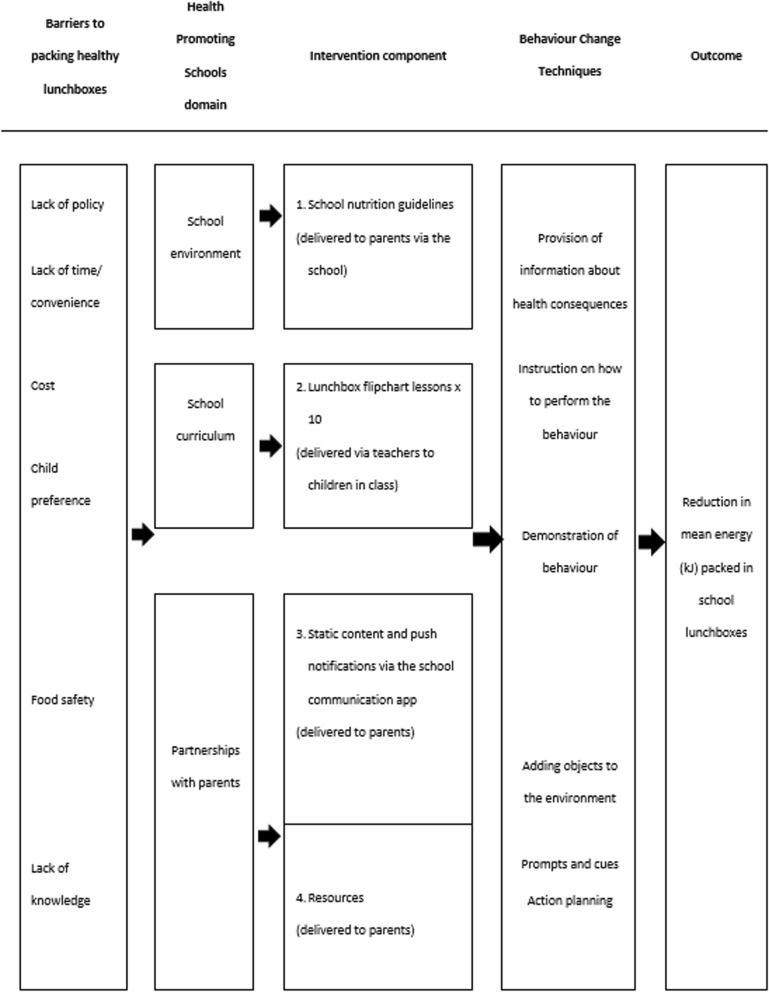
Methods: The study employed a 2X2 factorial cluster randomized-controlled trial design. Twelve primary schools in New South Wales, Australia were randomly allocated to one of four groups: (i) no intervention;(ii) physical activity intervention only;(iii) lunchbox intervention only; or(iv) physical activity and lunchbox intervention combined. The two intervention strategies were evaluated separately. This paper focuses on the effects of the lunchbox intervention only. The lunchbox intervention comprised four strategies: 1) school nutrition guidelines; 2) lunchbox lessons; 3) information pushed to parents via a school-communication app and 4) parent resources addressing barriers to packing healthy lunchboxes. Outcome measures were taken at baseline and immediately post-intervention (10 weeks) and included measures of effectiveness (mean energy (kJ) packed in lunchboxes, total energy and percentage energy from recommended foods consistent with Australian Dietary Guidelines), feasibility (of delivering intervention to schools, parent app engagement and behaviour change) and acceptability to school staff and parents. Linear mixed models were used to assess intervention efficacy.
Results: Of the 1915 lunchbox observations, at follow-up there was no significant differences between intervention and control group in mean energy of foods packed within lunchboxes (- 118.39 kJ, CI = -307.08, 70.30, p = 0.22). There was a significant increase favouring the intervention in the secondary outcome of mean lunchbox energy from recommended foods (79.21 kJ, CI = 1.99, 156.43, p = 0.04), and a non-significant increase in percentage of lunchbox energy from recommended foods in intervention schools (4.57%, CI = -0.52, 9.66, p = 0.08). The views of the messages pushed via the app ranged from 387 to 1550 views per week (mean views =1025 per week). A large proportion (71%) of parents reported awareness of the intervention, making healthier swaps in the lunchbox (55%), and pushed content was helpful (84%).
Conclusion: The study is the first RCT to assess the potential of a multi-component m-health lunchbox intervention. The intervention was feasible, acceptable and potentially effective in improving the nutritional quality of foods packed within children's lunchboxes.
Trial registration: Australian Clinical Trials Registry ACTRN: ACTRN12616001228471 .
Keywords: Child nutrition; Childhood obesity; Children; Lunchboxes; M-health; Schools.
Conflict of interest statement
The authors declare that they have no competing interests. This manuscript has not been published – either in print or electronic form – or is being considered for publication elsewhere.
Figures
References
-
- Development Initiatives. Global nutrition report 2017: nourishing the SDGs. Bristol; 2017.
-
- Ng M, Fleming T, Robinson M, Thomson B, Graetz N, Margono C, et al. Global, regional, and national prevalence of overweight and obesity in children and adults during 1980–2013: a systematic analysis for the Global Burden of Disease Study 2013. Lancet. 2014;384(9945):766–781. doi: 10.1016/S0140-6736(14)60460-8. - DOI - PMC - PubMed
-
- Dobbs R, Sawers C, Thompson F, Mankiya J, Woetzel JR, Child P, et al. Overcoming Obesity: An Initial Economic Analysis. Jakarta; 2014.
-
- World Health Organisation. Global Strategy on Diet, Physical Activity and Health: Childhood overweight and obesity: World Health Organisation; 2016. Available from: http://www.who.int/dietphysicalactivity/childhood/en/
-
- Hardy L, Mihrshahi S, Drayton B, Bauman A. NSW schools physical activity and nutrition survey (SPANS) 2015: full report. Sydney: Department of Health; 2016.
Publication types
MeSH terms
Associated data
LinkOut - more resources
Full Text Sources
