


Incidence and risk factors for Preeclampsia in a cohort of healthy nulliparous pregnant women: a nested case-control study
- PMID: 31266984
- PMCID: PMC6606578
- DOI: 10.1038/s41598-019-46011-3
Incidence and risk factors for Preeclampsia in a cohort of healthy nulliparous pregnant women: a nested case-control study
Abstract
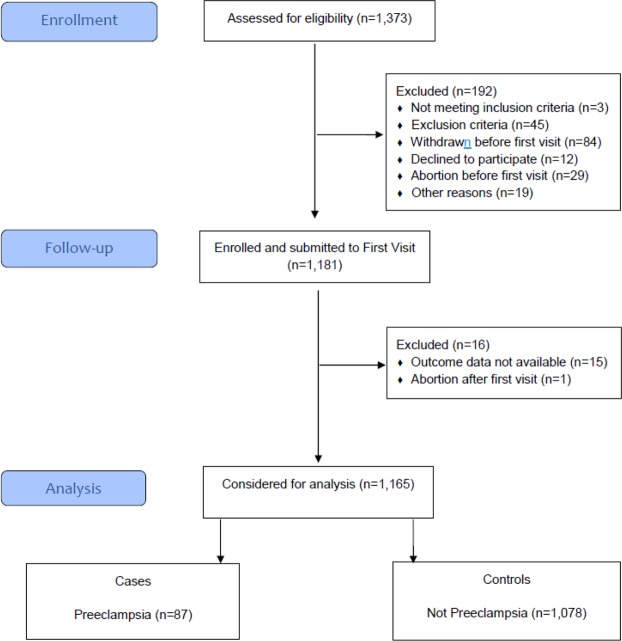
The objective of this study is to determine the incidence, socio-demographic and clinical risk factors for preeclampsia and associated maternal and perinatal adverse outcomes. This is a nested case-control derived from the multicentre cohort study Preterm SAMBA, in five different centres in Brazil, with nulliparous healthy pregnant women. Clinical data were prospectively collected, and risk factors were assessed comparatively between PE cases and controls using risk ratio (RR) (95% CI) plus multivariate analysis. Complete data were available for 1,165 participants. The incidence of preeclampsia was 7.5%. Body mass index determined at the first medical visit and diastolic blood pressure over 75 mmHg at 20 weeks of gestation were independently associated with the occurrence of preeclampsia. Women with preeclampsia sustained a higher incidence of adverse maternal outcomes, including C-section (3.5 fold), preterm birth below 34 weeks of gestation (3.9 fold) and hospital stay longer than 5 days (5.8 fold) than controls. They also had worse perinatal outcomes, including lower birthweight (a mean 379 g lower), small for gestational age babies (RR 2.45 [1.52-3.95]), 5-minute Apgar score less than 7 (RR 2.11 [1.03-4.29]), NICU admission (RR 3.34 [1.61-6.9]) and Neonatal Near Miss (3.65 [1.78-7.49]). Weight gain rate per week, obesity and diastolic blood pressure equal to or higher than 75 mmHg at 20 weeks of gestation were shown to be associated with preeclampsia. Preeclampsia also led to a higher number of C-sections and prolonged hospital admission, in addition to worse neonatal outcomes.
Conflict of interest statement
The authors declare no competing interests.
Figures
References
Publication types
MeSH terms
LinkOut - more resources
Full Text Sources
Medical
