Experimental Effects of Acute Exercise in Attenuating Memory Interference: Considerations by Biological Sex
- PMID: 31269780
- PMCID: PMC6680832
- DOI: 10.3390/medicina55070331
Experimental Effects of Acute Exercise in Attenuating Memory Interference: Considerations by Biological Sex
Abstract
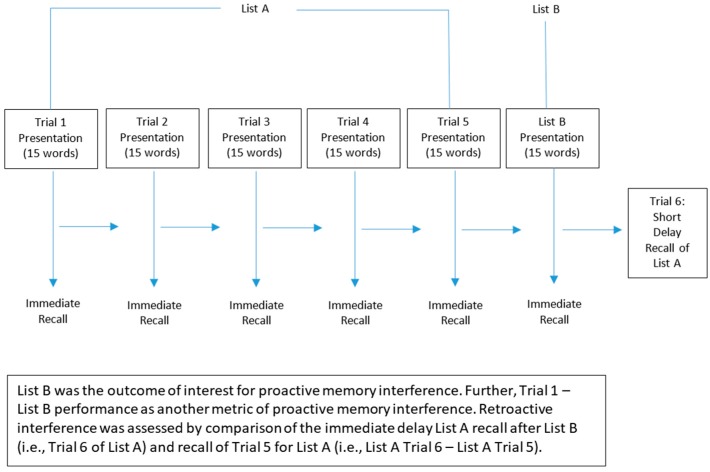
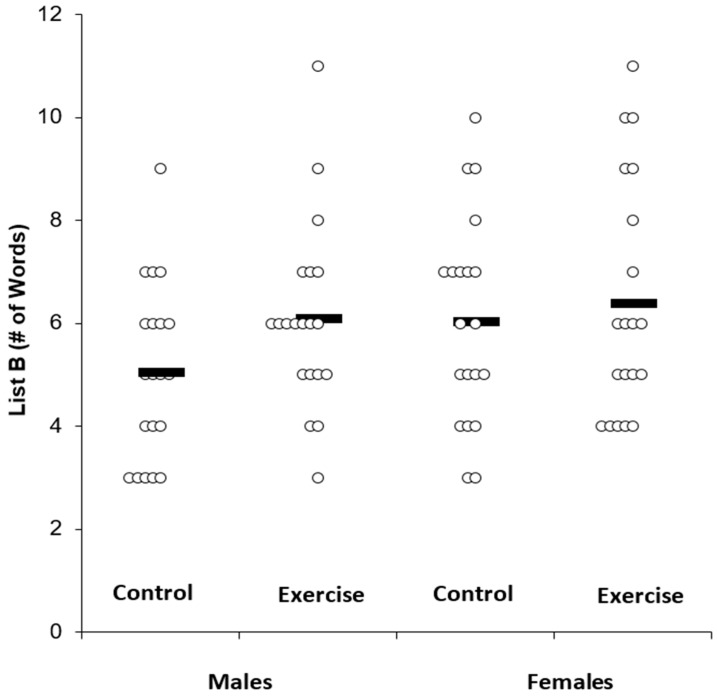
Background and Objectives: The objective of this experiment was to evaluate the effects of acute exercise on memory interference and determine if this potential relationship is moderated by sex. Materials and Methods: A randomized controlled experiment was conducted (N = 40), involving young adult males (n = 20) and females (n = 20) completing two counterbalanced visits (exercise and no exercise). The exercise visit involved an acute (15 min), moderate-intensity bout of treadmill exercise, while the control visit involved a time-matched seated task. Memory interference, including both proactive interference and retroactive interference, involved the completion of a multi-trial memory task. Results: In a factorial ANOVA with the outcome being List B, there was a main effect for condition (F(1,38) = 5.75, P = 0.02, n2p = 0.13), but there was no main effect for sex (F(1,38) = 1.39, P = 0.24, n2p = 0.04) or sex by condition interaction (F(1,38) = 1.44, P = 0.23, n2p = 0.04). Conclusion: In conclusion, acute moderate-intensity exercise was effective in attenuating a proactive memory interference effect. This effect was not moderated by biological sex.
Keywords: cognition; encoding; learning; memory; physical activity.
Conflict of interest statement
The authors declare no conflict of interest.
Figures