Recurrent Desmoid Tumor with Intra-Abdominal Extension After Abdominoplasty: A Rare Presentation
- PMID: 31270310
- PMCID: PMC6621933
- DOI: 10.12659/AJCR.916227
Recurrent Desmoid Tumor with Intra-Abdominal Extension After Abdominoplasty: A Rare Presentation
Abstract
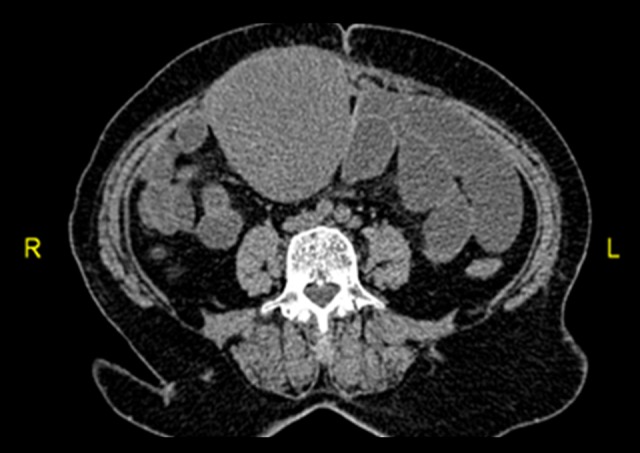
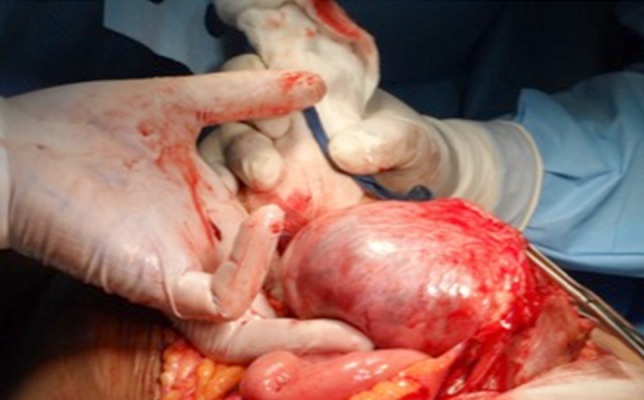
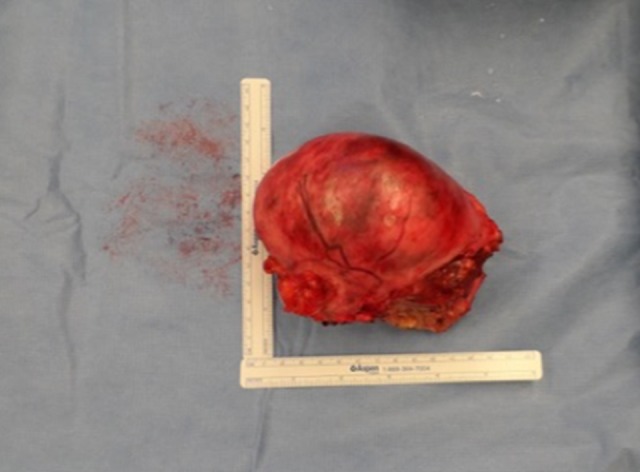
BACKGROUND Desmoid tumors are fibrous neoplasms that originate from the musculoaponeurotic structures in the body. Abdominal wall desmoid tumors are rare, but they can be locally aggressive, with high incidence of recurrence. These tumors are more common in young, fertile women. They frequently occur during or after pregnancy. CASE REPORT We present the case of a 63-year-old post-menopausal woman with a desmoid tumor of the anterior abdominal wall. She had no relevant family history. During abdominoplasty, an incidental mass was excised and biopsied, and was identified as a desmoid tumor with free margins. One year later, the patient presented with vague abdominal discomfort and feeling of heaviness. An incision was made through the previous abdominoplasty scar to maintain the aesthetic outcome. A large mass, arising from the abdominal wall and extending intra-abdominally, was excised and was determined to be a recurrent desmoid tumor. CONCLUSIONS Recurrent anterior abdominal wall desmoid tumors in post-menopausal women are rare and locally aggressive, with a high risk of recurrence. During abdominal wall repair in abdominoplasty, desmoid tumor filaments might seed deep intra-abdominally. Therefore, it is necessary to take adequate safe margins before abdominal wall repair. Post-operatively, surgeons should keep a high index of suspicion for tumor recurrence.
Conflict of interest statement
Figures
References
-
- Shields CJ, Winter DC, Kirwan WO, Redmond HP. Review desmoid tumors. Eur J Surg Oncol. 2001;27(8):701–6. - PubMed
-
- Fletcher CDM. Myofibroblastic tumors: An update. Verh Dtsch Ges Path. 1998;82:75–82. - PubMed
-
- Kiel KD, Suit HD. Radiation therapy in the treatment of aggressive fibromatoses (desmoid tumors) Cancer. 1984;54:2051–55. - PubMed
Publication types
MeSH terms
LinkOut - more resources
Full Text Sources