


A CC-NBS-LRR gene induces hybrid lethality in cotton
- PMID: 31270546
- PMCID: PMC6793457
- DOI: 10.1093/jxb/erz312
A CC-NBS-LRR gene induces hybrid lethality in cotton
Abstract
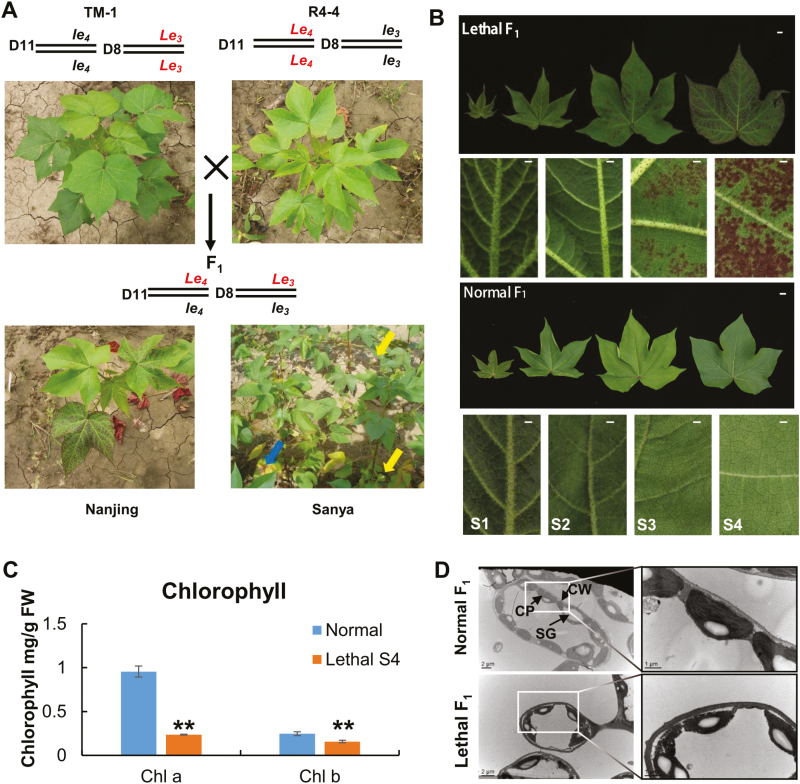
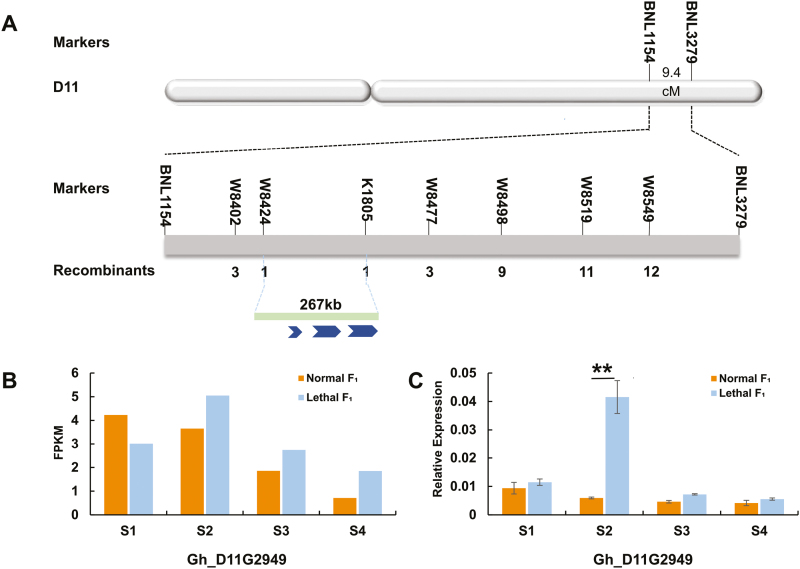
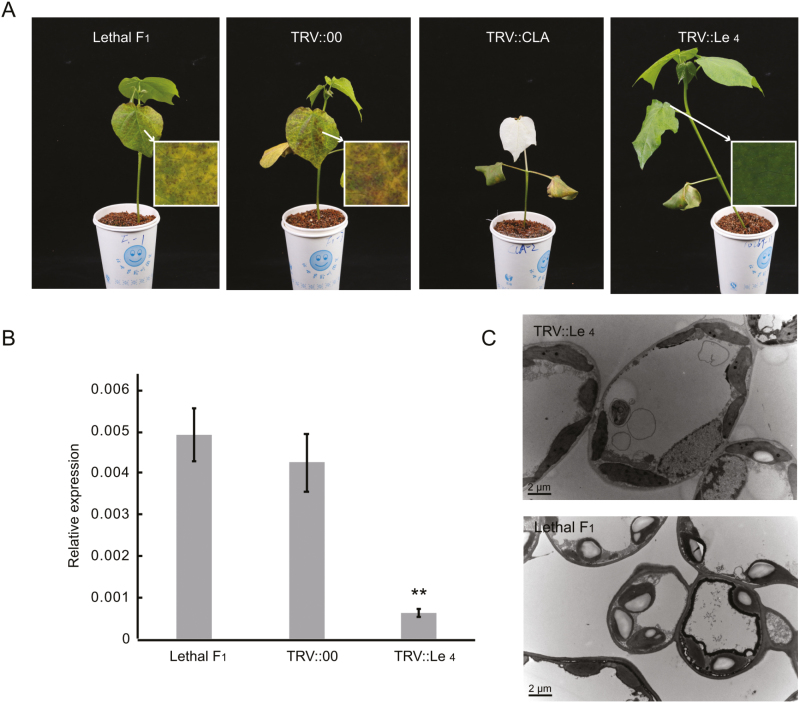
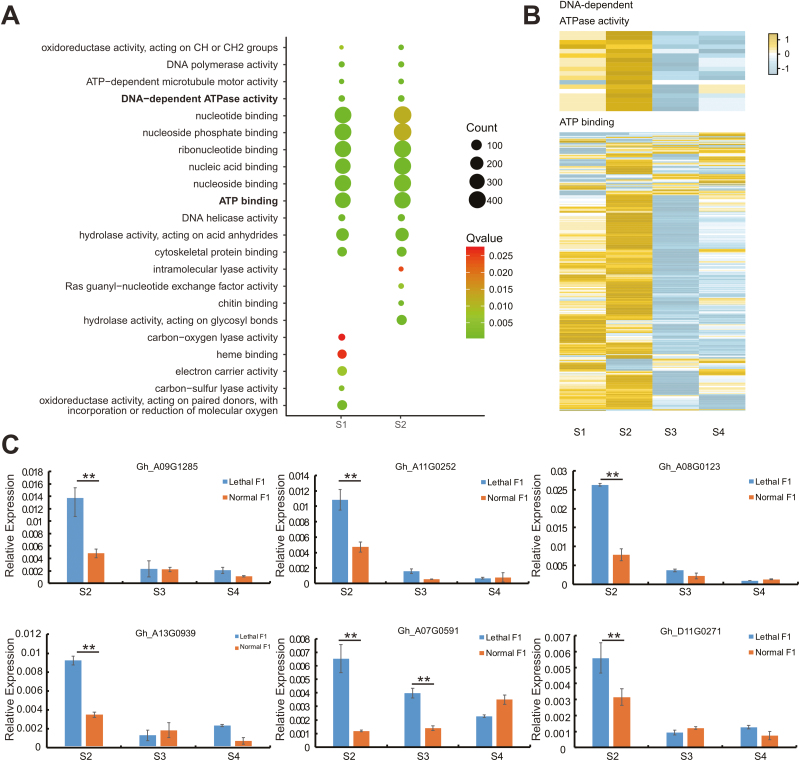
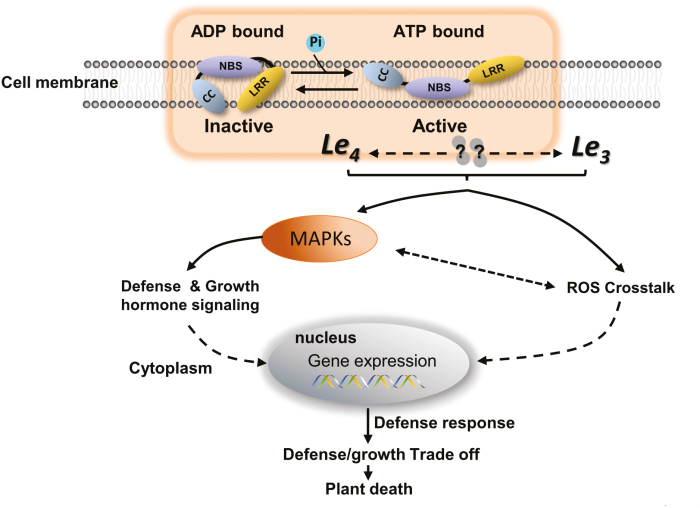
Hybrid lethality forms a reproductive barrier that has been found in many eukaryotes. Most cases follow the Bateson-Dobzhansky-Muller genetic incompatibility model and involve two or more loci. In this study, we demonstrate that a coiled-coil nucleotide-binding site leucine-rich repeat (CC-NBS-LRR) gene is the causal gene underlying the Le4 locus for interspecific hybrid lethality between Gossypium barbadense and G. hirsutum (cotton). Silencing this CC-NBS-LRR gene can restore F1 plants from a lethal to a normal phenotype. A total of 11 099 genes were differentially expressed between the leaves of normal and lethal F1 plants, of which genes related to autoimmune responses were highly enriched. Genes related to ATP-binding and ATPase were up-regulated before the lethal syndrome appeared; this may result in the conversion of Le4 into an active state and hence trigger immune signals in the absence of biotic/abiotic stress. We discuss our results in relation to the evolution and domestication of Sea Island cottons and the molecular mechanisms of hybrid lethality associated with autoimmune responses. Our findings provide new insights into reproductive isolation and may benefit cotton breeding.
Keywords: ATP-binding; DNA-dependent ATPase activity; NBS-LRR genes; autoimmunity response; cotton; hybrid lethality; map-based cloning.
© The Author(s) 2019. Published by Oxford University Press on behalf of the Society for Experimental Biology.
Figures
References
-
- Alcázar R, García AV, Kronholm I, de Meaux J, Koornneef M, Parker JE, Reymond M. 2010. Natural variation at Strubbelig Receptor Kinase 3 drives immune-triggered incompatibilities between Arabidopsis thaliana accessions. Nature Genetics 42, 1135–1139. - PubMed
Publication types
MeSH terms
LinkOut - more resources
Full Text Sources
Other Literature Sources
Research Materials
Miscellaneous
