


Eicosanoid Profile of Influenza A Virus Infected Pigs
- PMID: 31277231
- PMCID: PMC6680658
- DOI: 10.3390/metabo9070130
Eicosanoid Profile of Influenza A Virus Infected Pigs
Abstract
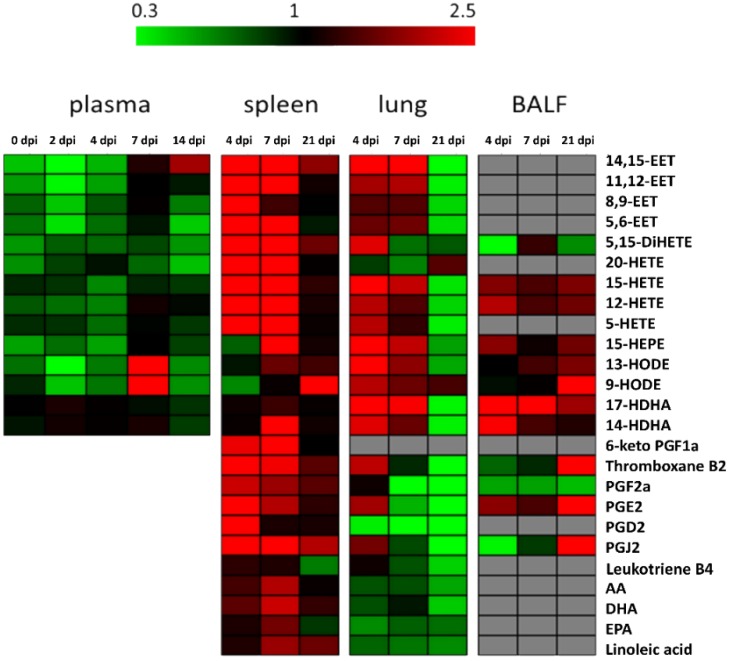
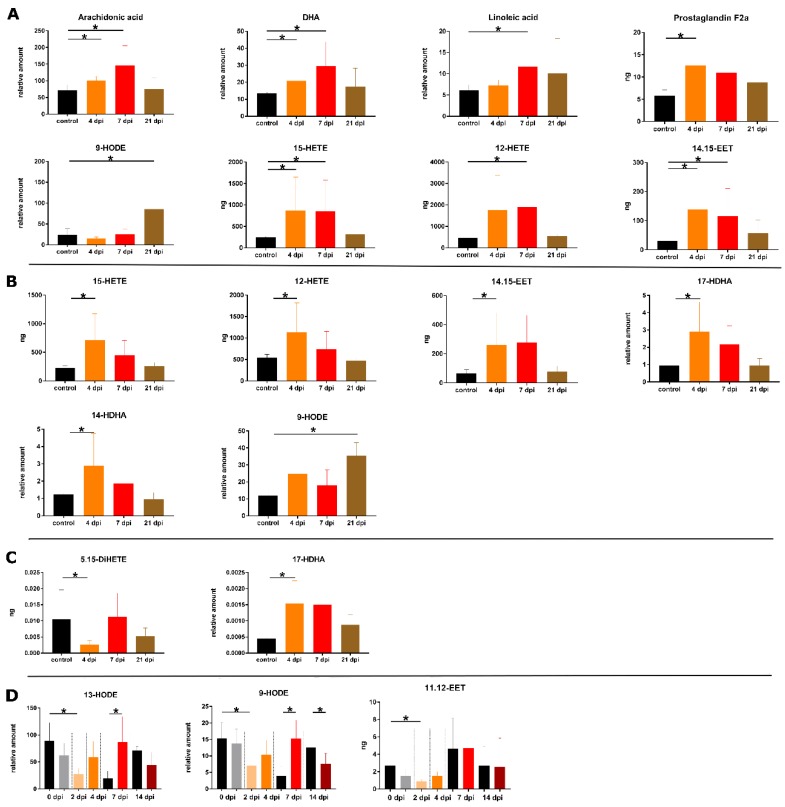
Respiratory tract infections caused by the Influenza A virus (IAV) are a worldwide problem for human and animal health. Within this study, we analyzed the impact of IAV infection on the immune-related lipidome (eicosanoids) of the pig as new infection model. For this purpose, we performed HPLC-MS/MS using dynamic multiple reaction monitoring and analyzed lung, spleen, blood plasma and bronchoalveolar lavages. IAV infection leads to collective changes in the levels of the analyzed hydroxyeicosatrienoic acids (HETEs), hydroxydocosahexaenoic acids (HDHAs) and epoxyeicosatrienoic acids (EETs), and moreover, unique eicosanoid changes in several sample types, even under mild infection conditions. In accordance with different mouse infection studies, we observed infection-related patterns for 12-HETE, 15-HETE and 17-HDHA, which seem to be common for IAV infection. Using a long-term approach of 21 days we established an experimental setup that can be used also for bacterial-viral coinfection experiments.
Keywords: Influenza A virus; eicosanoids; infection; lipid mediator; pig.
Conflict of interest statement
The authors declare no conflict of interest.
Figures
References
-
- Rice T.W., Rubinson L., Uyeki T.M., Vaughn F.L., John B.B., Miller R.R., 3rd, Higgs E., Randolph A.G., Smoot B.E., Thompson B.T., et al. Critical illness from 2009 pandemic influenza a virus and bacterial coinfection in the united states. Crit. Care Med. 2012;40:1487–1498. doi: 10.1097/CCM.0b013e3182416f23. - DOI - PMC - PubMed
Grants and funding
LinkOut - more resources
Full Text Sources
