


The multi-tiered medical education system and its influence on the health care market-China's Flexner Report
- PMID: 31277652
- PMCID: PMC6612177
- DOI: 10.1186/s12960-019-0382-4
The multi-tiered medical education system and its influence on the health care market-China's Flexner Report
Abstract
Background: Medical education is critical and the first step to foster the competence of a physician. Unlike developed countries, China has been adopting a system of multi-tiered medical education to training physicians, which is featured by the provision of an alternative lower level of medical practitioners, or known as a feldsher system since the 1950s. This study aimed to illustrate the impact of multi-tiered medical education on both the equity in the delivery of health care services and the efficiency of the health care market.
Methods: Based on both theoretical reasoning and empirical analysis, this paper documented evidence upon those impacts of the medical education system.
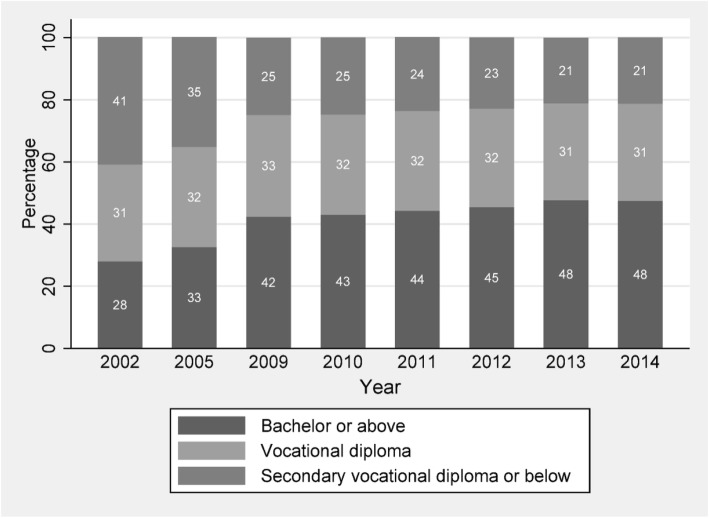
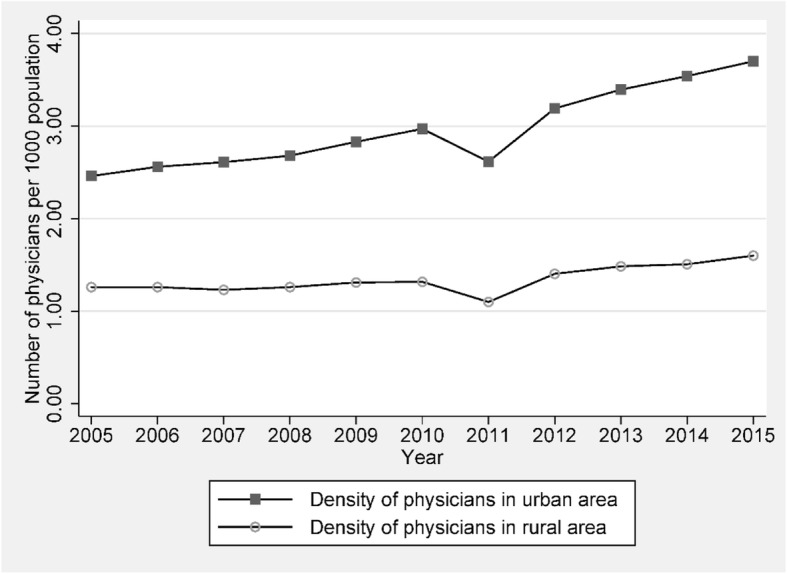
Results: First, the geographic distribution of physicians in China is not uniform across physicians with different educational training. Second, we also find the evidence that high-educated doctors are more likely to be hired by larger hospitals, which in turn add the fuel to foster the hospital-center health care system in China as patients choose large hospitals to chase good doctors. Third, through the channels of adverse selection and moral hazard, the heterogeneity in medical education also imposes costs to the health care market in China.
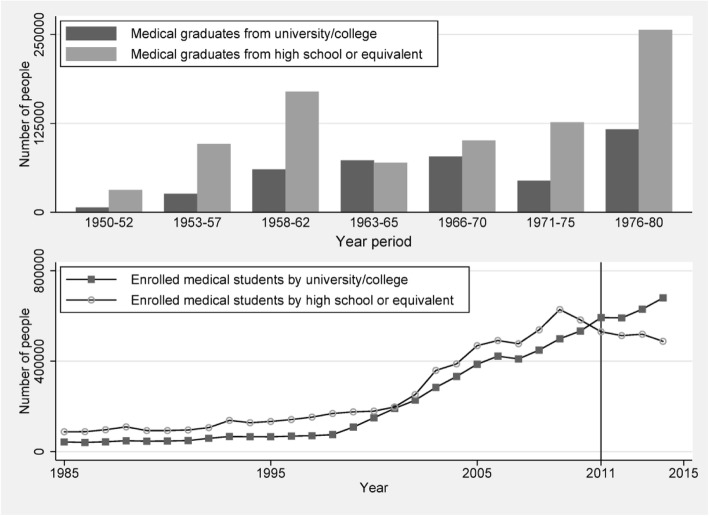
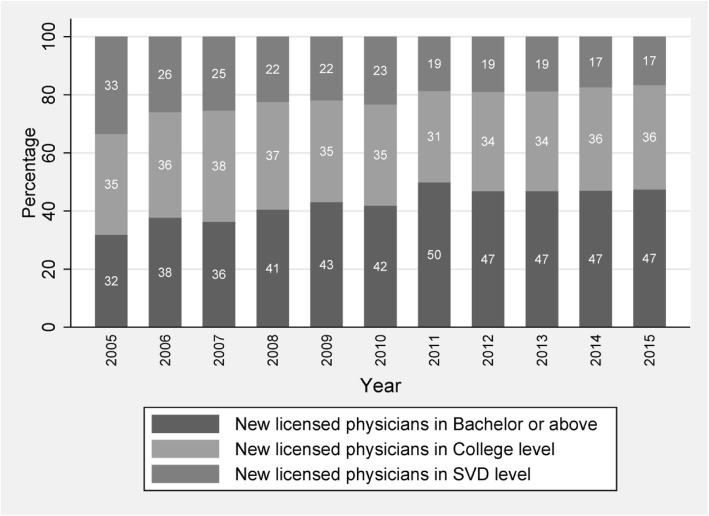
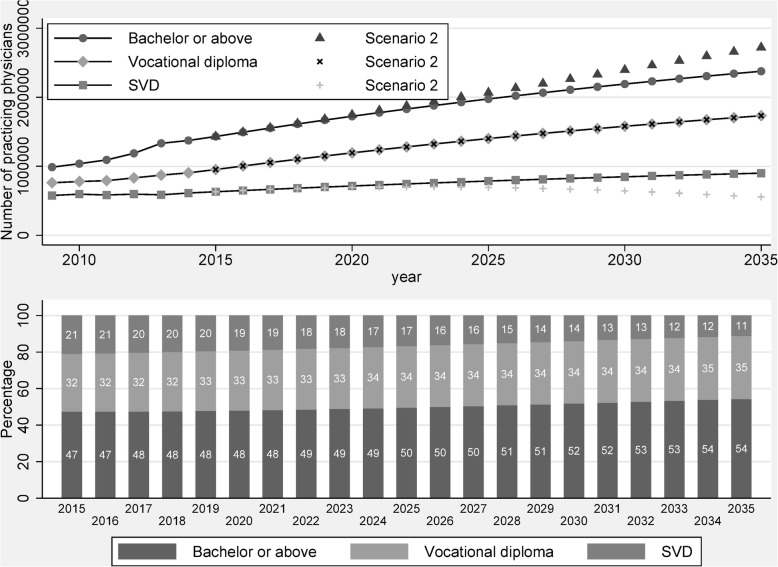
Discussion: Overall, the three-tiered medical education system in China is a standard policy trade-off between quantity and quality in training health care professionals. On the one hand, China gains the benefit of increasing the supply of health care professionals at lower costs. On the other hand, China pays the price for keeping a multi-tiered medical education in terms of increasing inequality and efficiency loss in the health care sector. Finally, we discuss the potential policy options for China to mitigate the negative impact of keeping a multi-tiered medical education on the performance of health care market.
Keywords: Barefoot doctor; China; Medical education; Physician.
Conflict of interest statement
The authors declare that they have no competing interests.
Figures
References
-
- Arrow KJ. Uncertainty and the welfare economics of medical care. Am Econ Rev. 1963;53:941–973.
Publication types
MeSH terms
Grants and funding
LinkOut - more resources
Full Text Sources
