Review
. 2019 Jul;144(1):13-23.
doi: 10.1016/j.jaci.2019.05.015.

Leveraging -omics for asthma endotyping

Affiliations
Review

Leveraging -omics for asthma endotyping

Scott R Tyler et al. J Allergy Clin Immunol. 2019 Jul.

Abstract

Asthma is a highly heterogeneous disease, often manifesting with wheeze, dyspnea, chest tightness, and cough as prominent symptoms. The eliciting factors, natural history, underlying molecular biology, and clinical management of asthma vary highly among affected subjects. Because of this variation, many efforts have gone into subtyping asthma. Endotypes are subtypes of disease based on distinct pathophysiologic mechanisms. Endotypes can be clinically useful because they organize our mechanistic understanding of heterogeneous diseases and can direct treatment toward modalities that are likely to be the most effective. Asthma endotyping can be shaped by clinical features, laboratory parameters, and/or -omics approaches. We discuss the application of -omics approaches, including transcriptomics, epigenomics, microbiomics, metabolomics, and proteomics, to asthma endotyping. -Omics approaches have provided supporting evidence for many existing endotyping paradigms and also suggested novel ways to conceptualize asthma endotypes. Although endotypes based on single -omics approaches are relatively common, their integrated multi-omics application to asthma endotyping has been more limited thus far. We discuss paths forward to integrate multi-omics with clinical features and laboratory parameters to achieve the goal of precise asthma endotypes.

Keywords: -ome; -omic; Asthma; cluster; endotype; epigenome; integrate; metabolome; microbiome; multi-ome; phenotype; proteome; transcriptome.


Conflict of interest statement

Conflicts of interest: The authors declare no conflicts of interest.

Figures

Figure 1:
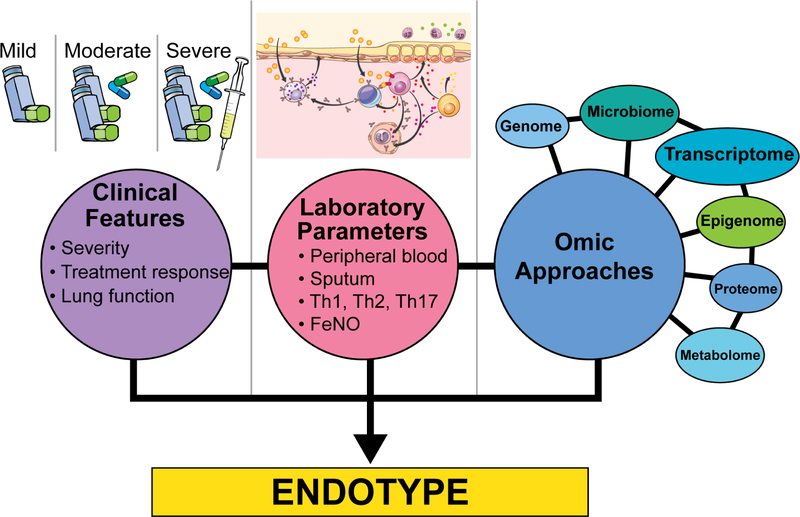
Figure 1:. Approaches to endotyping asthma.
Endotyping, or the subtyping of asthma based on pathophysiological mechanisms, can be informed by clinical features, laboratory parameters, and -omic approaches. Clinical features often serve as the basis for phenotyping asthma. Asthma endotyping based on laboratory parameters is common, spanning the well-recognized T2-high and T2-low endotypes based on induced sputum cells and/or fractional exhaled nitric oxide (FeNO), as well as eosinophilic, neutrophilic, mixed-granulocytic, and pauci-granulocytic endotypes based on sputum, BAL, and/or blood inflammatory cells. The application of -omic approaches to asthma endotyping has provided supporting evidence for many existing endotyping paradigms but also suggested novel ways to conceptualize asthma endotypes. While -omic approaches to asthma endotyping have been largely based on transcriptomic data thus far, there is emerging evidence that other -omic modalities can inform endotyping. The successful integration of clinical features, laboratory parameters, and -omic approaches will advance asthma endotyping.
Figure 2:
Figure 2:. Clinical features can be used to classify asthma.
Phenotypes of asthma are often based on clinical features, including severity of disease (e.g. mild intermittent, moderate persistent, severe persistent), response to treatment, and exacerbating factors.
Figure 3:
Figure 3:. Asthma endotypes based on laboratory parameters.
Laboratory parameters, such as inflammatory cell fractions in sputum, BAL, and peripheral blood, and fractional exhaled nitric oxide (FeNO), have been used to define asthma endotypes. As an example, the T2-high endotype is shown here, reflecting a pathophysiologic mechanism driven by Th2 and ILC2 cells. In this scenario, Th2 and ILC2 cells produce IL4, IL5, and IL13, leading to goblet cell hyperplasia, increased mucin production, local and systemic eosinophilia, and B-cell production of IgE. IgE coats mast cells that are then primed to release histamine upon IgE cross-linking induced by environmental allergens, leading to the bronchospasm and airway inflammation that characterizes T2-high asthma. Signs of this pathophysiologic mechanism can be detected by measuring inflammatory cell patterns in sputum, bronchoalveolar lavage fluid, and peripheral blood, FeNO, serum total and specific IgE levels, and cytokine levels in sputum and peripheral blood. Such laboratory parameters are often used to define asthma endotypes.
Figure 4:
Figure 4:. Asthma endotypes based on T-helper cell subtype involvement.
Endotypes of asthma based on the relative signal strengths of Th2, Th17, Th1, and T cells overall have been described and associated with eosinophil, neutrophil, serum total and specific IgE levels as well as with variable treatment response. These T-helper cell-based endotypes likely have some overlap between one another.

References

    1. Casale TB. Biologics and biomarkers for asthma, urticaria, and nasal polyposis. J Allergy Clin Immunol 2017; 139:1411–21. - PubMed
    1. Fitzpatrick AM, Moore WC. Severe Asthma Phenotypes — How Should They Guide Evaluation and Treatment? The Journal of Allergy and Clinical Immunology: In Practice 2017; 5:901–8. - PMC - PubMed
    1. Skloot GS. Asthma phenotypes and endotypes: a personalized approach to treatment. Curr Opin Pulm Med 2016; 22:3–9. - PubMed
    1. Woodruff PG, Modrek B, Choy DF, Jia G, Abbas AR, Ellwanger A, et al. T-helper type 2-driven inflammation defines major subphenotypes of asthma. Am J Respir Crit Care Med 2009; 180:388–95. - PMC - PubMed
    1. Nagasaki T, Matsumoto H, Izuhara K, Kanemitsu Y, Tohda Y, Horiguchi T, et al. Utility of serum periostin in combination with exhaled nitric oxide in the management of asthma. Allergology International 2017; 66:404–10. - PubMed

Publication types