A Peripheral Blood Gene Expression Signature to Diagnose Subclinical Acute Rejection
- PMID: 31278196
- PMCID: PMC6683710
- DOI: 10.1681/ASN.2018111098
A Peripheral Blood Gene Expression Signature to Diagnose Subclinical Acute Rejection
Abstract
Background: In kidney transplant recipients, surveillance biopsies can reveal, despite stable graft function, histologic features of acute rejection and borderline changes that are associated with undesirable graft outcomes. Noninvasive biomarkers of subclinical acute rejection are needed to avoid the risks and costs associated with repeated biopsies.
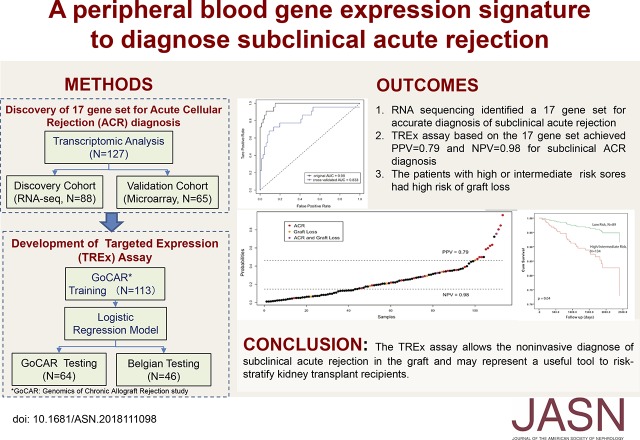
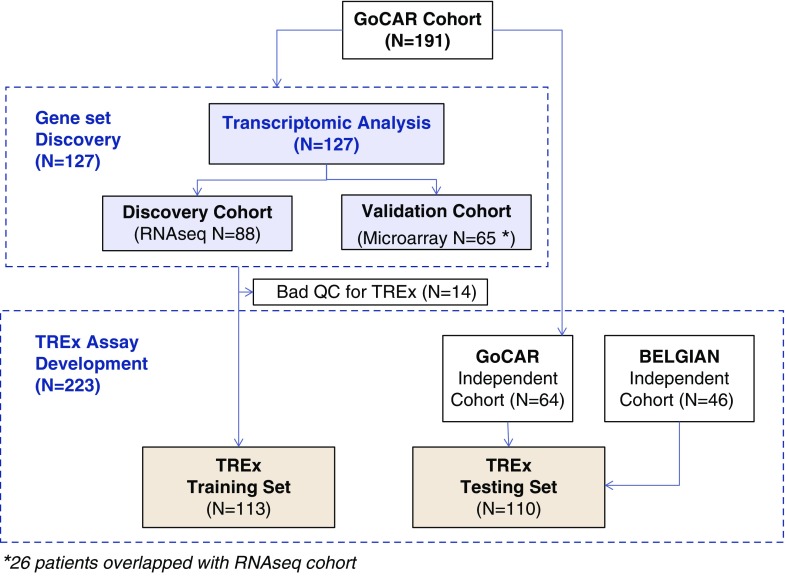
Methods: We examined subclinical histologic and functional changes in kidney transplant recipients from the prospective Genomics of Chronic Allograft Rejection (GoCAR) study who underwent surveillance biopsies over 2 years, identifying those with subclinical or borderline acute cellular rejection (ACR) at 3 months (ACR-3) post-transplant. We performed RNA sequencing on whole blood collected from 88 individuals at the time of 3-month surveillance biopsy to identify transcripts associated with ACR-3, developed a novel sequencing-based targeted expression assay, and validated this gene signature in an independent cohort.
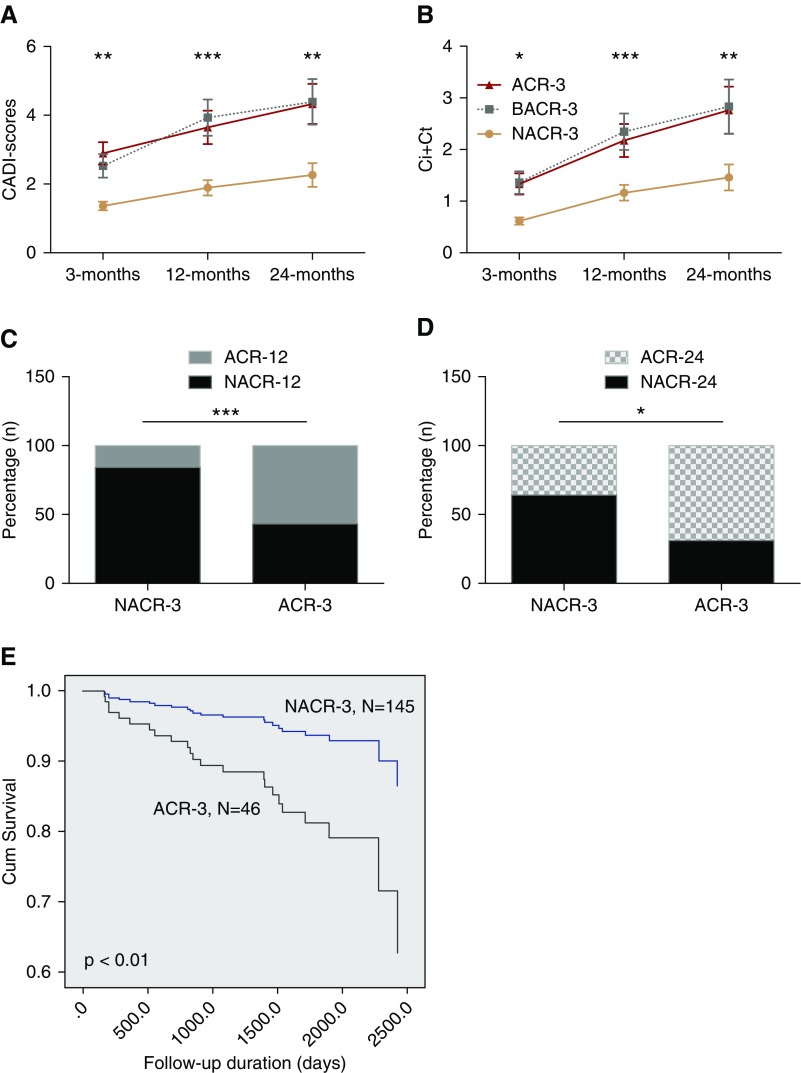
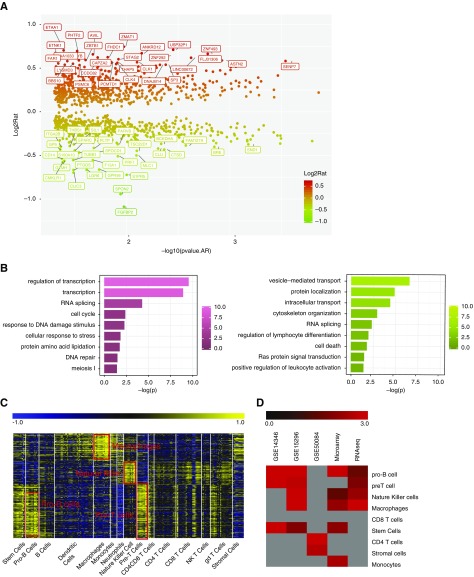
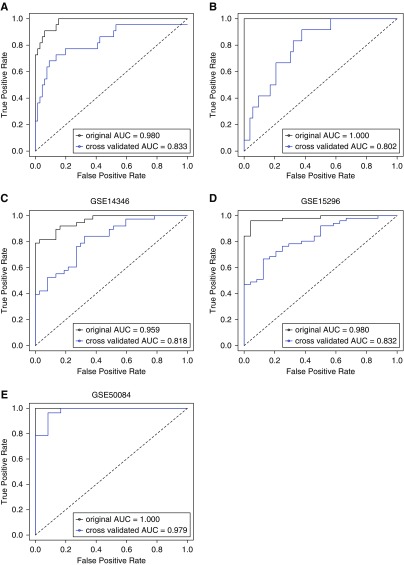
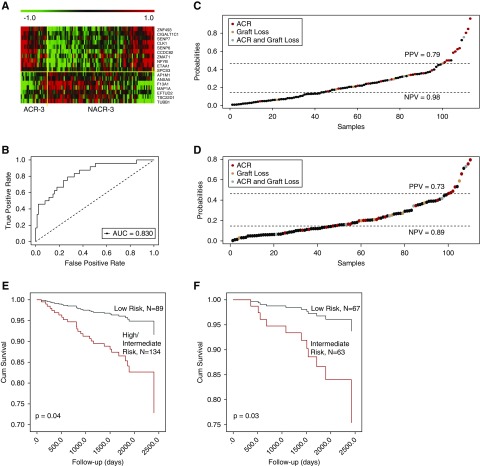
Results: Study participants with ACR-3 had significantly higher risk than those without ACR-3 of subsequent clinical acute rejection at 12 and 24 months, faster decline in graft function, and decreased graft survival in adjusted Cox analysis. We identified a 17-gene signature in peripheral blood that accurately diagnosed ACR-3, and validated it using microarray expression profiles of blood samples from 65 transplant recipients in the GoCAR cohort and three public microarray datasets. In an independent cohort of 110 transplant recipients, tests of the targeted expression assay on the basis of the 17-gene set showed that it identified individuals at higher risk of ongoing acute rejection and future graft loss.
Conclusions: Our targeted expression assay enabled noninvasive diagnosis of subclinical acute rejection and inflammation in the graft and may represent a useful tool to risk-stratify kidney transplant recipients.
Keywords: acute rejection; gene expression; renal transplantation; whole blood.
Copyright © 2019 by the American Society of Nephrology.
Figures
References
-
- Hariharan S, Johnson CP, Bresnahan BA, Taranto SE, McIntosh MJ, Stablein D: Improved graft survival after renal transplantation in the United States, 1988 to 1996. N Engl J Med 342: 605–612, 2000 - PubMed
-
- Pirsch JD, Ploeg RJ, Gange S, D’Alessandro AM, Knechtle SJ, Sollinger HW, et al.: Determinants of graft survival after renal transplantation. Transplantation 61: 1581–1586, 1996 - PubMed
-
- Shishido S, Asanuma H, Nakai H, Mori Y, Satoh H, Kamimaki I, et al.: The impact of repeated subclinical acute rejection on the progression of chronic allograft nephropathy. J Am Soc Nephrol 14: 1046–1052, 2003 - PubMed
Publication types
MeSH terms
Substances
Grants and funding
LinkOut - more resources
Full Text Sources
Medical
Molecular Biology Databases