


Antibacterial Activity of Terpenes and Terpenoids Present in Essential Oils
- PMID: 31284397
- PMCID: PMC6651100
- DOI: 10.3390/molecules24132471
Antibacterial Activity of Terpenes and Terpenoids Present in Essential Oils
Abstract
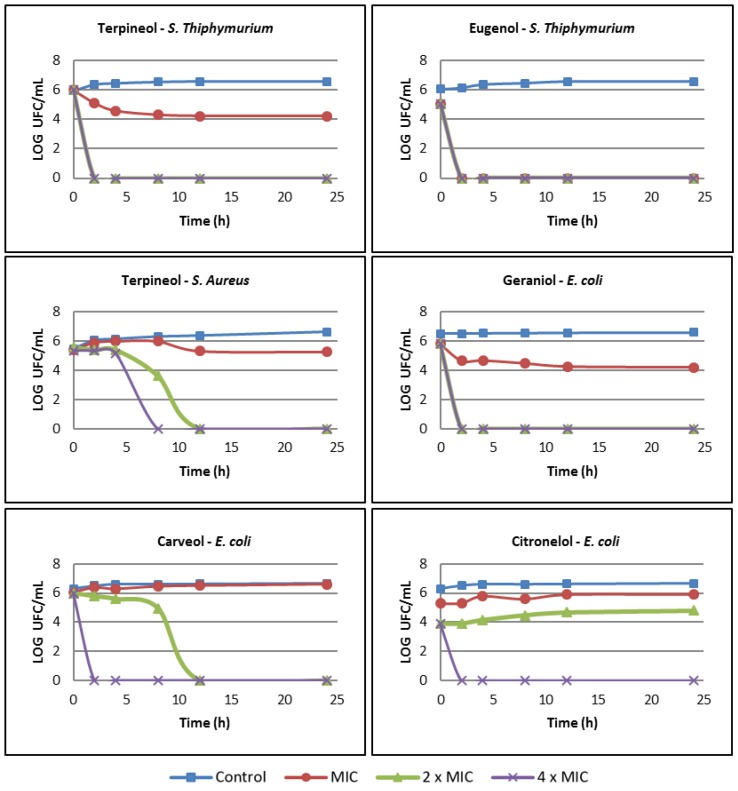
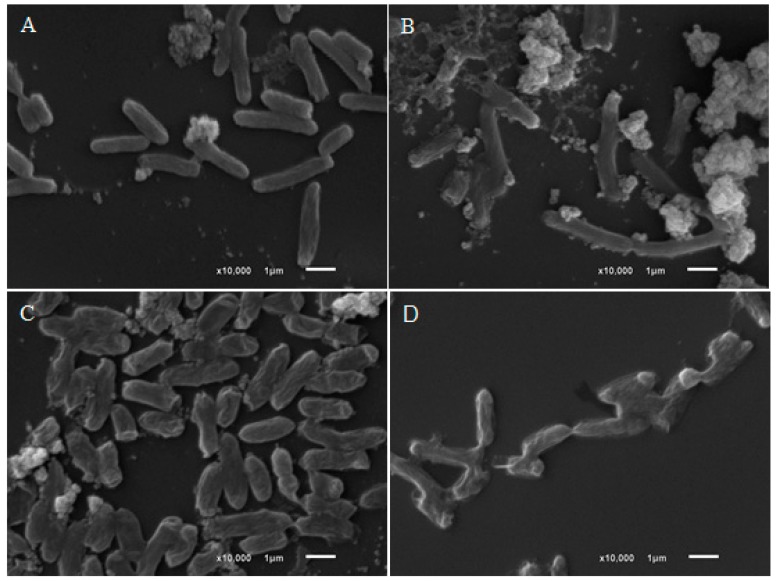
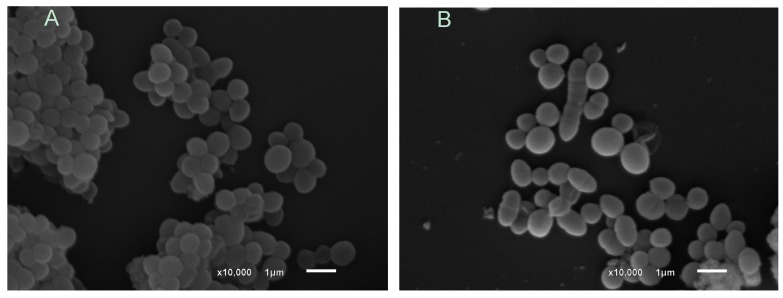
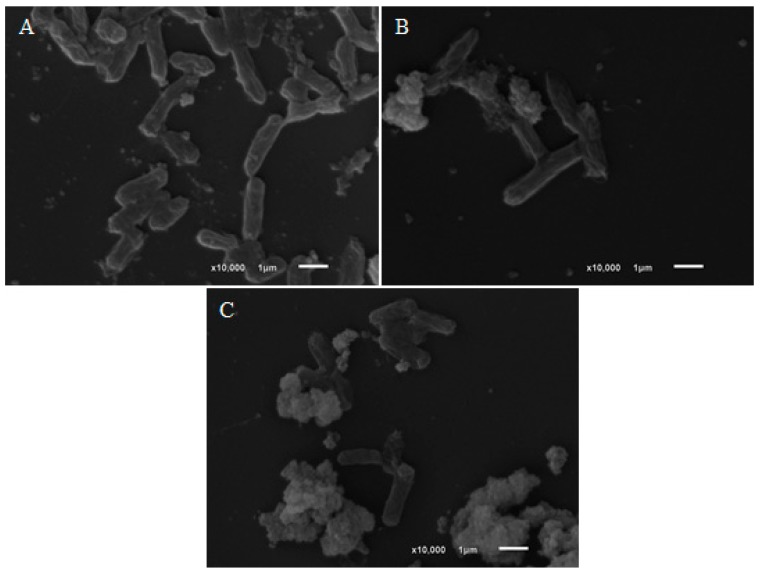
Background: The antimicrobial activity of essential oils has been reported in hundreds of studies, however, the great majority of these studies attribute the activity to the most prevalent compounds without analyzing them independently. Therefore, the aim was to investigate the antibacterial activity of 33 free terpenes commonly found in essential oils and evaluate the cellular ultrastructure to verify possible damage to the cellular membrane. Methods: Screening was performed to select substances with possible antimicrobial activity, then the minimal inhibitory concentrations, bactericidal activity and 24-h time-kill curve studies were evaluated by standard protocols. In addition, the ultrastructure of control and death bacteria were evaluated by scanning electron microscopy. Results: Only 16 of the 33 compounds had antimicrobial activity at the initial screening. Eugenol exhibited rapid bactericidal action against Salmonella enterica serovar Typhimurium (2 h). Terpineol showed excellent bactericidal activity against S. aureus strains. Carveol, citronellol and geraniol presented a rapid bactericidal effect against E. coli. Conclusions: The higher antimicrobial activity was related to the presence of hydroxyl groups (phenolic and alcohol compounds), whereas hydrocarbons resulted in less activity. The first group, such as carvacrol, l-carveol, eugenol, trans-geraniol, and thymol, showed higher activity when compared to sulfanilamide. Images obtained by scanning electron microscopy indicate that the mechanism causing the cell death of the evaluated bacteria is based on the loss of cellular membrane integrity of function. The present study brings detailed knowledge about the antimicrobial activity of the individual compounds present in essential oils, that can provide a greater understanding for the future researches.
Keywords: antimicrobial activity; bacteria; bactericidal; essential oil; terpenes; time kill kinetics.
Conflict of interest statement
The authors declare no conflict of interest.
Figures
References
-
- Iriti M., Colnaghi G., Chemat F., Smadja J., Faoro F., Visinoni F.A. Histo-cytochemistry and scanning electron microscopy of lavander glandular trichomes following conventional and microwave-assisted hydrodistillation of essential oils: A comparative study. Flavour Fragr. J. 2006;21:704–712. doi: 10.1002/ffj.1692. - DOI
-
- IUPAC Compendium of Chemical Terminology-Gold Book: Version 2.3.3 2014-02-24. [(accessed on 2 December 2019)]; Available online: https://goldbook.iupac.org/src/src_PAC1995671307.html.
-
- Tripathi N.N., Kumar N. Putranjiva roxburghii oil-A potential herbal preservative for peanuts during storage. J. Stored Prod. Res. 2007;43:435–442. doi: 10.1016/j.jspr.2006.11.005. - DOI
-
- Pandey A.K., Mohan M., Singh P., Palni U.T., Tripathi N.N. Chemical composition, antibacterial and antioxidant activity of essential oil of Eupatorium adenophorum Spreng. from Eastern Uttar Pradesh, India. Food Biosci. 2014;7:80–87. doi: 10.1016/j.fbio.2014.06.001. - DOI
MeSH terms
Substances
LinkOut - more resources
Full Text Sources
Other Literature Sources
Medical
Molecular Biology Databases
