


On the Origins of a Species: What Might Explain the Rise of Candida auris?
- PMID: 31284576
- PMCID: PMC6787658
- DOI: 10.3390/jof5030058
On the Origins of a Species: What Might Explain the Rise of Candida auris?
Abstract
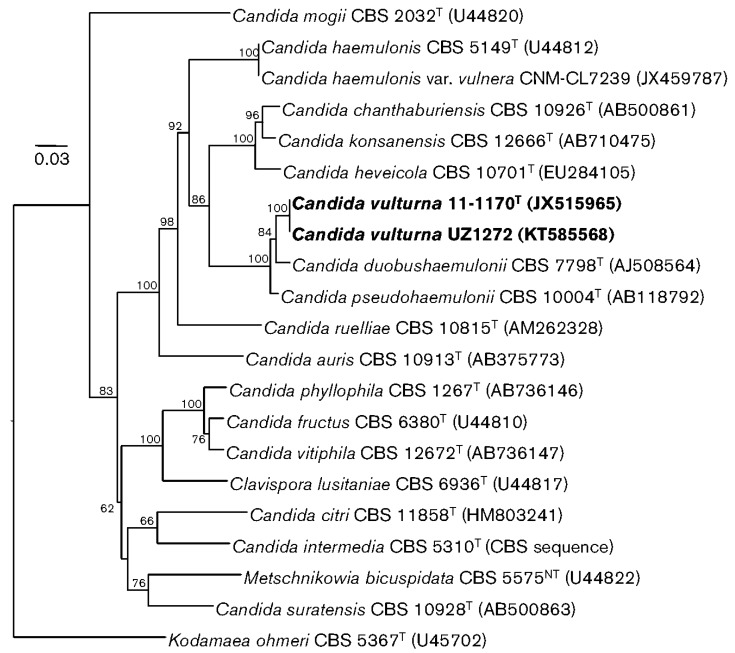
Candida auris is an emerging multidrug-resistant yeast first described in 2009 that has since caused healthcare-associated outbreaks of severe human infections around the world. In some hospitals, it has become a leading cause of invasive candidiasis. C. auris is markedly different from most other pathogenic Candida species in its genetics, antifungal resistance, and ability to spread between patients. The reasons why this fungus began spreading widely in the last decade remain a mystery. We examine available data on C. auris and related species, including genomic epidemiology, phenotypic characteristics, and sites of detection, to put forth hypotheses on its possible origins. C. auris has not been detected in the natural environment; related species have been detected in in plants, insects, and aquatic environments, as well as from human body sites. It can tolerate hypersaline environments and higher temperatures than most Candida species. We explore hypotheses about the pre-emergence niche of C. auris, whether in the environmental or human microbiome, and speculate on factors that might have led to its spread, including the possible roles of healthcare, antifungal use, and environmental changes, including human activities that might have expanded its presence in the environment or caused increased human contact.
Keywords: Candida auris; ecological niche; emerging infections; fungal infection; yeast.
Conflict of interest statement
The authors declare no conflict of interest.
Figures
Comment in
-
Global warming "heating up" the ICU through Candida auris infections: the climate changes theory.Crit Care. 2019 Dec 19;23(1):416. doi: 10.1186/s13054-019-2702-4. Crit Care. 2019. PMID: 31856873 Free PMC article. No abstract available.
References
-
- Clinical Alert to U.S. Healthcare Facilities—June 2016|CDC. [(accessed on 6 June 2019)]; Available online: https://www.cdc.gov/fungal/candida-auris/candida-auris-alert.html.
-
- Candida auris Identified in England. [(accessed on 6 June 2019)]; Available online: https://www.gov.uk/government/publications/candida-auris-emergence-in-en....
-
- 3 October 2016: Candida auris Outbreaks in Health Care Services—Epidemiological Alert|PAHO WHO. [(accessed on 6 June 2019)]; Available online: https://www.paho.org/hq/index.php?option=com_content&view=article&id=125....
-
- Magobo R.E., Naicker S.D., Wadula J., Nchabeleng M., Coovadia Y., Hoosen A., Lockhart S.R., Govender N.P. TRAC-South Africa group. Detection of neonatal unit clusters of Candida parapsilosis fungaemia by microsatellite genotyping: Results from laboratory-based sentinel surveillance, South Africa, 2009–2010. Mycoses. 2017;60:320–327. doi: 10.1111/myc.12596. - DOI - PubMed
LinkOut - more resources
Full Text Sources
Other Literature Sources
