. 2019 Jul 7;9(7):261.
doi: 10.3390/biom9070261.

Ameliorative Effect of Beta vulgaris Root Extract on Chlorpyrifos-Induced Oxidative Stress, Inflammation and Liver Injury in Rats

Affiliations

Ameliorative Effect of Beta vulgaris Root Extract on Chlorpyrifos-Induced Oxidative Stress, Inflammation and Liver Injury in Rats

Gadah Albasher et al. Biomolecules. .

Abstract

Exposure to organophosphorus insecticides causes several health problems to animals and humans. Red beetroot (RBR) is rich in antioxidant ingredients and possesses a promising hepatoprotective activity. This study evaluated the potential of RBR extract to prevent chlorpyrifos (CPF)-induced liver injury, with an emphasis on oxidative stress, inflammation and apoptosis. Rats received 10 mg/kg CPF and were treated with 300 mg/kg RBR extract for 28 days. CPF caused liver injury evidenced by elevated serum levels of serum alanine aminotransferase (ALT), aspartate aminotransferase (AST), alkaline phosphatase (ALP) and bilirubin, along with several histological alterations. Hepatic lipid peroxidation (LPO) and nitric oxide (NO) levels, as well as inducible nitric oxide synthase (iNOS) and pro-inflammatory cytokines were increased in CPF-intoxicated rats. RBR prevented CPF-induced histological alterations, and ameliorated liver function, LPO, NO, iNOS and pro-inflammatory cytokines. RBR boosted glutathione and antioxidant enzymes, and increased Nrf2 expression. In addition, RBR diminished Bax and caspase-3, and increased Bcl-2 expression. In conclusion, RBR prevented CPF-induced liver injury via attenuation of oxidative stress, inflammation and apoptosis. RBR enhanced antioxidant defenses, suggesting that it could be used as a potential therapeutic intervention to minimize CPF hepatotoxicity.

Keywords: Nrf2; apoptosis; chlorpyrifos; oxidative stress; red beetroot.


Conflict of interest statement

The authors declare no conflict of interest.

Figures
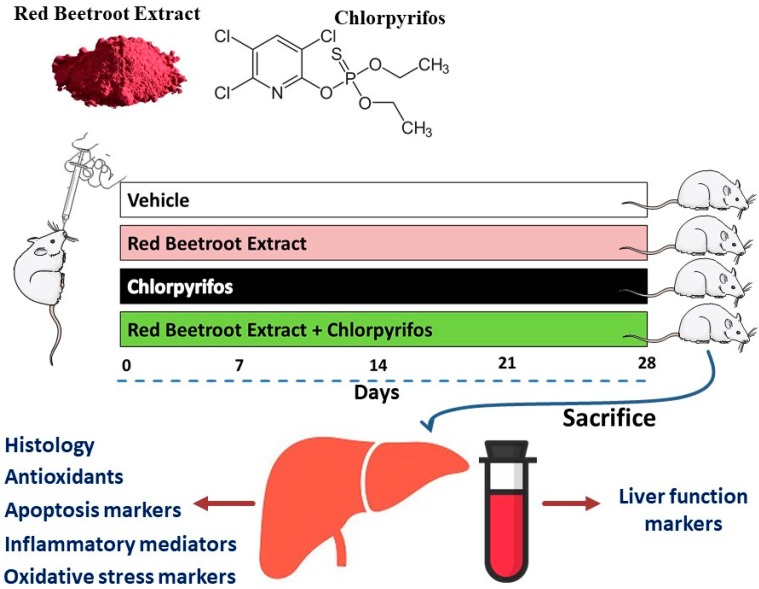
Figure 1
Figure 1
A schematic diagram showing the experimental design.
Figure 2
Figure 2
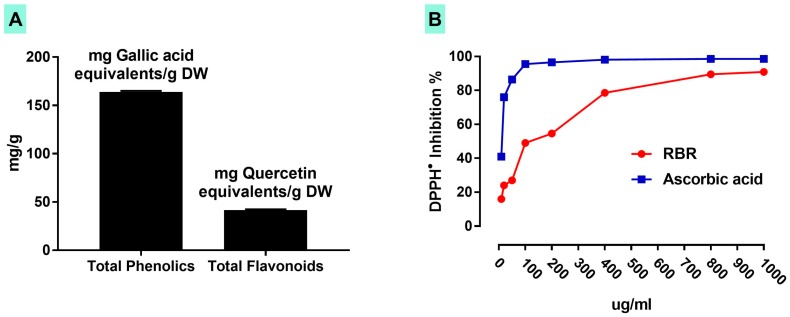
Total phenolics and flavonoids content (A) and DPPH• scavenging activity of red beetroot (RBR) extract (B). Data are the mean values of triplicate and expressed as mean ± SD.
Figure 3
Figure 3
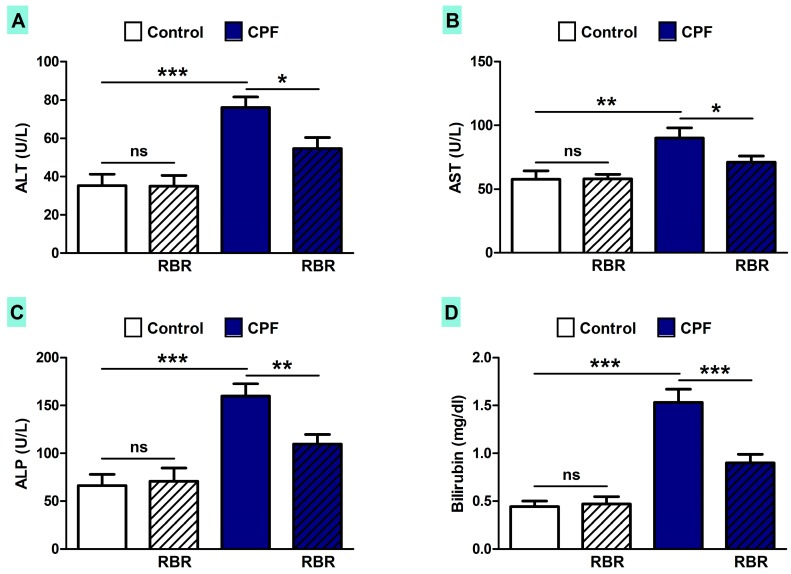
RBR prevents liver injury in chlorpyrifos (CPF)-induced rats. RBR ameliorates serum (A) ALT, (B) AST, (C) ALP and (D) bilirubin in CPF-intoxicated rats. Data are mean ± SD, (N = 7). * p < 0.05, ** p < 0.01 and *** p < 0.001. ns = non-significant.
Figure 4
Figure 4
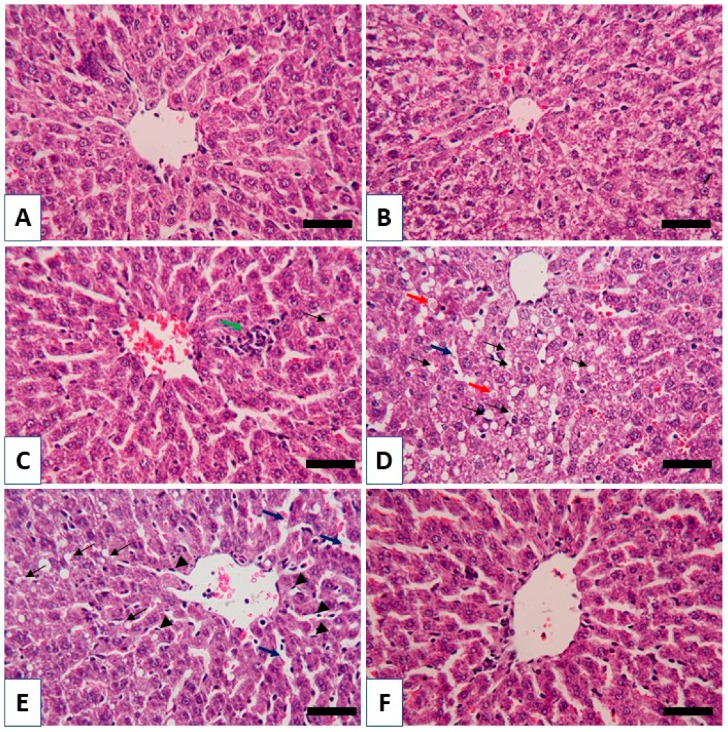
RBR inhibits histological alterations in CPF-intoxicated rats. Photomicrographs of sections in liver of (A) control, (B) RBR-supplemented groups showing normal hepatic lobules and hepatocytes, (CE) CPF-intoxicated rats showing leukocyte infiltration (green arrow), vacuolations (black arrow), cytoplasmic vacuolations with eosinophilic substance (red arrow), dilated sinusoids (blue arrow) and Kupffer cells (arrow head) and (F) CPF-intoxicated rats treated with RBR showing no histological alterations. (X400, Scale bar 50 µm.).
Figure 5
Figure 5
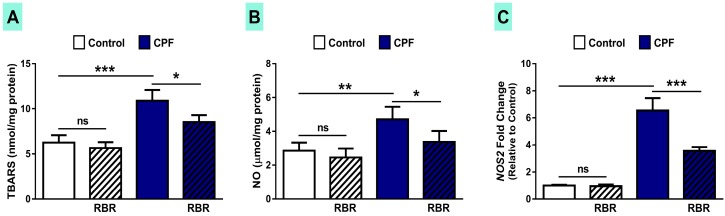
RBR prevents oxidative/nitrative stress and down-regulates iNOS in CPF-induced rats. RBR diminishes (A) TBARS, (B) NO and (C) iNOS mRNA expression in the liver of CPF-intoxicated rats. Data are mean ± SD, (N = 7). * p < 0.05, ** p < 0.01 and *** p < 0.001. ns = non-significant.
Figure 6
Figure 6
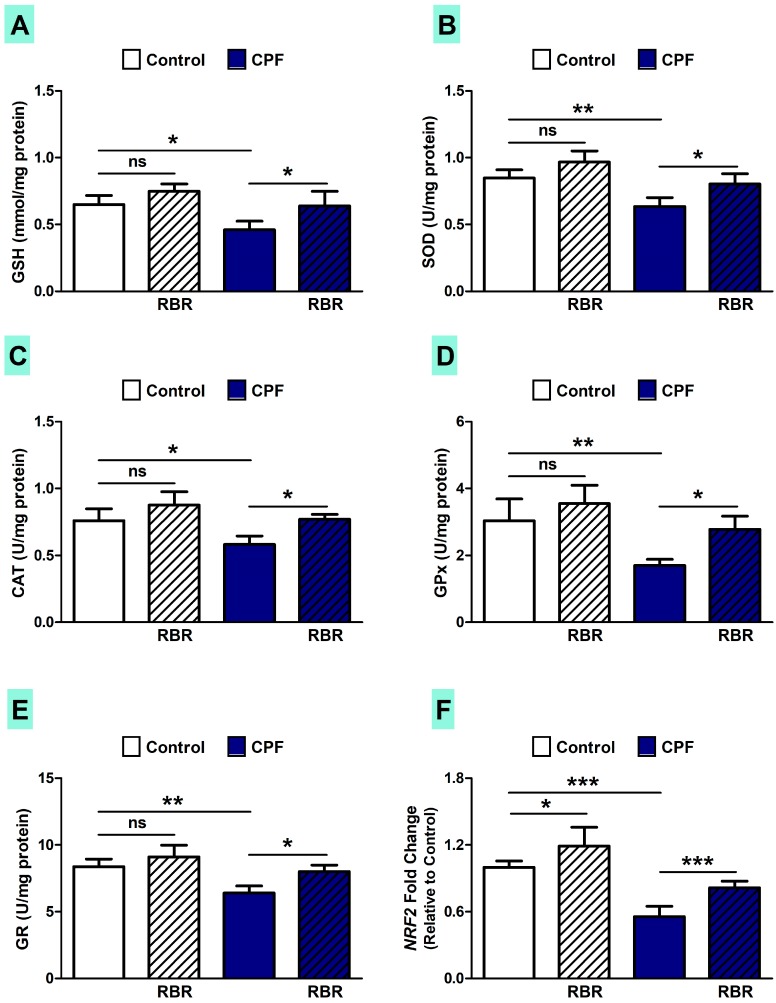
RBR enhances cellular antioxidants and up-regulates Nrf2 in control and CPF-induced rats. RBR increases (A) GSH content, and activity of (B) SOD, (C) CAT, (D) GPx and (E) GR in the liver of CPF-intoxicated rats. (F) RBR increased hepatic Nrf2 expression. Data are mean ± SD, (N = 7). * p < 0.05, ** p < 0.01 and *** p < 0.001. ns = non-significant.
Figure 7
Figure 7
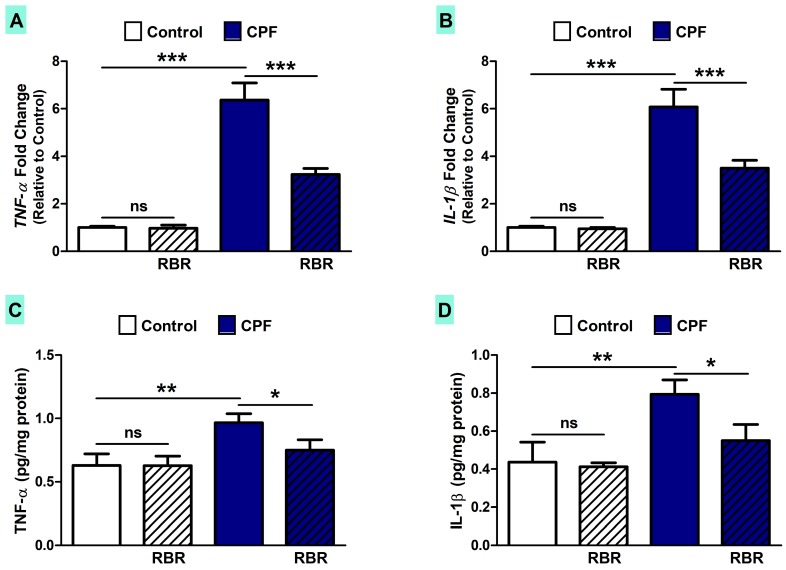
RBR attenuates inflammation in CPF-intoxicated rats. RBR decreases the gene (A and B) and protein expression (C and D) of TNF-α and IL-1β in the liver of CPF-intoxicated rats. Data are mean ± SD, (N = 7). * p < 0.05, ** p < 0.01 and *** p < 0.001. ns = non-significant.
Figure 8
Figure 8
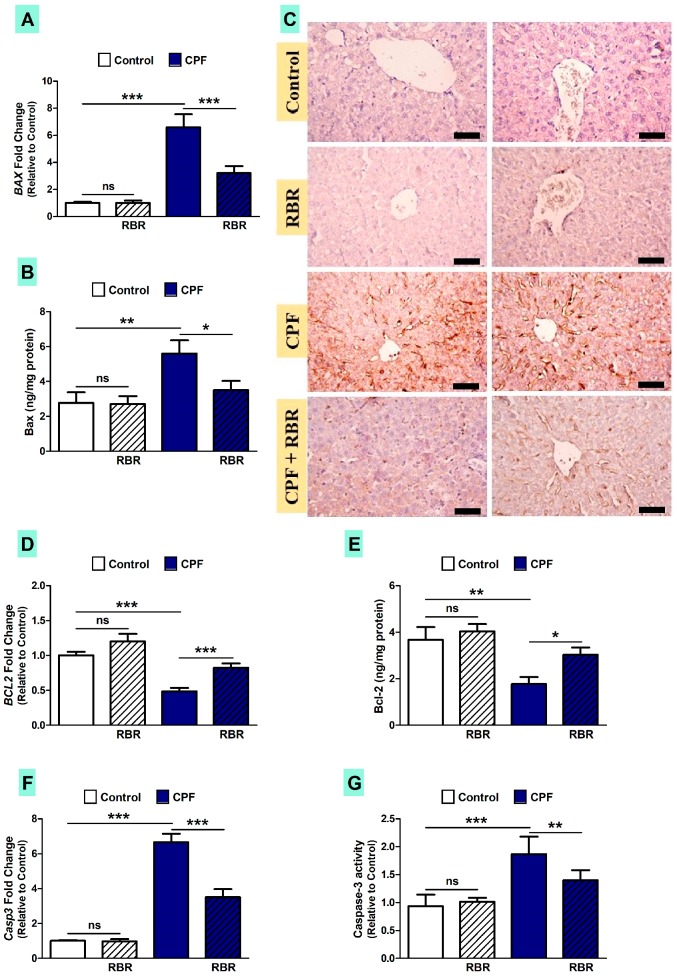
RBR mitigates apoptosis in CPF-induced rats. RBR decreases Bax mRNA (A) and protein (B) and caspase-3 (F and G). (C) Photomicrographs of the immunohistochemical staining of Bax showing increased Bax in the liver of CPF-intoxicated rats and the alleviative effect of RBR. (400×, Scale bar 50 µm). (D and E) RBR increased Bcl-2 in CPF-intoxicated rats. Data are mean ± SD, (N = 7). * p < 0.05, ** p < 0.01 and *** p < 0.001. ns = non-significant.
Figure 9
Figure 9
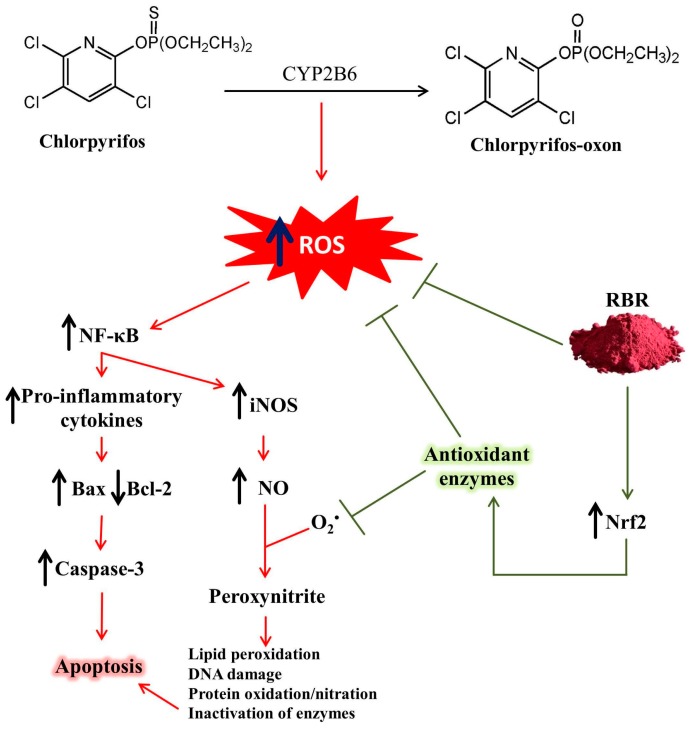
A proposed schematic diagram illustrating the protective mechanism of RBR against CPF hepatotoxicity.

References

    1. Suratman S., Edwards J.W., Babina K. Organophosphate pesticides exposure among farmworkers: Pathways and risk of adverse health effects. Rev. Environ. Health. 2015;30:65–79. - PubMed
    1. Peter J.V., Sudarsan T.I., Moran J.L. Clinical features of organophosphate poisoning: A review of different classification systems and approaches. Indian J. Crit. Care Med. Peer-Rev. Off. Publ. Indian Soc. Crit. Care Med. 2014;18:735–745. doi: 10.4103/0972-5229.144017. - DOI - PMC - PubMed
    1. Nurulain S.M. Different approaches to acute organophosphorus poison treatment. Jpma. J. Pak. Med Assoc. 2012;62:712–717. - PubMed
    1. Uzun F.G., Kalender Y. Chlorpyrifos induced hepatotoxic and hematologic changes in rats: The role of quercetin and catechin. Food Chem. Toxicol. Int. J. Publ. Br. Ind. Biol. Res. Assoc. 2013;55:549–556. doi: 10.1016/j.fct.2013.01.056. - DOI - PubMed
    1. Tanvir E.M., Afroz R., Chowdhury M., Gan S.H., Karim N., Islam M.N., Khalil M.I. A model of chlorpyrifos distribution and its biochemical effects on the liver and kidneys of rats. Hum. Exp. Toxicol. 2016;35:991–1004. doi: 10.1177/0960327115614384. - DOI - PubMed

Publication types

MeSH terms