BAP1 Loss Is Associated with DNA Methylomic Repatterning in Highly Aggressive Class 2 Uveal Melanomas
- PMID: 31285370
- PMCID: PMC6744995
- DOI: 10.1158/1078-0432.CCR-19-0366
BAP1 Loss Is Associated with DNA Methylomic Repatterning in Highly Aggressive Class 2 Uveal Melanomas
Abstract
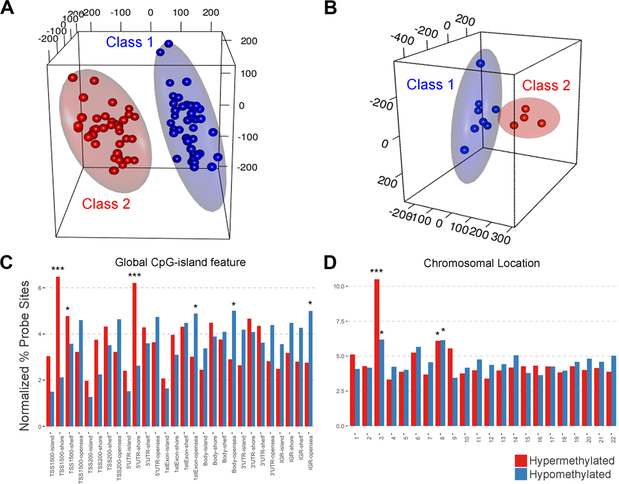
Purpose: The strong association between BAP1 mutations and metastasizing Class 2 uveal melanoma (UM) suggests that epigenetic alterations may play a significant role in tumor progression. Thus, we characterized the impact of BAP1 loss on the DNA methylome in UM.Experimental Design: Global DNA methylation was analyzed in 47 Class 1 and 45 Class 2 primary UMs and in UM cells engineered to inducibly deplete BAP1. RNA-Seq was analyzed in 80 UM samples and engineered UM cells.
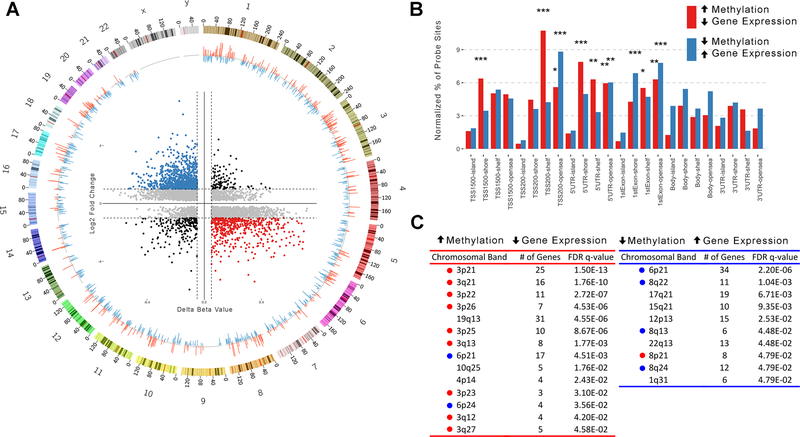
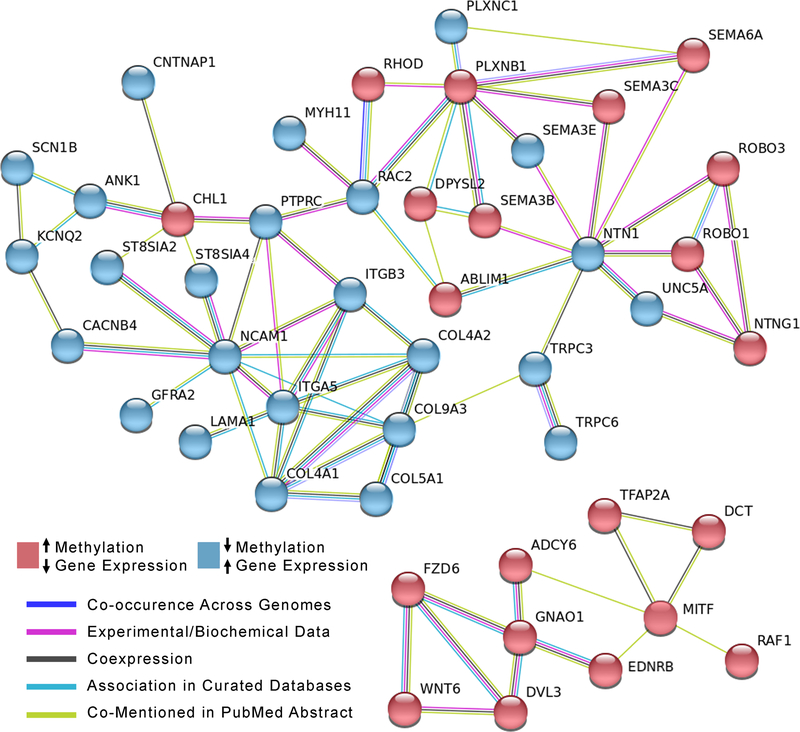
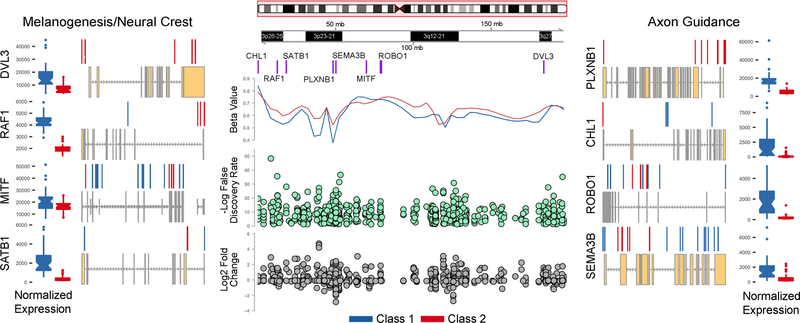
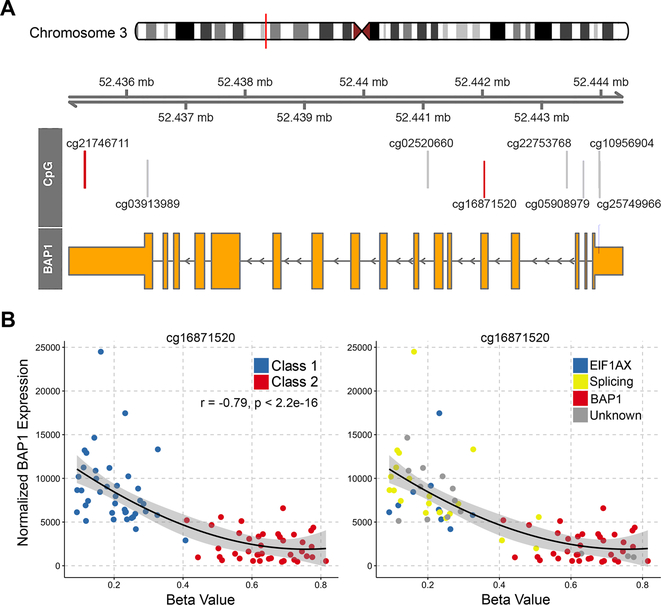
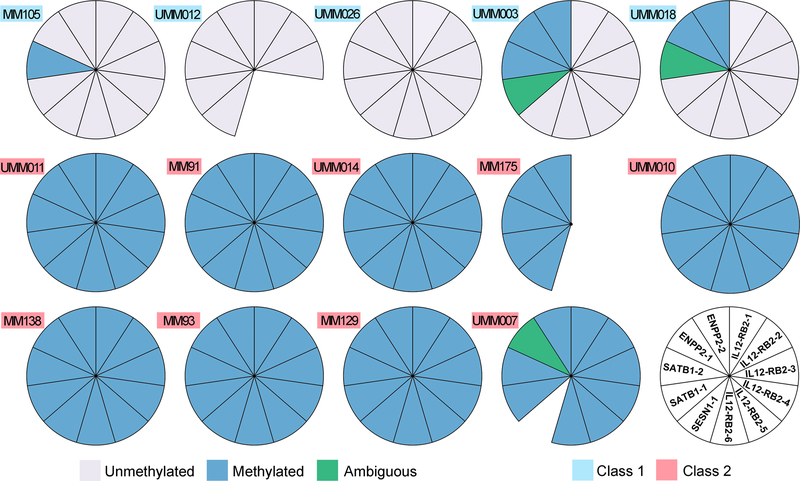
Results: Hypermethylation on chromosome 3 correlated with downregulated gene expression at several loci, including 3p21, where BAP1 is located. Gene set analysis of hypermethylated and downregulated genes identified axon guidance and melanogenesis as deregulated pathways, with several of these genes located on chromosome 3. A novel hypermethylated site within the BAP1 locus was found in all Class 2 tumors, suggesting that BAP1 itself is epigenetically regulated. Highly differentially methylated probes were orthogonally validated using bisulfite sequencing, and they successfully distinguished Class 1 and Class 2 tumors in 100% of cases. In functional validation experiments, BAP1 knockdown in UM cells induced methylomic repatterning similar to UM tumors, enriched for genes involved in axon guidance, melanogenesis, and development.
Conclusions: This study, coupled with previous work, suggests that the initial event in the divergence of Class 2 UM from Class 1 UM is loss of one copy of chromosome 3, followed by mutation of BAP1 on the remaining copy of chromosome 3, leading to the methylomic repatterning profile characteristic of Class 2 UMs.
©2019 American Association for Cancer Research.
Conflict of interest statement
Conflicts of Interest: Dr. Harbour is an inventor of intellectual property discussed in this study. He is a paid consultant for Castle Biosciences, licensee of this intellectual property, and he receives royalties from its commercialization. All remaining authors declare no competing financial interests.
Figures
References
-
- Ramaiya KJ, Harbour JW. Current management of uveal melanoma. Expert Review of Ophthalmology 2007;2(6):939–46 doi doi: 10.1586/17469899.2.6.939. - DOI
-
- Tschentscher F, Husing J, Holter T, Kruse E, Dresen IG, Jockel KH, et al. Tumor classification based on gene expression profiling shows that uveal melanomas with and without monosomy 3 represent two distinct entities. Cancer Res 2003;63(10):2578–84. - PubMed
-
- van Gils W, Lodder EM, Mensink HW, Kilic E, Naus NC, Bruggenwirth HT, et al. Gene expression profiling in uveal melanoma: two regions on 3p related to prognosis. Invest Ophthalmol Vis Sci 2008;49(10):4254–62. - PubMed
Publication types
MeSH terms
Substances
Grants and funding
LinkOut - more resources
Full Text Sources
Other Literature Sources
Medical
Molecular Biology Databases
Research Materials