. 2019 Aug;25(8):1274-1279.
doi: 10.1038/s41591-019-0492-5. Epub 2019 Jul 8.

Genome-wide association study of peripheral artery disease in the Million Veteran Program

Affiliations

Genome-wide association study of peripheral artery disease in the Million Veteran Program

Derek Klarin et al. Nat Med. 2019 Aug.

Abstract

Peripheral artery disease (PAD) is a leading cause of cardiovascular morbidity and mortality; however, the extent to which genetic factors increase risk for PAD is largely unknown. Using electronic health record data, we performed a genome-wide association study in the Million Veteran Program testing ~32 million DNA sequence variants with PAD (31,307 cases and 211,753 controls) across veterans of European, African and Hispanic ancestry. The results were replicated in an independent sample of 5,117 PAD cases and 389,291 controls from the UK Biobank. We identified 19 PAD loci, 18 of which have not been previously reported. Eleven of the 19 loci were associated with disease in three vascular beds (coronary, cerebral, peripheral), including LDLR, LPL and LPA, suggesting that therapeutic modulation of low-density lipoprotein cholesterol, the lipoprotein lipase pathway or circulating lipoprotein(a) may be efficacious for multiple atherosclerotic disease phenotypes. Conversely, four of the variants appeared to be specific for PAD, including F5 p.R506Q, highlighting the pathogenic role of thrombosis in the peripheral vascular bed and providing genetic support for Factor Xa inhibition as a therapeutic strategy for PAD. Our results highlight mechanistic similarities and differences among coronary, cerebral and peripheral atherosclerosis and provide therapeutic insights.


Figures
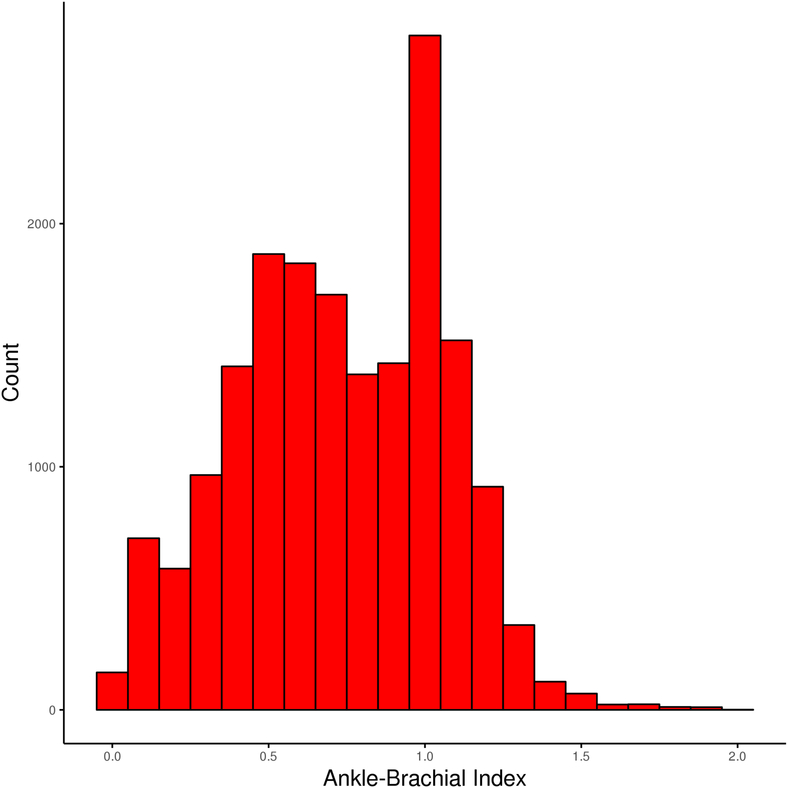
Extended Data Figure 1 -
Distribution of minimum ankle-brachial index values in the Million Veteran Program Histogram of minimum ankle-brachial index (ABI) values extracted from the electronic health record for 17,861 participants of the Million Veteran Program. These values, restricted to those with an minimum ABI of < 1.4, were used for the subsequent ABI genome-wide association study.
Extended Data Figure 2 -
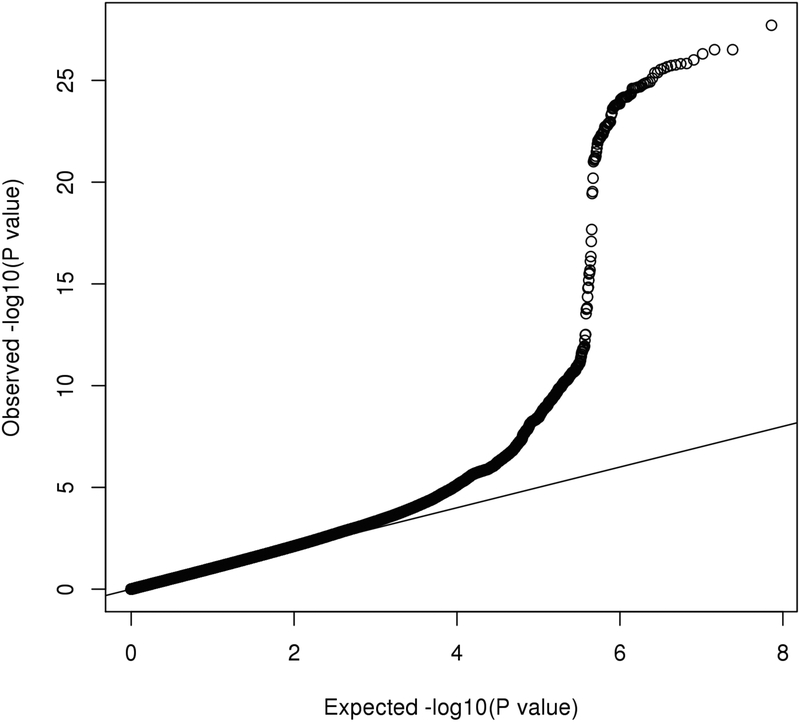
Quantile-quantile plot for the discovery trans-ethnic PAD GWAS in MVP The expected logistic regression association P values versus the observed distribution of P values for PAD association are displayed. Quantile-quantile plots were inspected for ancestry-specific analyses, and genomic control values were < 1.20 for each racial group (data not shown). No systemic inflation was observed (λgc = 1.05). All P values were two-sided. Abbreviations: PAD, Peripheral Artery Disease; GWAS, Genome-wide Association Study; MVP, Million Veteran Program
Extended Data Figure 3 -
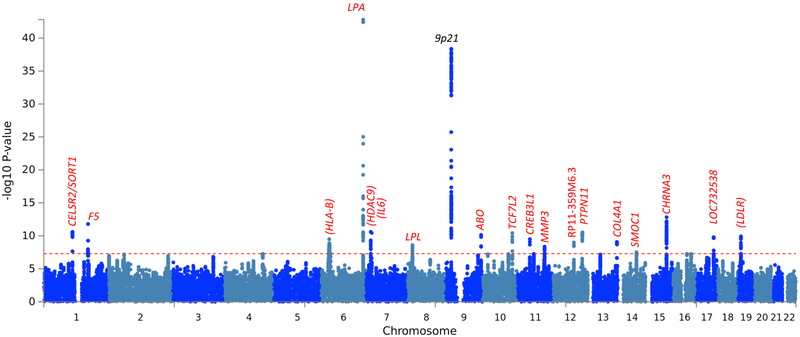
Manhattan plot for the PAD GWAS Plot of -log10(P) for association of imputed variants by chromosomal position for all autosomal polymorphisms analyzed in the PAD GWAS. The genes nearest to the top associated variants are displayed. Genes highlighted in red represent novel PAD loci (18). Genes for variants that are outside the transcript boundary of a protein-coding gene are shown with nearest candidate gene in parentheses [eg, (LDLR)]. Logistic regression two-sided P values are displayed. Abbreviations: PAD, Peripheral artery disease; GWAS, genome-wide association study
Extended Data Figure 4 -
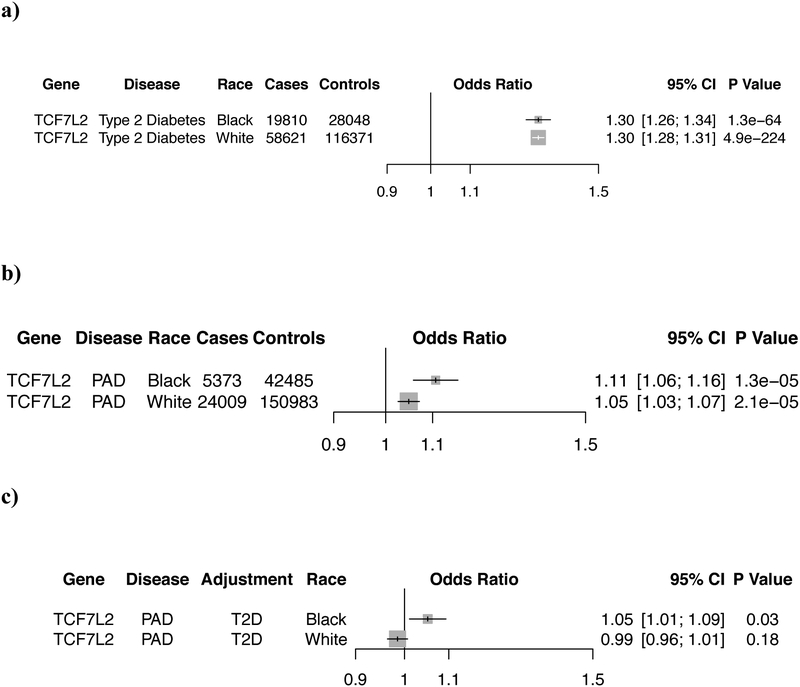
TCF7L2 mediates its effect on PAD via type 2 diabetes a) Forest plot depicting the replication of the known TCF7L2/rs7903146-T2D association signal in MVP for both white and black participants. b) The same variant is also associated with PAD risk in whites and blacks in MVP. However, when controlling for T2D status in the regression model, c) the association signal is dramatically reduced suggesting that TCF7L2 PAD risk is mediated through its effect on T2D. Logistic regression two-sided values of P are displayed. Abbreviations: MVP, Million Veteran Program; PAD, Peripheral Artery Disease; T2D, Type 2 Diabetes
Extended Data Figure 5 -
Forest plot for association of the CHRNA3 locus and peripheral artery disease risk stratified by smoking status When stratifying European MVP participants by smoking status (ever smokers vs. never smokers), nearly all the association signal resides within the ever smoker group. Previous reports of variation at the CHRNA3 locus demonstrate that carriers of the PAD risk allele have a reduced likelihood of cigarette smoking cessation1. This suggests that the PAD-CHRNA3 association is driven by a greater burden of tobacco exposure in those who carry the nicotine dependence/PAD risk allele. Logistic regression two-sided values of P are displayed. Abbreviations: MVP, Million Veteran Program; PAD, Peripheral Artery Disease
Extended Data Figure 6 -
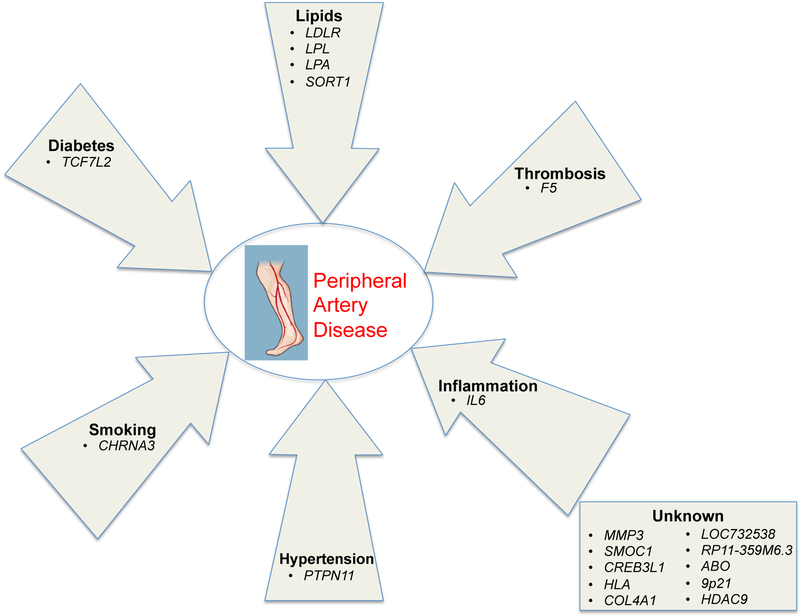
Peripheral artery disease risk loci and known causal risk factors Peripheral artery disease risk loci identified in this GWAS analysis are depicted along with the plausible relationship to the underling causal risk factor. Loci names are based on the nearest genes; however, the causal gene(s) remains unclear for some associated loci and as such, the resultant annotation may prove incorrect in some cases. Abbreviations: GWAS, Genome-wide Association Study
Extended Data Figure 7 -
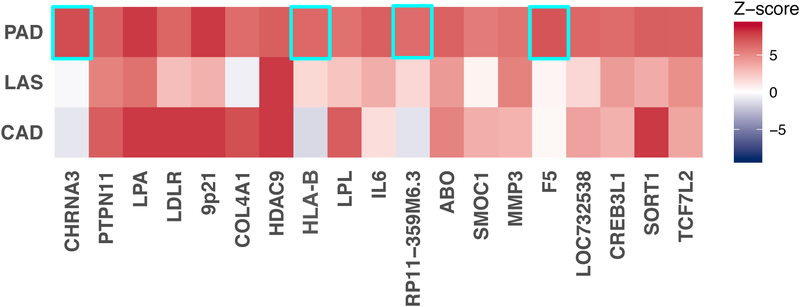
Peripheral artery disease risk variants and association with LAS and CAD For the 19 PAD risk variants identified in our study, logistic regression Z-scores of association (aligned to the PAD risk allele) were obtained from MVP and publicly available summary statistics for large artery stroke (MVP + MEGASTROKE consortium2) and coronary artery disease (MVP + CARDIoGRAMplusC4D consortium3). A positive Z-score (red) indicates a positive association between the PAD risk allele and the disease, while a negative Z-score (blue) indicates an inverse association. Boxes are outlined in cyan if the variant is uniquely associated with PAD (two-sided PPAD < 5 ×10⁻⁸, PCAD & PLAS > 0.05). Abbreviations: PAD, Peripheral Artery Disease; LAS, Large Artery Stroke; CAD, Coronary Artery Disease
Extended Data Figure 8 -
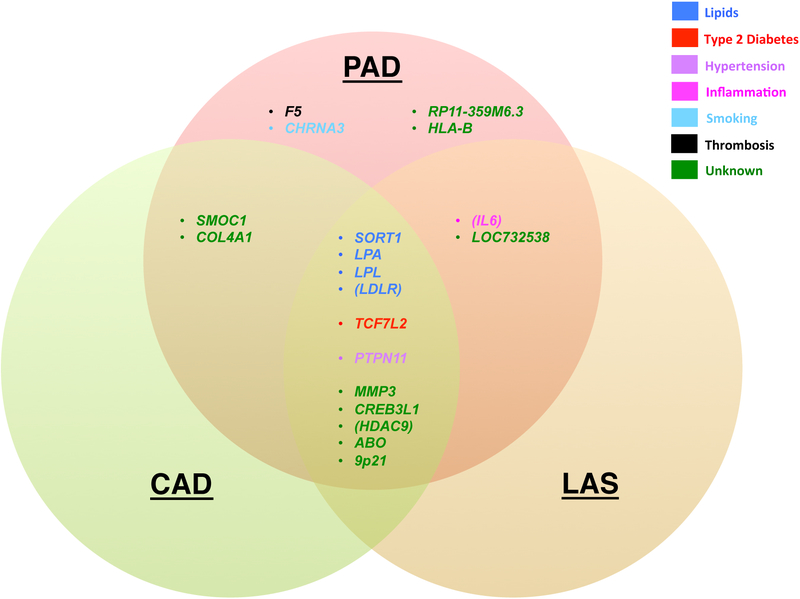
Peripheral artery disease risk variants and mechanistic overlap with LAS and CAD Venn diagram of each of the 19 PAD risk loci in a based on their association with PAD (two-sided PPAD < 5 ×10⁻⁸), CAD (P < 0.05), and LAS (P < 0.05). Each locus is depicted along with the plausible relationship to the underling causal risk factor separately by color. Loci names are based on the nearest genes; however, the causal gene(s) remains unclear for some associated loci and as such, the resultant annotation may prove incorrect in some cases. Abbreviations: PAD, Peripheral Artery Disease; LAS, Large Artery Stroke; CAD, Coronary Artery Disease
Extended Data Figure 9 -
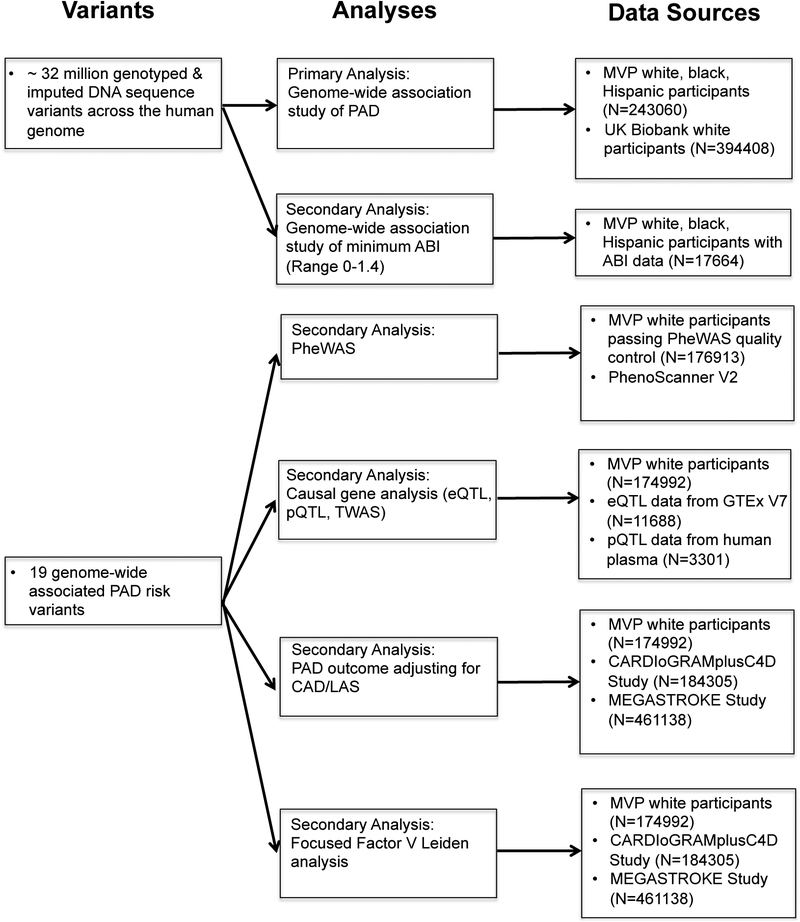
Overall study design The primary analysis consisted of a genome-wide association study to identify novel PAD risk variants. Secondary analyses involved a genome-wide association study of minimum ABI, a closer examination the 19 PAD risk variants through PheWAS, a candidate causal gene analysis using eQTL/pQTL/TWAS data, a PAD analysis accounting for CAD/LAS status, and a focused Factor V Leiden analysis. Abbreviations: MVP, Million Veteran Program; PAD, Peripheral artery disease; ABI, Ankle-Brachial Index; CAD, Coronary Artery Disease; LAS, Large Artery Stroke; PheWAS, Phenome-wide Association Study
Extended Data Figure 10 -
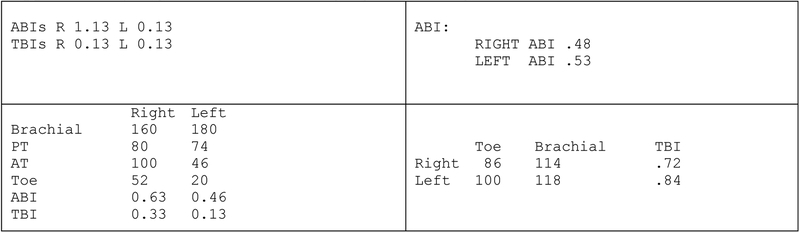
Natural Language Processing for index extraction Examples of semi-structured text that contains targeted indices for extraction using Natural Language Processing (NLP) Abbreviations: ABI, Ankle-Brachial Index; TBI, Toe-Brachial Index; PT, Posterior Tibial Artery; AT, Anterior Tibial Artery
Figure 1.
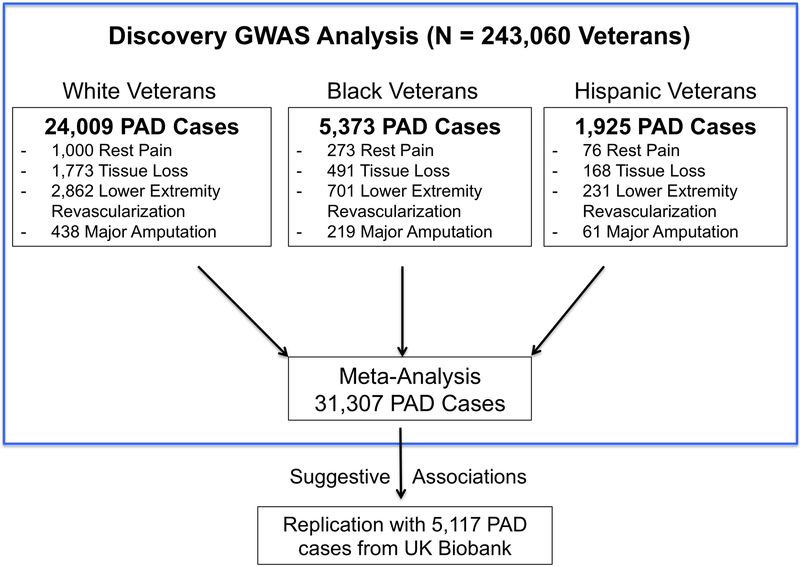
Figure 1.. Discovery study design for the peripheral artery disease genome-wide association analysis
Electronic health record based phenotyping identified 31,307 PAD cases of varying severity, as depicted in the upper row of boxes, in the Million Veteran Program. The association of DNA sequence variants with PAD was tested separately in 3 mutually exclusive ancestry groups and the results combined using an inverse-variance weighted fixed effects meta-analysis in the discovery phase. Variants with suggestive association (two-sided logistic regression P < 10−6) were then brought forward for independent replication in the UK Biobank. Abbreviations: GWAS, genome-wide association study; PAD, Peripheral Artery Disease
Figure 2.
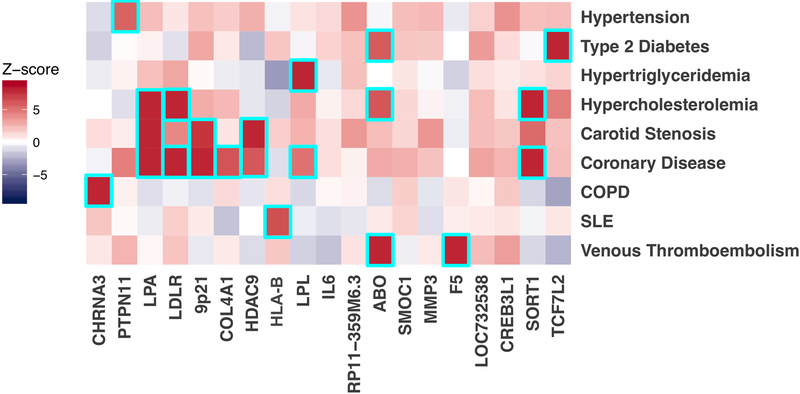
Figure 2.. Representative heatmap of phenome-wide association results and biologic pathways underlying genetic loci associated with peripheral artery disease.
Logistic regression Z-scores (aligned to the PAD risk allele) from the MVP PheWAS analysis (N = 176,913) or publically available PheWAS results from PhenoScanner 2.0 (variable N, see Supplementary Table 23) are shown for the associations between the 19 PAD risk loci and representative disease traits. A positive Z-score (red) indicates a positive association between the PAD risk allele and the disease, whereas a negative Z-score (blue) indicates an inverse association. Boxes are outlined in cyan if the variant is associated with the indicated disease at genome-wide significance (logistic regression two-sided P < 5.0 ×10⁻⁸). Abbreviations: COPD, chronic obstructive pulmonary disease; SLE, Systemic Lupus Erythematosus
Figure 3.
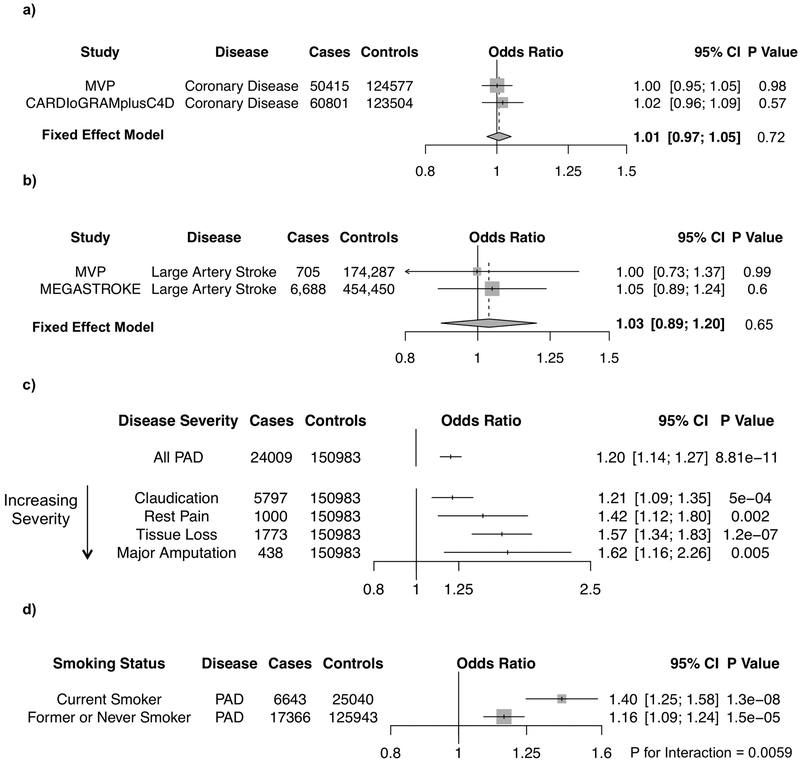
Figure 3.. Factor V Leiden mutation and vascular disease.
(ad) The association of the thrombophilic Factor V Leiden variant, F5 p.R506Q, with different types of vascular disease were analyzed, as depicted in forest plots. Associations are shown with CAD (a) and LAS (b) using MVP and GWAS meta-analysis data (either CARDIoGRAM plusC4D or MEGASTROKE, respectively) that was combined using an fixed-effects, inverse-variance weighted meta-analysis. Associations with all PAD cases, as well as PAD cases of increasing severity (c), and PAD cases stratified by smoking status (d) among European ancestry MVP participants are shown. Two-sided logistic regression P values are displayed. Gray boxes reflect the inverse-variance weight for each study or subgroup. Abbreviations: CI, Confidence Interval; CAD, Coronary Artery Disease; LAS, Large Artery Stroke; PAD, Peripheral Artery Disease; MVP, Million Veteran Program; GWAS, Genome-wide Association Study

References

    1. GBD 2016 Causes of Death Collaborators. Global, regional, and national age-sex specific mortality for 264 causes of death, 1980–2016: a systematic analysis for the Global Burden of Disease Study 2016. Lancet 390, 1151–1210 (2017). - PMC - PubMed
    1. Wahlgren CM & Magnusson PK Genetic influences on peripheral arterial disease in a twin population. Arterioscler Thromb Vasc Biol 31, 678–82 (2011). - PubMed
    1. Murabito JM et al. Association between chromosome 9p21 variants and the ankle-brachial index identified by a meta-analysis of 21 genome-wide association studies. Circ Cardiovasc Genet 5, 100–12 (2012). - PMC - PubMed
    1. Matsukura M et al. Genome-Wide Association Study of Peripheral Arterial Disease in a Japanese Population. PLoS One 10, e0139262 (2015). - PMC - PubMed
    1. Collins R What makes UK Biobank special? The Lancet 379, 1173–1174 (2012). - PubMed

Publication types