


Shared medical appointments and patient-centered experience: a mixed-methods systematic review
- PMID: 31286876
- PMCID: PMC6615093
- DOI: 10.1186/s12875-019-0972-1
Shared medical appointments and patient-centered experience: a mixed-methods systematic review
Abstract
Background: Shared medical appointments (SMAs), or group visits, are a healthcare delivery method with the potential to improve chronic disease management and preventive care. In this review, we sought to better understand opportunities, barriers, and limitations to SMAs based on patient experience in the primary care context.
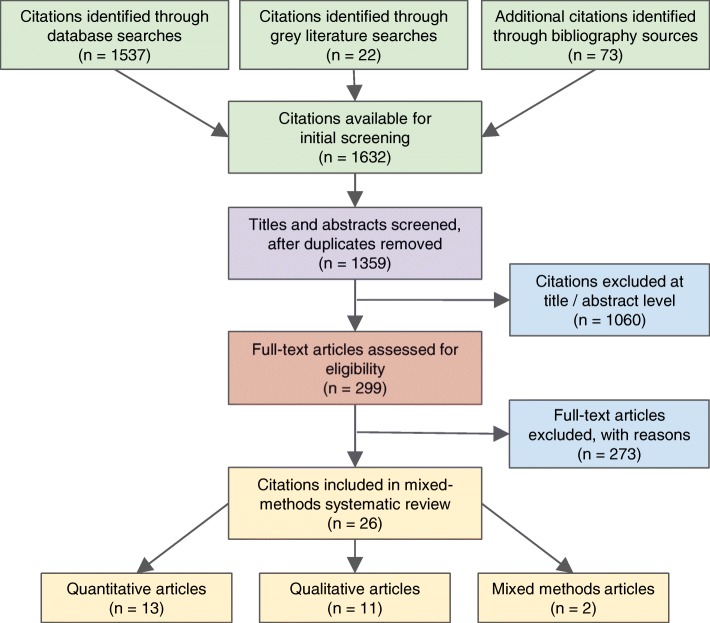
Methods: An experienced biomedical librarian conducted literature searches of PubMed, Cochrane Library, PsycINFO, CINAHL, Web of Science, ClinicalTrials.gov , and SSRN for peer-reviewed publications published 1997 or after. We searched grey literature, nonempirical reports, social science publications, and citations from published systematic reviews. The search yielded 1359 papers, including qualitative, quantitative, and mixed method studies. Categorization of the extracted data informed a thematic synthesis. We did not perform a formal meta-analysis.
Results: Screening and quality assessment yielded 13 quantitative controlled trials, 11 qualitative papers, and two mixed methods studies that met inclusion criteria. We identified three consistent models of care: cooperative health care clinic (five articles), shared medical appointment / group visit (10 articles) and group prenatal care / CenteringPregnancy® (11 articles).
Conclusions: SMAs in a variety of formats are increasingly employed in primary care settings, with no singular gold standard. Accepting and implementing this nontraditional approach by both patients and clinicians can yield measurable improvements in patient trust, patient perception of quality of care and quality of life, and relevant biophysical measurements of clinical parameters. Further refinement of this healthcare delivery model will be best driven by standardizing measures of patient satisfaction and clinical outcomes.
Keywords: Cooperative health care clinic; Coproduction; Group prenatal care; Group visit; Health services; Patient experience; Patient satisfaction; Primary care; Primary health care; Shared medical appointment.
Conflict of interest statement
The authors declared no potential conflicts of interest with respect to the research, authorship, and/or publication of this article.
Figures
References
-
- Noffsinger EB. Group visits -- the “secret sauce” of the medical home. Med Home News. 2013;5:1,6-8.
-
- Noffsinger Edward B. Running Group Visits in Your Practice. New York, NY: Springer US; 2009. Introduction to Group Visits; pp. 3–19.
Publication types
MeSH terms
LinkOut - more resources
Full Text Sources
Miscellaneous
