


Acceptability, feasibility and utility of a Mobile health family planning decision aid for postpartum women in Kenya
- PMID: 31286989
- PMCID: PMC6615081
- DOI: 10.1186/s12978-019-0767-9
Acceptability, feasibility and utility of a Mobile health family planning decision aid for postpartum women in Kenya
Abstract
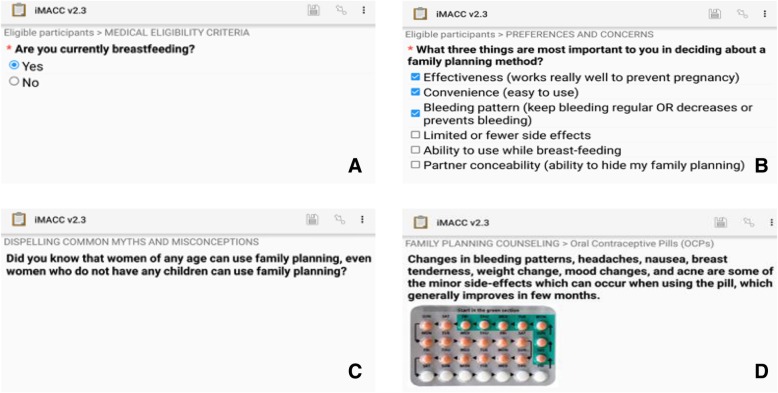
Background: Unmet need for contraception is high during the postpartum period, increasing the risk of unintended subsequent pregnancy. We developed a client facing mobile phone-based family planning (FP) decision aid and assessed acceptability, feasibility, and utility of the tool among health care providers and postpartum women.
Methods: Semi-structured in-depth interviews (IDIs) were conducted among postpartum women (n = 25) and FP providers (n = 17) at 4 Kenyan maternal and child health clinics, 2 in the Nyanza region (Kisumu and Siaya Counties) and 2 in Nairobi. Stratified purposive sampling was used to enroll postpartum women and FP providers. Data were analyzed using an inductive content analysis approach by 3 independent coders, with consensual validation.
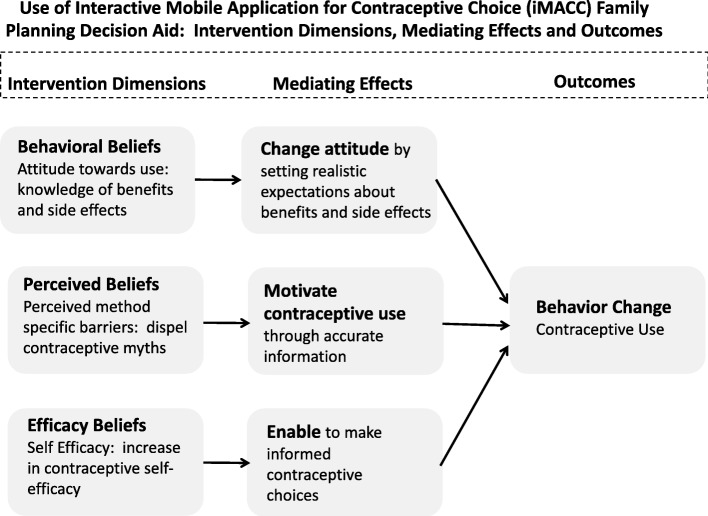
Results: FP providers stated that the Interactive Mobile Application for Contraceptive Choice (iMACC) tool contained the necessary information about contraceptive methods for postpartum women and believed that it would be a useful tool to help women make informed, voluntary decisions. Most women valued the decision aid content, and described it as being useful in helping to dispel myths and misconceptions, setting realistic expectations about potential side effects and maintaining confidentiality. Both women and providers expressed concerns about literacy and lack of familiarity with smart phones or tablets and suggested inclusion of interactive multimedia such as audio or videos to optimize the effectiveness of the tool.
Conclusions: The iMACC decision aid was perceived to be an acceptable tool to deliver client-centered FP counseling by both women and providers. Counseling tools that can support FP providers to help postpartum women make informed and individualized FP decisions in resource-limited settings may help improve FP counseling and contraceptive use in the postpartum period.
Keywords: Contraceptive counseling; Decision aid; Family planning; Postpartum.
Conflict of interest statement
The authors declare that they have no competing interests.
Figures
References
-
- Darroch JE, Audam S, Biddlecom A, Kopplin G, Riley T, Singh S, Sully E. Adding it up: investing in contraception and maternal and newborn health. Fact sheet New York: Guttmacher Institute; 2017.
-
- Moore Z, Pfitzer A, Gubin R, Charurat E, Elliott L, Croft T. Missed opportunities for family planning: an analysis of pregnancy risk and contraceptive method use among postpartum women in 21 low-and middle-income countries. Contraception. 2015;92:31–39. doi: 10.1016/j.contraception.2015.03.007. - DOI - PubMed
MeSH terms
Grants and funding
- Hester McLaws Grant/School of Nursing, University of Washington
- Department of Global Health (Global Opportunity Health Fellowship)/School of Nursing, University of Washington
- K01 AI116298/AI/NIAID NIH HHS/United States
- NIH/NIAID P30-AI027757/Center for AIDS Research, University of Washington
- Sigma Theta Tau International (STTI), Psi-at-Large Chapter/School of Nursing, University of Washington
LinkOut - more resources
Full Text Sources
Other Literature Sources
Medical
