


A novel mindful-compassion art therapy (MCAT) for reducing burnout and promoting resilience for end-of-life care professionals: a waitlist RCT protocol
- PMID: 31287010
- PMCID: PMC6615114
- DOI: 10.1186/s13063-019-3533-y
A novel mindful-compassion art therapy (MCAT) for reducing burnout and promoting resilience for end-of-life care professionals: a waitlist RCT protocol
Abstract
Introduction: End-of-life (EoL) care professionals are prone to burnout given the intense emotional nature of their work. Previous research supports the efficacy of art therapy in reducing work-related stress and enhancing emotional health among professional EoL caregivers. Integrating mindfulness meditation with art therapy and reflective awareness complementing emotional expression has immense potential for self-care and collegial support. Mindful-compassion art therapy (MCAT) is a novel, empirically informed, and highly structured intervention that aims to reduce work-related stress, cultivate resilience, and promote wellness. This study aims to assess the potential effectiveness of MCAT for supporting EoL care professionals in Singapore.
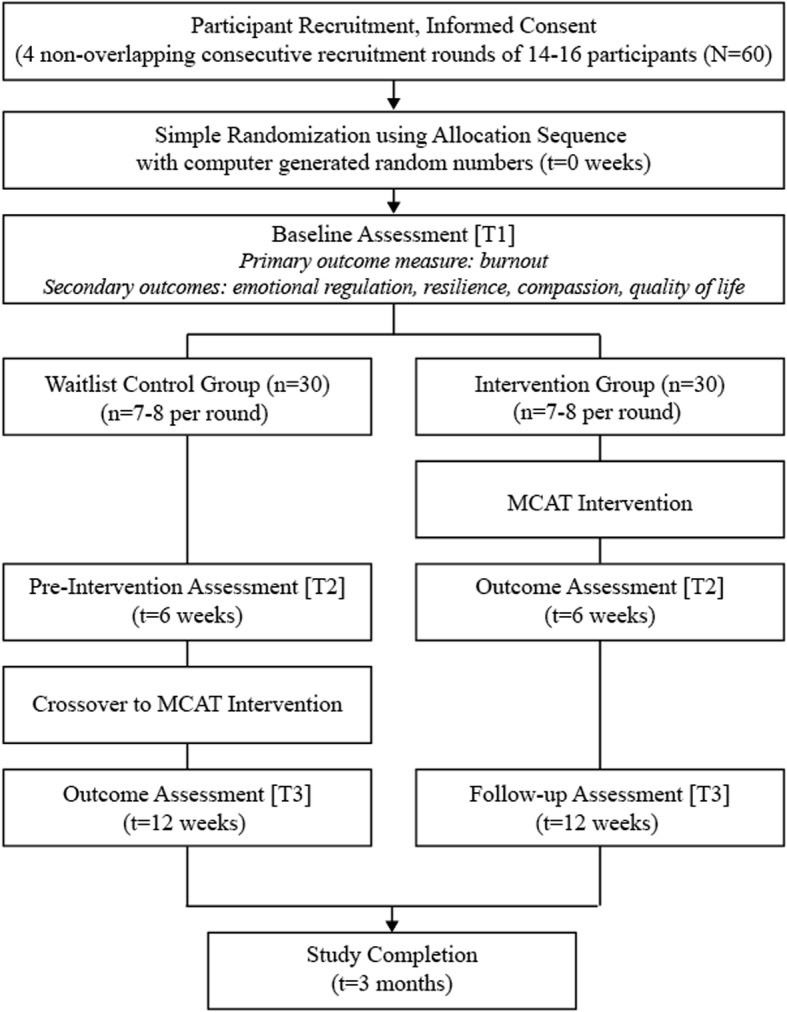
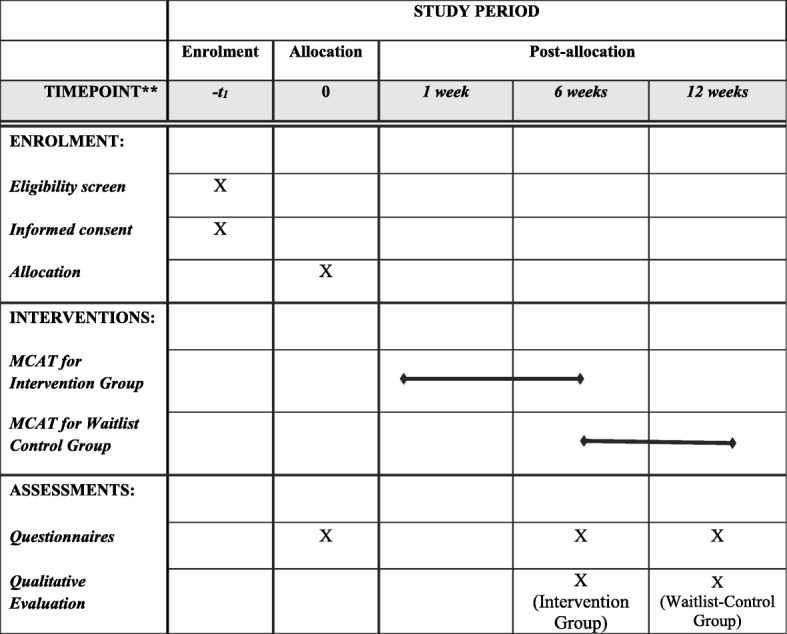
Methods: This is an open-label waitlist randomized controlled trial. Sixty EoL care professionals, including doctors, nurses, social workers, and personal care workers, are randomly allocated to one of two groups: (i) an intervention group that receives MCAT immediately and (ii) a waitlist-control group that receives MCAT after the intervention group completes treatment. Face-to-face self-administered outcome assessments are collected at three different time points-baseline (T1) for both groups, post-intervention (T2), and 6-week follow-up (T3) for intervention group-as well as pre-intervention (T2) and post-intervention (T3) for the waitlist-control group. The primary outcome measure is burnout, and secondary measures include emotional regulation, resilience, compassion, quality of life, and death attitudes. Between- and within-participant comparisons of outcomes are conducted, and the appropriate effect size estimates are reported. An acceptability and feasibility study is to be conducted by using a triangulation of qualitative data with framework analysis.
Discussion: The outcomes of this study will contribute to advancements in both theories and practices for supporting professional EoL caregivers around the world. It will also inform policy makers about the feasibility, acceptability, and effectiveness of delivering a multimodal psycho-socio-spiritual intervention within a community institutional setting. The study has received ethical approval from the institutional review board of Nanyang Technological University.
Trial registration: ClinicalTrials.gov Identifier: NCT03440606 . Retrospectively registered February 21, 2018.
Keywords: Art therapy; Burnout; End-of-life care; Mindful compassion; Multimodal intervention; Palliative care; Randomized control trial; Resilience.
Conflict of interest statement
The authors declare that they have no competing interests.
Figures
References
-
- Maslach C, Jackson SE, Leiter MP. The Maslach Burnout Inventory. 3. Palo Alto: Consulting Psychologists Press; 1996.
-
- Figley C. The Compassion Fatigue Awareness Project. 2017.
Publication types
MeSH terms
Associated data
Grants and funding
LinkOut - more resources
Full Text Sources
Medical
