Facilitating treatment of HCV in primary care in regional Australia: closing the access gap
- PMID: 31288252
- PMCID: PMC6583569
- DOI: 10.1136/flgastro-2018-101049
Facilitating treatment of HCV in primary care in regional Australia: closing the access gap
Abstract
Background: Australia has unrestricted access to direct-acting antivirals (DAA) for hepatitis C virus (HCV) treatment. In order to increase access to treatment, primary care providers are able to prescribe DAA after fibrosis assessment and specialist consultation. Transient elastography (TE) is recommended prior to commencement of HCV treatment; however, TE is rarely available outside secondary care centres in Australia and therefore a requirement for TE could represent a barrier to access to HCV treatment in primary care.
Objectives: In order to bridge this access gap, we developed a community-based TE service across the Sunshine Coast and Wide Bay areas of Queensland.
Design: Retrospective analysis of a prospectively recorded HCV treatment database.
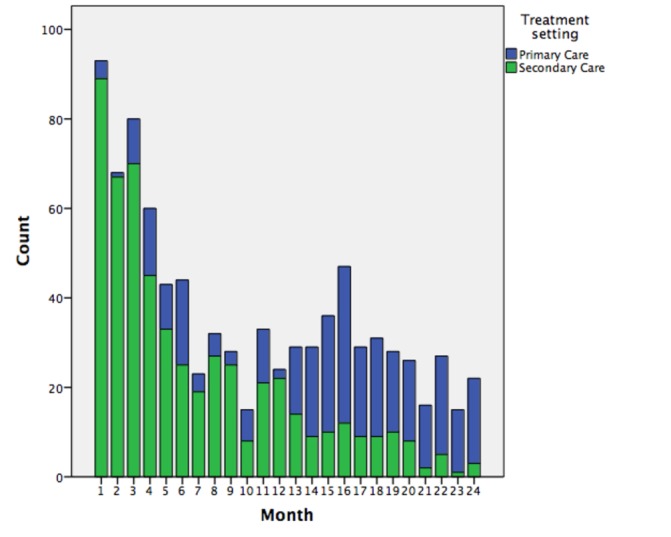
Interventions: A nurse-led service equipped with two mobile Fibroscan units assesses patients in eight locations across regional Queensland. Patients are referred into the service via primary care and undergo nurse-led TE at a location convenient to the patient. Patients are discussed at a weekly multidisciplinary team meeting and a treatment recommendation made to the referring GP. Treatment is initiated and monitored in primary care. Patients with cirrhosis are offered follow-up in secondary care.
Results: 327 patients have undergone assessment and commenced treatment in primary care. Median age 48 years (IQR 38-56), 66% male. 57% genotype 1, 40% genotype 3; 82% treatment naïve; 10% had cirrhosis (liver stiffness >12.5 kPa). The majority were treated with sofosbuvir-based regimens. 26% treated with 8-week regimens. All patients had treatment prescribed and monitored in primary care. Telephone follow-up to confirm sustained virological response (SVR) was performed by clinic nurses. 147 patients remain on treatment. 180 patients have completed treatment. SVR data were not available for 19 patients (lost to follow-up). Intention-to-treat SVR rate was 85.5%. In patients with complete data SVR rate was 95.6%.
Conclusion: Community-based TE assessment facilitates access to HCV treatment in primary care with excellent SVR rates.
Keywords: antiviral therapy; hepatitis c; primary care.
Conflict of interest statement
Competing interests: None declared.
Figures
References
LinkOut - more resources
Full Text Sources
Miscellaneous