


Pharmacologic Application Potentials of Sulfated Polysaccharide from Marine Algae
- PMID: 31288474
- PMCID: PMC6680640
- DOI: 10.3390/polym11071163
Pharmacologic Application Potentials of Sulfated Polysaccharide from Marine Algae
Abstract
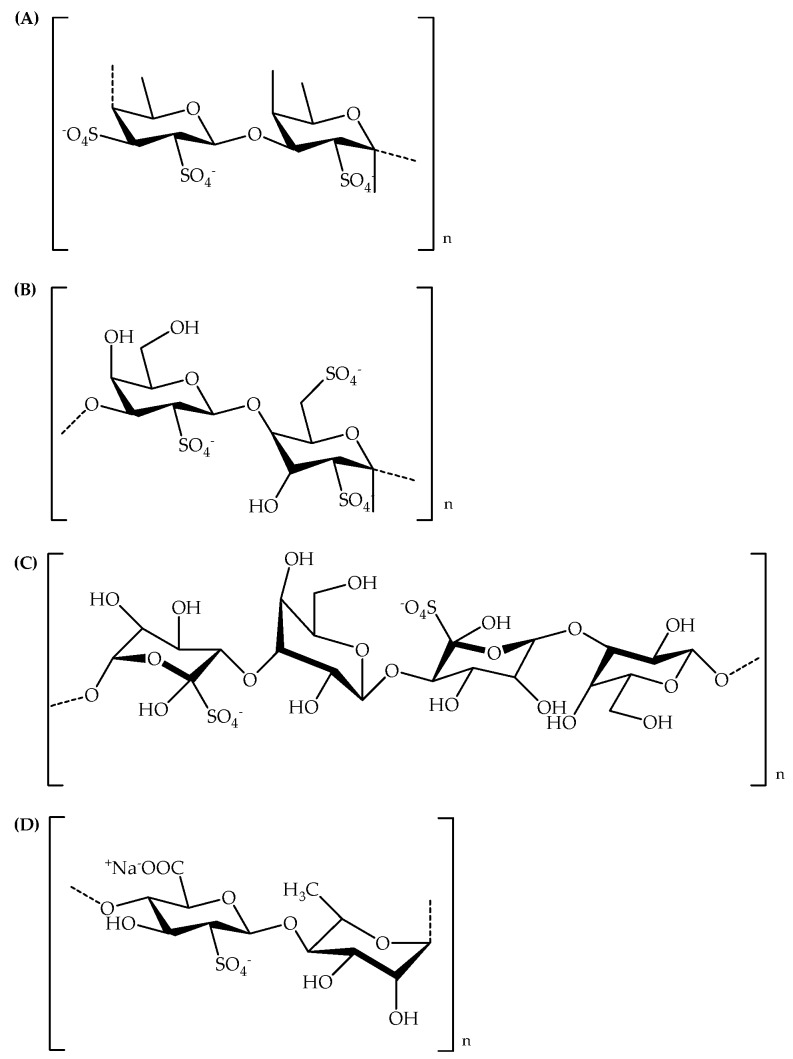
With the advent of exploration in finding new sources for treating different diseases, one possible natural source is from marine algae. Having an array of potential benefits, researchers are interested in the components which comprise one of these activities. This can lead to the isolation of active compounds with biological activities, such as antioxidation of free radicals, anti-inflammation, antiproliferation of cancer cells, and anticoagulant to name a few. One of the compounds that are isolated from marine algae are sulfated polysaccharides (SPs). SPs are complex heterogenous natural polymers with an abundance found in different species of marine algae. Marine algae are known to be one of the most important sources of SPs, and depending on the species, its chemical structure varies. This variety has important physical and chemical components and functions which has gained the attention of researchers as this contributes to the many facets of its pharmacologic activity. In this review, recent pharmacologic application potentials and updates on the use of SPs from marine algae are discussed.
Keywords: bioactivity; marine algae; natural polymers; pharmacologic activity; seaweeds; sulfated polysaccharides; therapeutics.
Conflict of interest statement
The authors declare no conflicts of interest.
Figures
References
-
- Wijesekara I., Pangestuti R., Kim S.-K. Biological Activities and Potential Health Benefits of Sulfated Polysaccharides Derived from Marine Algae. Carbohydr. Polym. 2011;84:14–21. doi: 10.1016/j.carbpol.2010.10.062. - DOI
-
- Wang Z., Xie J., Shen M., Nie S., Xie M. Sulfated Modification of Polysaccharides: Synthesis, Characterization and Bioactivities. Trends Food Sci. Technol. 2018;74:147–157. doi: 10.1016/j.tifs.2018.02.010. - DOI
-
- Sanjeewa K.K.A., Fernando I.P.S., Kim S.-Y., Kim H.-S., Ahn G., Jee Y., Jeon Y.-J. In Vitro and in Vivo Anti-Inflammatory Activities of High Molecular Weight Sulfated Polysaccharide; Containing Fucose Separated from Sargassum Horneri: Short Communication. Int. J. Biol. Macromol. 2018;107:803–807. doi: 10.1016/j.ijbiomac.2017.09.050. - DOI - PubMed
Publication types
LinkOut - more resources
Full Text Sources
