


Psychedelic microdosing benefits and challenges: an empirical codebook
- PMID: 31288862
- PMCID: PMC6617883
- DOI: 10.1186/s12954-019-0308-4
Psychedelic microdosing benefits and challenges: an empirical codebook
Abstract
Background: Microdosing psychedelics is the practice of consuming very low, sub-hallucinogenic doses of a psychedelic substance, such as lysergic acid diethylamide (LSD) or psilocybin-containing mushrooms. According to media reports, microdosing has grown in popularity, yet the scientific literature contains minimal research on this practice. There has been limited reporting on adverse events associated with microdosing, and the experiences of microdosers in community samples have not been categorized.
Methods: In the present study, we develop a codebook of microdosing benefits and challenges (MDBC) based on the qualitative reports of a real-world sample of 278 microdosers.
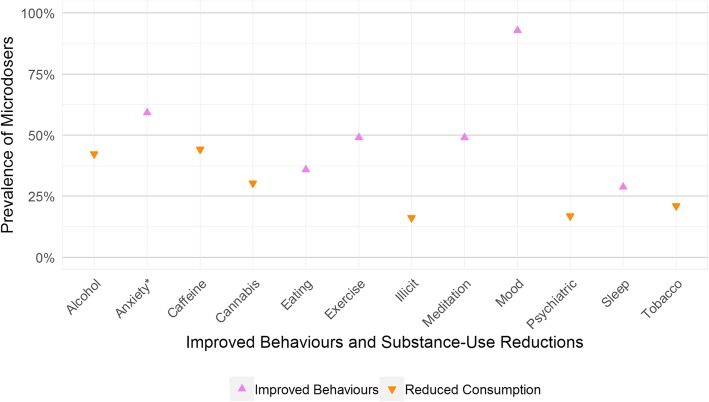
Results: We describe novel findings, both in terms of beneficial outcomes, such as improved mood (26.6%) and focus (14.8%), and in terms of challenging outcomes, such as physiological discomfort (18.0%) and increased anxiety (6.7%). We also show parallels between benefits and drawbacks and discuss the implications of these results. We probe for substance-dependent differences, finding that psilocybin-only users report the benefits of microdosing were more important than other users report.
Conclusions: These mixed-methods results help summarize and frame the experiences reported by an active microdosing community as high-potential avenues for future scientific research. The MDBC taxonomy reported here informs future research, leveraging participant reports to distil the highest-potential intervention targets so research funding can be efficiently allocated. Microdosing research complements the full-dose literature as clinical treatments are developed and neuropharmacological mechanisms are sought. This framework aims to inform researchers and clinicians as experimental microdosing research begins in earnest in the years to come.
Keywords: Anxiety; Depression; Grounded theory; LSD; Microdosing; Mood; Open science; Psilocybin; Psychedelic; Self-efficacy.
Conflict of interest statement
The authors declare that they have no competing interests.
Figures


References
-
- Pollan M. The trip treatment. 2015 [cited 2018 Nov 16]; Available from: https://www.newyorker.com/magazine/2015/02/09/trip-treatment
-
- Pollan M. How to change your mind: what the new science of psychedelics teaches us about consciousness, dying, addiction, depression, and transcendence: Penguin; 2018. p. 558. - PubMed
-
- Leonard A. How LSD microdosing became the hot new business trip. Rolling Stone. 2015 [cited 2018 Jul 9]. Available from: https://www.rollingstone.com/culture/culture-news/how-lsd-microdosing-be...
-
- Solon O. Under pressure, Silicon Valley workers turn to LSD microdosing. Wired UK. 2016 [cited 2018 Jul 9]; Available from: http://www.wired.co.uk/article/lsd-microdosing-drugs-silicon-valley
-
- Anderson T, Petranker R. “Microdosers” of LSD and magic mushrooms are wiser and more creative. The Conversation. 2018 [cited 2018 Nov 14]. Available from: http://theconversation.com/microdosers-of-lsd-and-magic-mushrooms-are-wi...
MeSH terms
Substances
LinkOut - more resources
Full Text Sources
Other Literature Sources
Medical
Molecular Biology Databases
