Measures to Avoid Coercion in Psychiatry and Their Efficacy
- PMID: 31288909
- PMCID: PMC6630163
- DOI: 10.3238/arztebl.2019.0336
Measures to Avoid Coercion in Psychiatry and Their Efficacy
Abstract
Background: Coercive measures such as seclusion and restraint encroach on the patient's human rights and can have serious adverse effects ranging from emotional trauma to physical injury and even death. At the same time, they may be the only way to avert acute danger for the patient and/or the hospital staff. In this article, we provide an overview of the efficacy of the measures that have been studied to date for the avoidance of coercion in psychiatry.
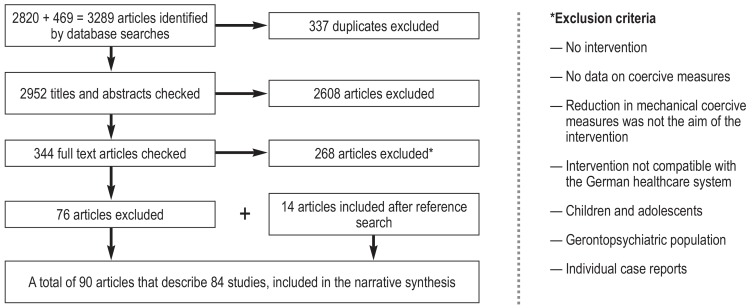
Methods: This review is based on publications retrieved by a systematic search in the Medline and Cinahl databases, supplemented by a search in the reference lists of these publications. We provide a narrative synthesis in which we categorize the interventions by content.
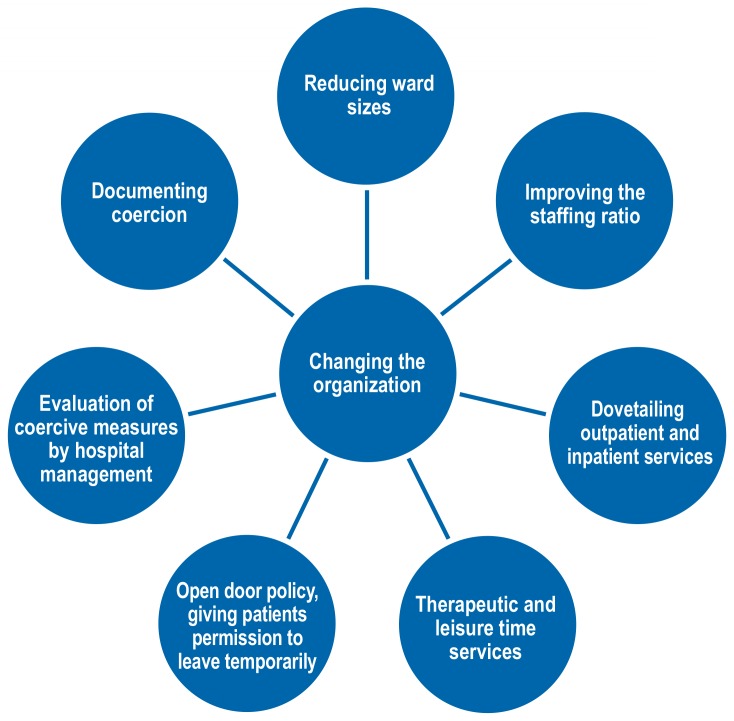
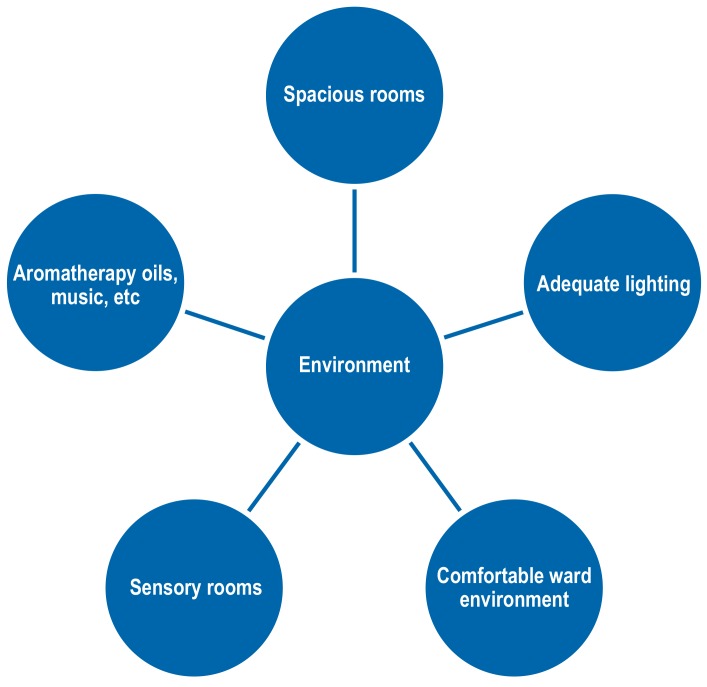
Results: Of the 84 studies included in this review, 16 had a control group; 6 of these 16 were randomized controlled trials (RCTs). The interventions were categorized by seven different types of content: organization, staff training, risk assessment, environment, psychotherapy, debriefings, and advance directives. Most interventions in each category were found to be effective in the respective studies. 38 studies investigated complex treatment programs that incorporated elements from more than one category; 37 of these (including one RCT) revealed effective reduction of the frequency of coercion. Two RCTs on the use of rating instruments to assess the risk of aggressive behavior revealed a relative reduction of the number of seclusion measures by 27% and a reduction of the cumulative duration of seclusion by 45%.
Conclusion: Complex intervention programs to avoid coercive measures, incorporating elements of more than one of the above categories, seem to be particularly effective. In future, cluster-randomized trials to investigate the individual categories of intervention would be desirable.
Figures
References
-
- Gaebel W, Falkai P. Therapeutische Maßnahmen bei aggressivem Verhalten Deutsche Gesellschaft für Psychiatrie, Psychotherapie und Nervenheilkunde, eds.: S2 Praxisleitlinien in Psychiatrie und Psychotherapie. Heidelberg: Steinkopff: (1) 2010;2
-
- Centers for Medicare & Medicaid Services. Rules and regulations: Medicare and Medicaid programs, hospital conditions of participation: patients’ rights; interim final rule. Fed Register. 1999;64:36069–36089. - PubMed
-
- Sequeira H, Halstead S. Control and restraint in the UK: service user perspectives. British Journal of Forensic Practice. 2002;4:9–18.
Publication types
MeSH terms
LinkOut - more resources
Full Text Sources
Medical