


Chromosomal-level assembly of the blood clam, Scapharca (Anadara) broughtonii, using long sequence reads and Hi-C
- PMID: 31289832
- PMCID: PMC6615981
- DOI: 10.1093/gigascience/giz067
Chromosomal-level assembly of the blood clam, Scapharca (Anadara) broughtonii, using long sequence reads and Hi-C
Abstract
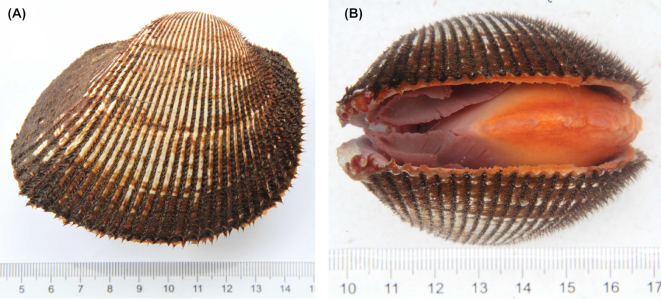
Background: The blood clam, Scapharca (Anadara) broughtonii, is an economically and ecologically important marine bivalve of the family Arcidae. Efforts to study their population genetics, breeding, cultivation, and stock enrichment have been somewhat hindered by the lack of a reference genome. Herein, we report the complete genome sequence of S. broughtonii, a first reference genome of the family Arcidae.
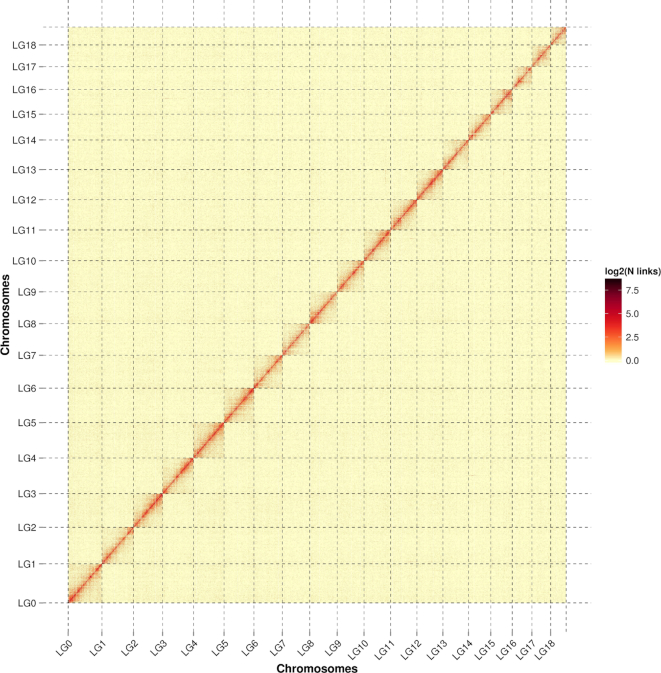
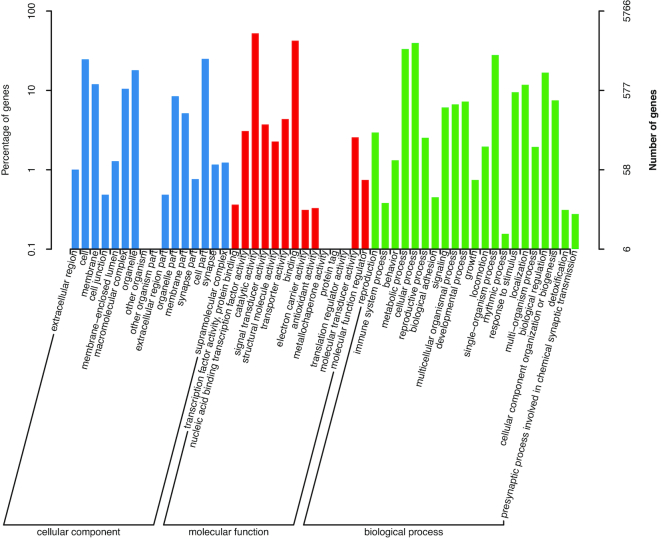
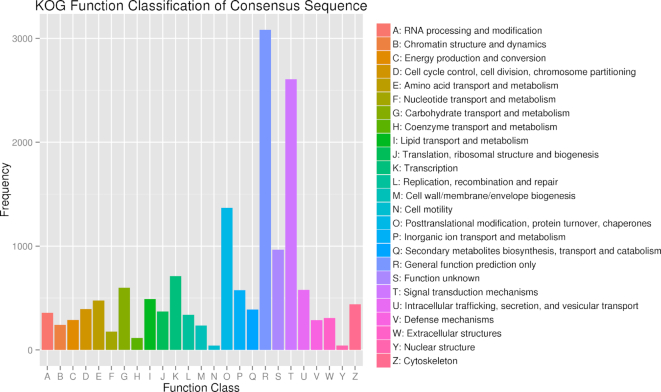
Findings: A total of 75.79 Gb clean data were generated with the Pacific Biosciences and Oxford Nanopore platforms, which represented approximately 86× coverage of the S. broughtonii genome. De novo assembly of these long reads resulted in an 884.5-Mb genome, with a contig N50 of 1.80 Mb and scaffold N50 of 45.00 Mb. Genome Hi-C scaffolding resulted in 19 chromosomes containing 99.35% of bases in the assembled genome. Genome annotation revealed that nearly half of the genome (46.1%) is composed of repeated sequences, while 24,045 protein-coding genes were predicted and 84.7% of them were annotated.
Conclusions: We report here a chromosomal-level assembly of the S. broughtonii genome based on long-read sequencing and Hi-C scaffolding. The genomic data can serve as a reference for the family Arcidae and will provide a valuable resource for the scientific community and aquaculture sector.
Keywords: Hi-C; PacBio; ark shell; chromosomal assembly; genomic.
© The Author(s) 2019. Published by Oxford University Press.
Figures
References
-
- An HY, Park JY. Ten new highly polymorphic microsatellite loci in the blood clam Scapharca broughtonii. Mol Ecol Notes. 2005;5(4):896–8.
-
- Nishida K, Ishimura T, Suzuki A, et al.. Seasonal changes in the shell microstructure of the bloody clam, Scapharca broughtonii (Mollusca: Bivalvia: Arcidae). Palaeogeogr Palaeocl. 2012;363:99–108.
-
- Boyd SE. Order Arcoida. In: Beesley PL, Ross GJB, Wells A, eds. Mollusca: The Southern Synthesis Fauna of Australia, vol 5 Melbourne: CSIRO; 1998:253–61.
-
- Sugiura D, Katayama S, Sasa S, et al.. Age and growth of the ark shell Scapharca broughtonii (Bivalvia, Arcidae) in Japanese waters. J Shellfish Res. 2014;33(1):315–24.
-
- Tang Q, Qiu XY, Wang J, et al.. Resource enhancement of arkshell (Scapharca ( Anadara) broughtonii) in Shandong offshore waters. Chin J Appl Ecol. 1994;5(4):396–402.
Publication types
MeSH terms
LinkOut - more resources
Full Text Sources
Research Materials
Miscellaneous
