Review
. 2019 Oct;10(5):1595-1622.
doi: 10.1007/s13300-019-0657-8. Epub 2019 Jul 9.

SGLT2 Inhibitors: Cardiovascular Benefits Beyond HbA1c-Translating Evidence into Practice

Affiliations
Review

SGLT2 Inhibitors: Cardiovascular Benefits Beyond HbA1c-Translating Evidence into Practice

Amar Ali et al. Diabetes Ther. 2019 Oct.

Erratum in

Abstract

Cardiovascular disease (CVD), including heart failure (HF), is a leading cause of morbidity and mortality in people with type 2 diabetes mellitus (T2DM). CVD and T2DM share common risk factors for development and progression, and there is significant overlap between the conditions in terms of worsening outcomes. In assessing the cardiovascular (CV) safety profiles of anti-diabetic drugs, sodium-glucose co-transporter-2 inhibitor (SGLT2i) therapies have emerged with robust evidence for reducing the risk of adverse CVD outcomes in people with T2DM who have either established CVD or are at risk of developing CVD. A previous consensus document from the Improving Diabetes Steering Committee has examined the potential role of SGLT2is in T2DM management and considered the risk-benefit profile of the class and the appropriate place for these medicines within the T2DM pathway. This paper builds on these findings and presents practical guidance for maximising the pleiotropic benefits of this class of medicines in people with T2DM in terms of reducing adverse CVD outcomes. The Improving Diabetes Steering Committee aims to offer evidence-based practical guidance for the use of SGLT2i therapies in people with T2DM stratified by CVD risk. This is of particular importance currently because some treatment guidelines have not been updated to reflect recent evidence from cardiovascular outcomes trials (CVOTs) and real-world studies that complement the CVOTs. The Improving Diabetes Steering Committee seeks to support healthcare professionals (HCPs) in appropriate treatment selection for people with T2DM who are at risk of developing or have established CVD and examines the role of SGLT2i therapy for these people.Funding: Napp Pharmaceuticals Limited.

Keywords: Anti-diabetic medicines; Cardiovascular disease (CVD); Clinical guidance; Heart failure (HF); Oral glucose-lowering medicines; Practical treatment selection; SGLT2 inhibitors (SGLT2i); Therapy choice; Type 2 diabetes mellitus (T2DM).


Figures
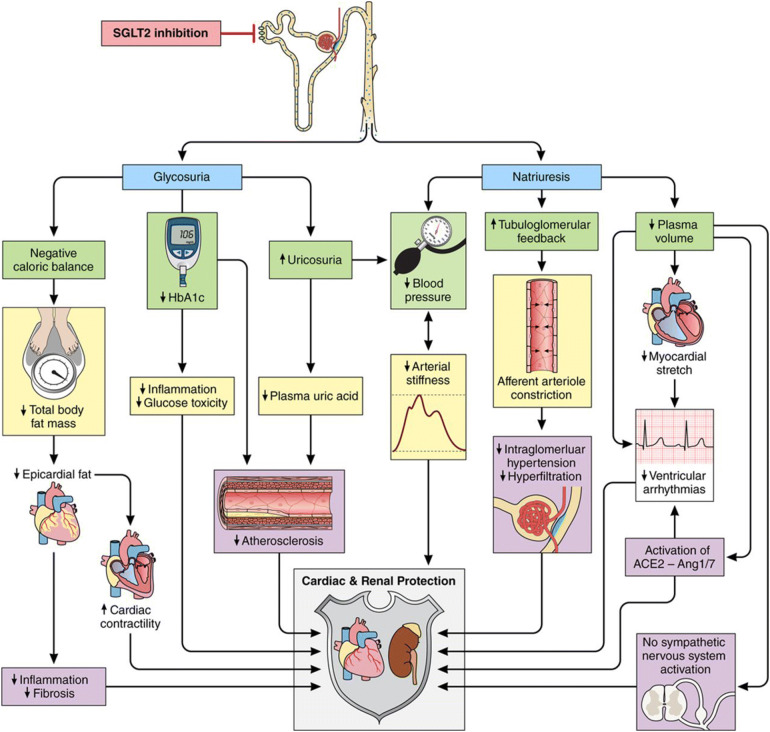
Fig. 1
Fig. 1
Proposed pathways involved in cardioprotective role of SGLT2is. Multiple physiologic mechanisms related to cardiorenal outcomes are modulated with SGLT2i treatments. Adapted with permission from [58]
Fig. 2
Fig. 2
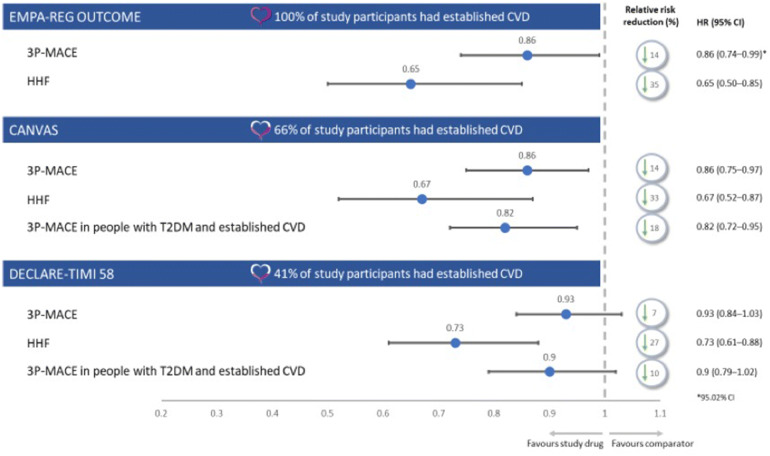
Overview of trial population and selected cardiovascular endpoints in SGLT2i CVOTs [–52]. This figure reports selected outcomes from three trials of an active comparator versus placebo in addition to standard of care, and is not a head-to-head trial outcome. 3P-MACE 3-point major adverse cardiovascular events, CI confidence interval, CVD cardiovascular disease, CVOT cardiovascular outcomes trials, HHF hospitalisation for heart failure, HR hazard ratio
Fig. 3
Fig. 3
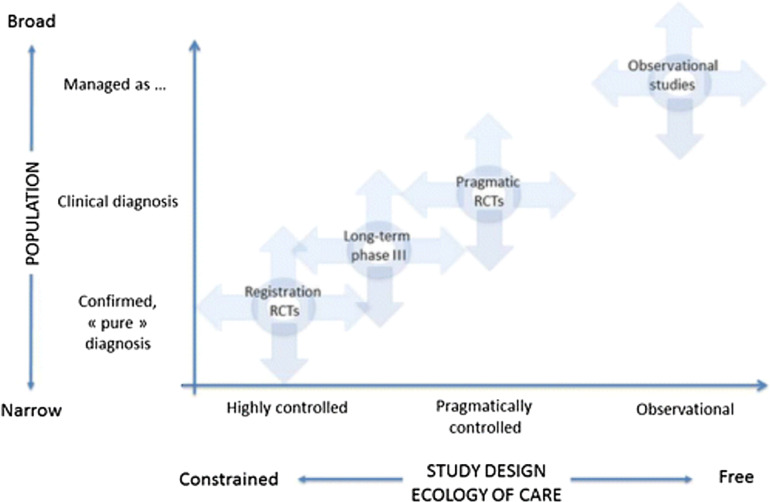
Population characteristics of different types of therapeutic trial. Real-world observational evidence complements prospective data from randomised controlled trials by examining the safety and efficacy of drugs in a broader population that is representative of people most likely to use the drug [91]. RCT randomised controlled trial. Reprinted with permission of the American Thoracic Society Copyright © 2019 American Thoracic Society. Roche et al. [91]. Annals of the American Thoracic Society is an official journal of the American Thoracic Society
Fig. 4
Fig. 4
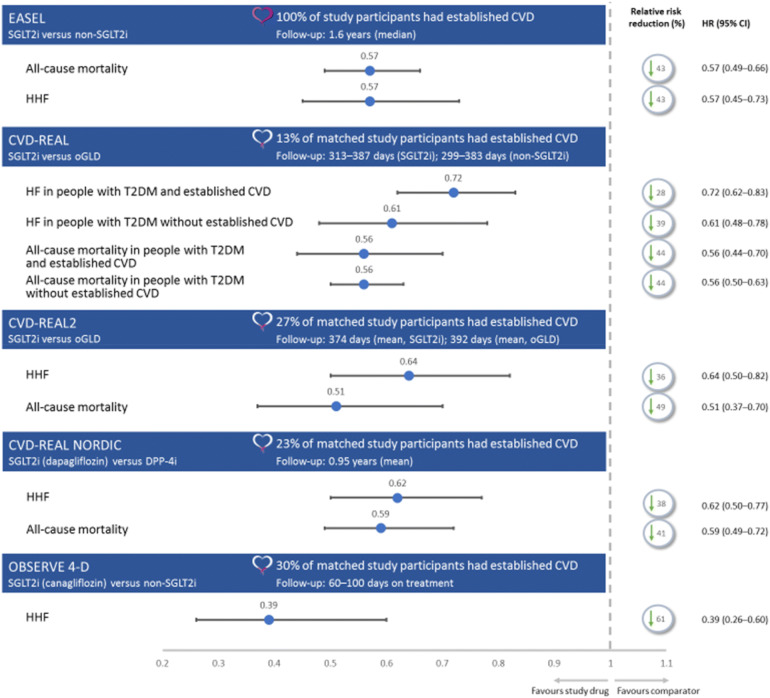
Overview of trial population and selected cardiovascular endpoints in real-world evidence studies [–56, 94]. This figure reports selected outcomes from four trials and is not a head-to-head trial outcome. CI confidence interval, CVD cardiovascular disease, DPP-4i dipeptidyl peptidase‐4 inhibitor, HF heart failure, HHF hospitalisation for heart failure, HR hazard ratio, oGLD other glucose-lowering drug
Fig. 5
Fig. 5
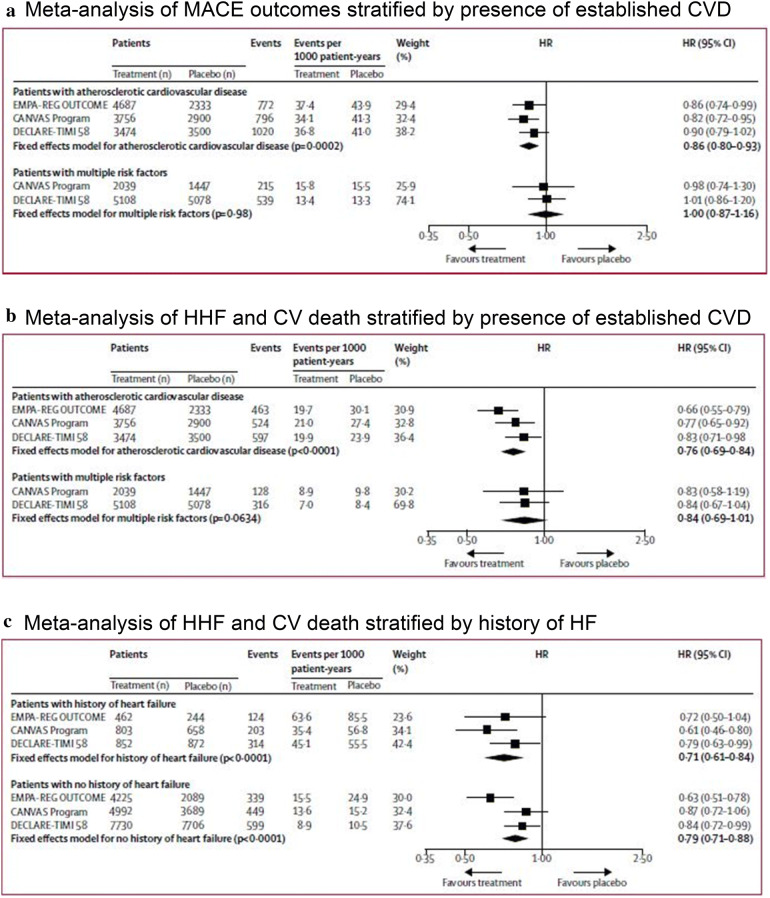
SGLT2i treatment efficacy in people both with and without established CVD or HF [97]. a Meta-analysis of MACE outcomes stratified by presence of established CVD. b Meta-analysis of HHF and CV death stratified by presence of established CVD. c Meta-analysis of HHF and CV death stratified by history of HF. Adapted with permission from Zelniker et al. [97]
Fig. 6
Fig. 6
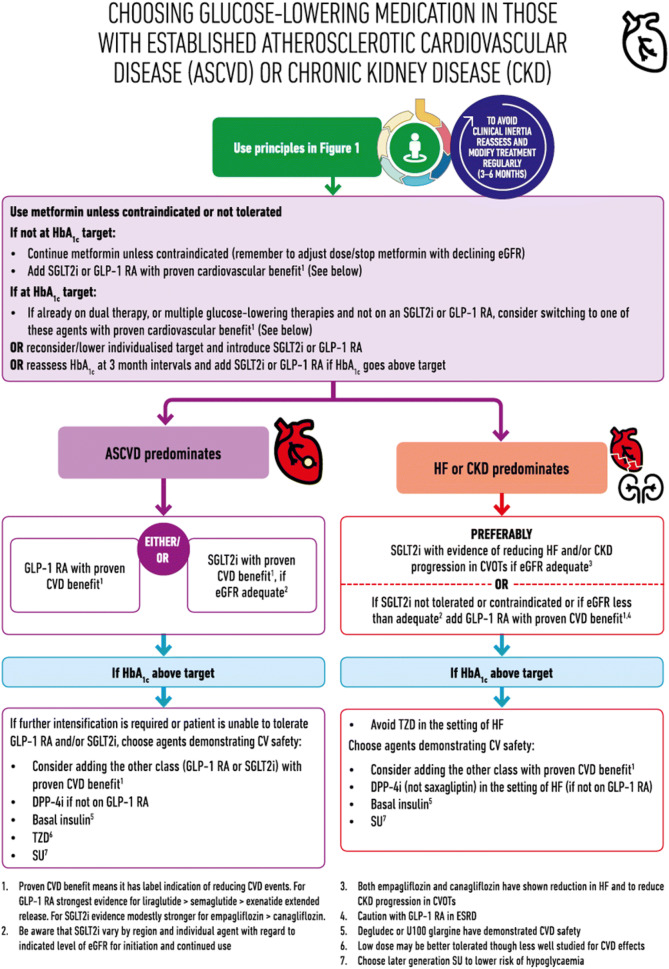
ADA/EASD consensus on treatment selection in T2DM when considering CVD or renal outcomes. Adapted with permission from [101]
Fig. 7
Fig. 7
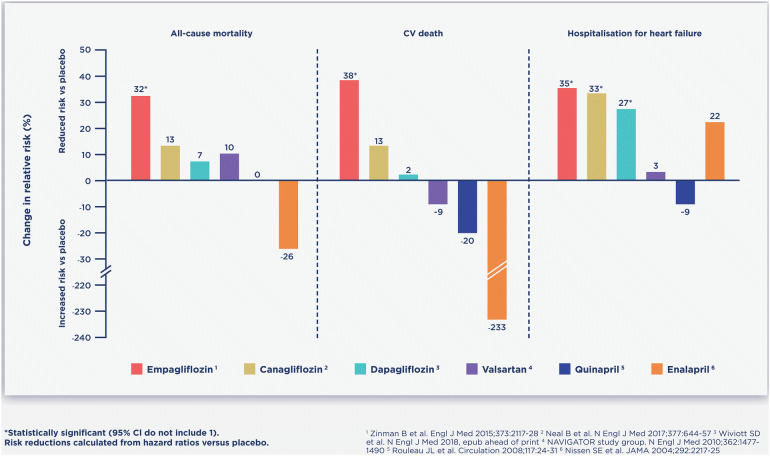
Illustrative efficacy of SGLT2i treatments in the reduction of CVD risks in the context of commonly used CVD drugs

References

    1. Wilding J, Fernando K, Milne N, et al. SGLT2 inhibitors in type 2 diabetes management: key evidence and implications for clinical practice. Diabetes Ther. 2018;9:1757–1773. - PMC - PubMed
    1. Pantalone KM, Hobbs TM, Wells BJ, et al. Clinical characteristics, complications, comorbidities and treatment patterns among patients with type 2 diabetes mellitus in a large integrated health system. BMJ Open Diabetes Res Care. 2015;3:e000093. - PMC - PubMed
    1. Einarson TR, Acs A, Ludwig C, Panton UH. Prevalence of cardiovascular disease in type 2 diabetes: a systematic literature review of scientific evidence from across the world in 2007–2017. Cardiovasc Diabetol. 2018;17:83. - PMC - PubMed
    1. Shah AD, Langenberg C, Rapsomaniki E, et al. Type 2 diabetes and incidence of cardiovascular diseases: a cohort study in 1.9 million people. Lancet Diabetes Endocrinol. 2015;3:105–113. - PMC - PubMed
    1. World Health Organization. Fact sheets: cardiovascular diseases (CVDs). 2017. Retrieved from: https://www.who.int/en/news-room/fact-sheets/detail/cardiovascular-disea....