


Molecular characterization of Campylobacter causing human clinical infection using whole-genome sequencing: Virulence, antimicrobial resistance and phylogeny in Ireland
- PMID: 31291319
- PMCID: PMC6619736
- DOI: 10.1371/journal.pone.0219088
Molecular characterization of Campylobacter causing human clinical infection using whole-genome sequencing: Virulence, antimicrobial resistance and phylogeny in Ireland
Abstract
Objectives: We characterized clinical isolates of Campylobacter using whole-genome sequencing (WGS) for detection of virulence genes, antimicrobial resistance markers and phylogenetic analysis in order to increase the knowledge on the molecular epidemiology of Campylobacter in Ireland, where there are significant gaps due to the widespread in the use of culture independent methods for the diagnosis of campylobacteriosis.
Methods: WGS was applied to 122 Campylobacter human isolates collected over a 10-years period, from diarrhoeal stool samples submitted for routine enteric screening.
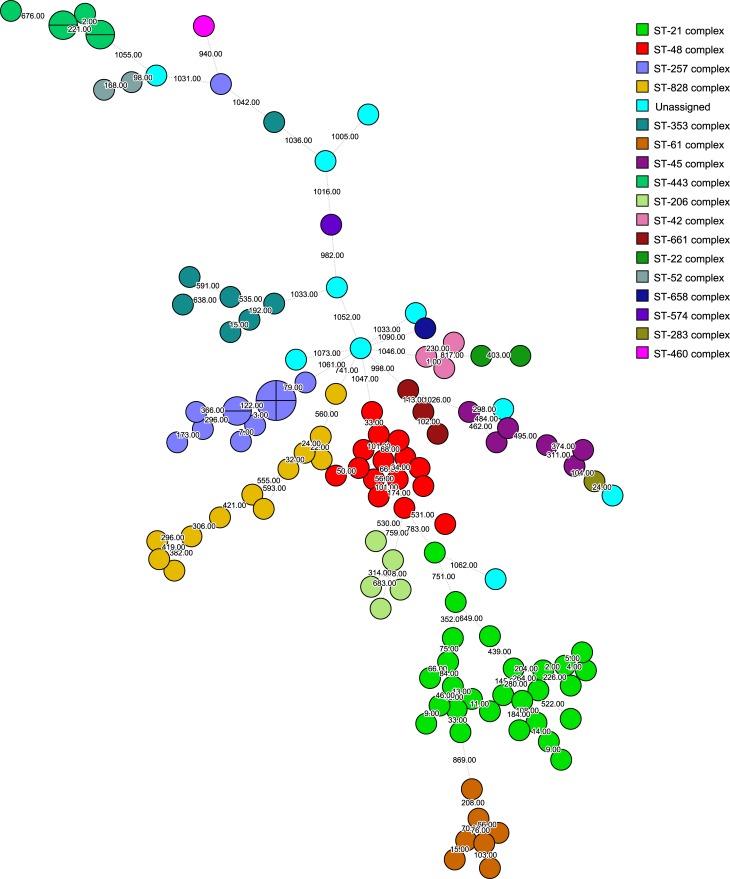
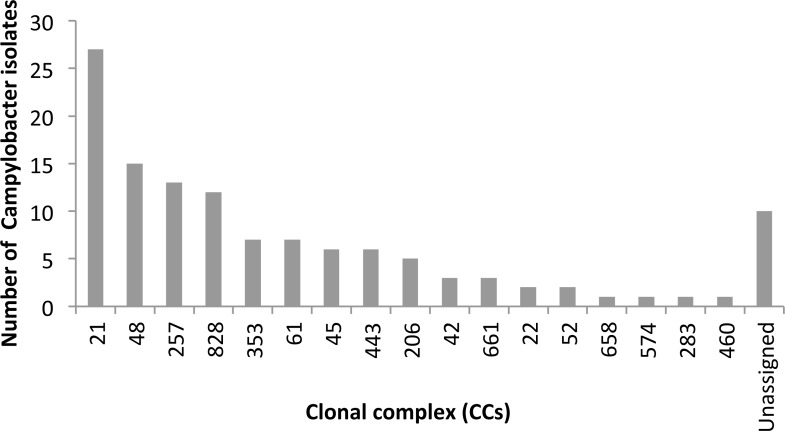
Results: Genes associated with cytotoxin production such as cdtA, cdtB and cdtC were found in 88%, 89% and 89% isolates, respectively; adherence, colonization and invasion genes such as cadF, dnaJ, racR, iam, virB11 and ciaB were found in 99%, 99%, 98%, 99%, 1% and 80% isolates, respectively. Genetic markers associated with resistance to quinolones (C257T in gyrA), beta-lactams (blaoxa-61) and tetracycline (tet(O)) were present in 43%, 71% and 25% isolates, respectively. The cmeABC operon was present in 94% of isolates. No macrolide or aminoglycoside resistance markers were detected. Phylogenetic analysis showed that 112 isolates were assigned to 29 sequence types grouped into 17 clonal complexes. Four clusters previously unidentified were detected. These results shown the similarity of Irish data compared to what has been described globally.
Conclusions: WGS has shown a high discriminatory power for cluster detection, demonstrating that its integration in routine laboratory surveillance could improve the detection and management of outbreaks. In addition we were able to demonstrate that virulence genes in clinical Campylobacter infections in Ireland were similar to those known previously. High prevalence of quinolone resistance markers has been found, which has implications for antimicrobial stewardship.
Conflict of interest statement
The authors have declared that no competing interests exist.
Figures
References
Publication types
MeSH terms
Substances
LinkOut - more resources
Full Text Sources
Medical
