


Efficacy and Safety of Bcl-2 Inhibitor Venetoclax in Hematological Malignancy: A Systematic Review and Meta-Analysis of Clinical Trials
- PMID: 31293422
- PMCID: PMC6598635
- DOI: 10.3389/fphar.2019.00697
Efficacy and Safety of Bcl-2 Inhibitor Venetoclax in Hematological Malignancy: A Systematic Review and Meta-Analysis of Clinical Trials
Abstract
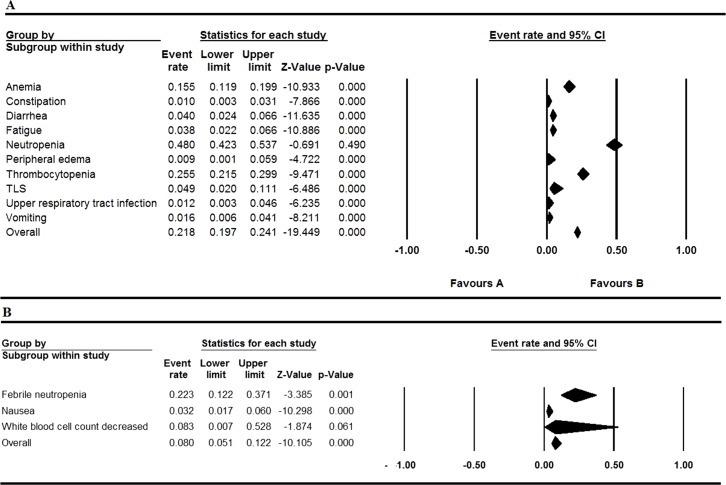
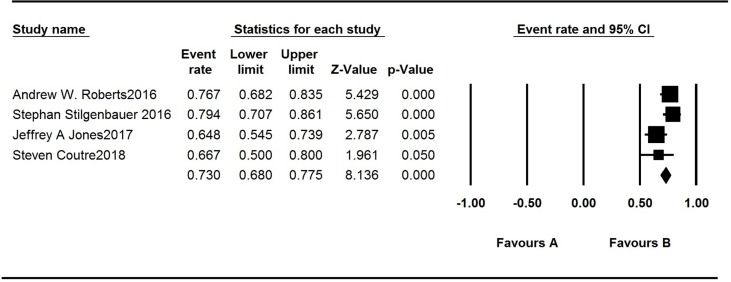
Background: B-cell leukemia/lymphoma-2 (BCL-2) protein is an important part of apoptotic pathway, which is overexpressed in chronic lymphocytic leukemia cells, non-Hodgkin lymphoma cells, and myeloma cells. Venetoclax (ABT-199/GDC-0199) is a highly selective bioavailable inhibitor of BCL-2 protein, which is more effective and less valid against BCL-xL in BCL2-dependent leukemia and lymphoma cell. Method: We searched PubMed database using retrieval keyword venetoclax, ABT-199, or GDC-0199 and investigated the data of the involved articles. Considering variability in different studies, the overall response rate was collected to assess the efficacy. Meanwhile, adverse events (AEs) were summarized, and event rates were calculated to assess the safety. Results: When patients were treated with venetoclax monotherapy, the most common AEs were nausea, diarrhea, neutropenia, fatigue and thrombocytopenia, and neutropenia. In addition, thrombocytopenia, anemia, febrile neutropenia, and leukopenia appeared more common and are considered as the severe AEs (defined as grade ≥ 3 AEs). Although the occurrence of thrombocytopenia was relatively high, it was not the most severe type. When compared with patients treated with venetoclax and other drugs, nausea, diarrhea, and thrombocytopenia were still the most common AEs occurrence in the patients of all the grade. The overall event rate was 73%, which is quite satisfactory. Conclusion: Venetoclax is a mild and efficient drug in treating advanced hematological malignancy, which can be specially fit for the chronic lymphocytic leukemia patients with del[17p], and AEs are well tolerable. Few tumor lysis syndrome occurred after taking the drugs. The AEs aroused by venetoclax, and the combination is well tolerable. Therefore, the use of venetoclax monotherapy or its combination with other therapies is desirable in hematological malignancy.
Keywords: Bcl-2 inhibitor; chronic lymphocytic leukemia; deletion of chromosome 17p; hematological malignancy; venetoclax.
Figures
References
Publication types
LinkOut - more resources
Full Text Sources
Other Literature Sources
Research Materials
