


Thymoma-Associated Paraneoplastic Autoimmune Multiorgan Syndrome-From Pemphigus to Lichenoid Dermatitis
- PMID: 31293579
- PMCID: PMC6598597
- DOI: 10.3389/fimmu.2019.01413
Thymoma-Associated Paraneoplastic Autoimmune Multiorgan Syndrome-From Pemphigus to Lichenoid Dermatitis
Abstract
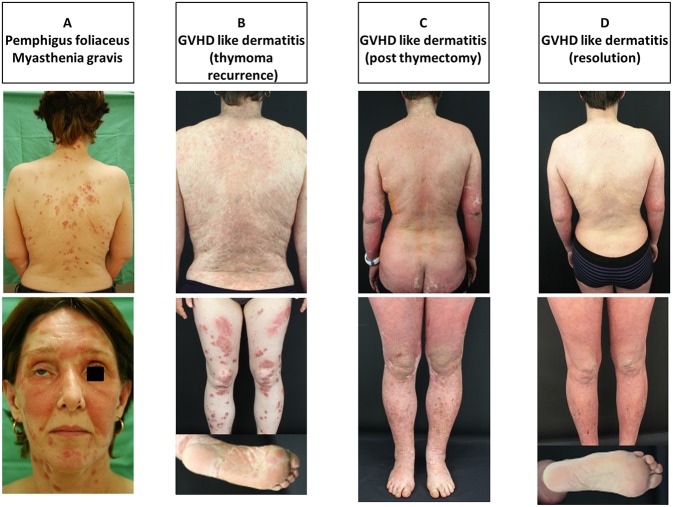
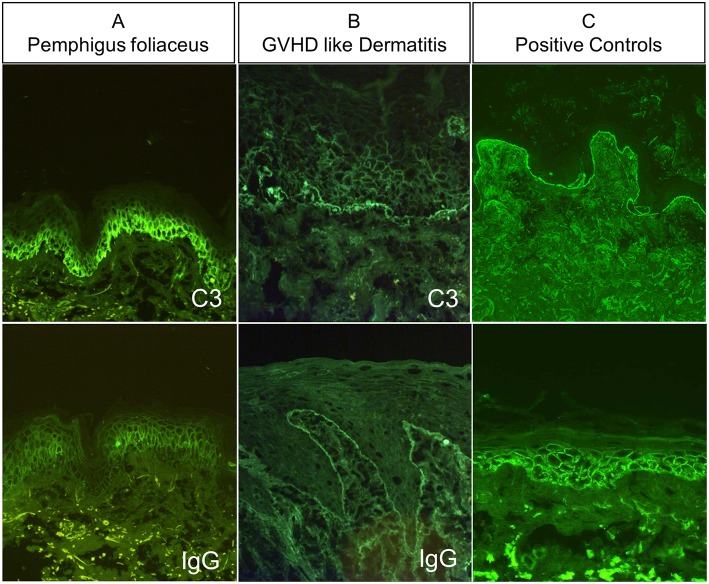
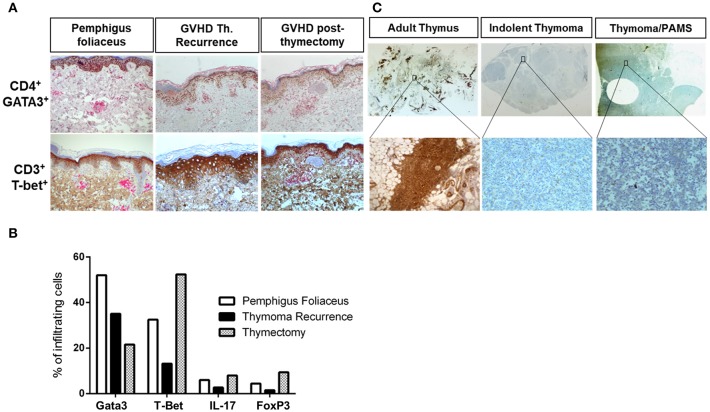
Introduction: Paraneoplastic autoimmune multi-organ syndrome (PAMS) is a rare clinical condition characterized by variable and heterogeneous clinical phenotypes in the presence of neoplasias which largely depend on the activation of humoral and cellular immune responses. Clinically, these patients present with a spectrum of antibody-driven pemphigus-like lesions to graft-vs.-host-disease-like exanthemas with a lichenoid inflammatory infiltrate in the skin. PAMS is occasionally associated with thymoma, in which altered immune surveillance eventually leads to multiorgan autoimmunity which often includes variable cutaneous symptoms. This disorder is associated with a profound disturbance of peripheral immune tolerance against human autoantigens. Objectives: We here present a patient with relapsing thymoma who developed PAMS with several cutaneous and extracutaneous autoimmune disorders. Materials: Peripheral blood mononuclear cells (PBMC), sera, and lesional skin biopsies were obtained at different clinical disease stages. Peripheral T cell subsets were characterized phenotypically and the cytokine profile of the peripheral blood T cellular response against distinct epidermal and dermal autoantigens of the skin was analyzed by ELISpot assay. Serological screening was performed by ELISA and immunoblot analysis. Skin biopsies were subjected to immunohistochemical analysis of distinct T cell subsets. Thymoma tissue was analyzed for the presence of T regulatory cells and compared with adult thymus and indolent thymoma. Results and Conclusions: In the present case, thymoma was the cause of the observed multi-organ autoimmune syndromes as its recurrence and surgical removal was associated with the relapse and regression of the cutaneous symptoms, respectively. Initially, the patient presented with two autoimmune disorders with Th2/Th1 imbalance, myasthenia gravis (MG) and pemphigus foliaceus (PF), which regressed upon immunosuppressive treatment. Months later, the patient developed a lichenoid exanthema with a Th1-dominated skin infiltrate. Further clinical evaluation revealed the recurrence of the thymoma and the lichenoid exanthema gradually regressed upon thymectomy. Our contention that T cell recognition against distinct cutaneous autoantigens, such as desmoglein 1 (Dsg1), shifted from a Th2 to a Th1-dominated immune response could not be fully substantiated as the patient was on a stringent immunosuppressive treatment regimen. We could only observe a decrease of the initially present serum IgG autoantibodies against Dsg1. Phenotypic analysis of the associated thymoma showed a lower number of T regulatory cells compared to adult thymus and indolent thymoma, suggesting that impaired thymus-derived immune surveillance had a direct impact on the outcome of the observed cutaneous autoimmune disorders.
Keywords: GVHD-like disease; PAMS; Pemphigus foliaceous; autoimmunity; myasthenia (myasthenia gravis—MG); thymoma auto-immunity.
Figures
References
-
- Nguyen VT, Ndoye A, Bassler KD, Shultz LD, Shields MC, Ruben BS, et al. Classification, clinical manifestations, and immunopathological mechanisms of the epithelial variant of paraneoplastic autoimmune multiorgan syndrome: a reappraisal of paraneoplastic pemphigus. Arch Dermatol. (2001) 137:193–206. - PubMed
Publication types
MeSH terms
LinkOut - more resources
Full Text Sources
Medical
