


Toward Personalized Tinnitus Treatment: An Exploratory Study Based on Internet Crowdsensing
- PMID: 31294010
- PMCID: PMC6604754
- DOI: 10.3389/fpubh.2019.00157
Toward Personalized Tinnitus Treatment: An Exploratory Study Based on Internet Crowdsensing
Abstract
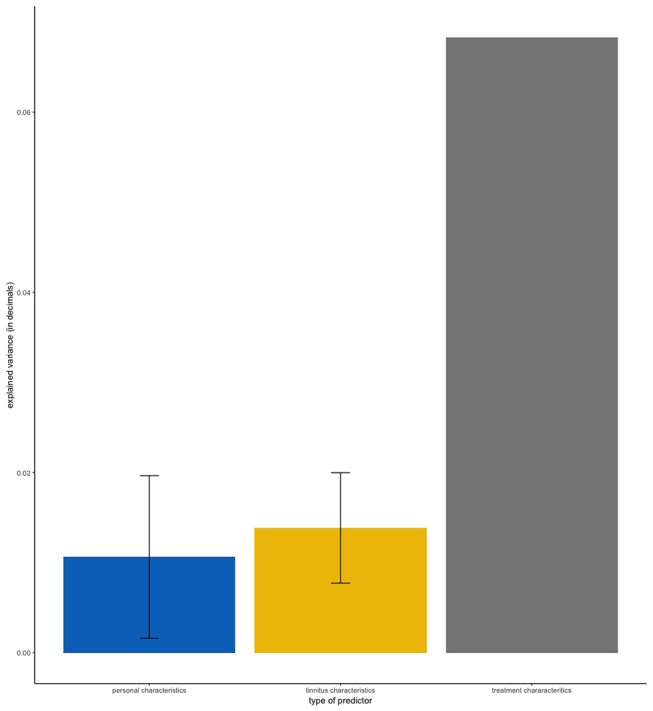
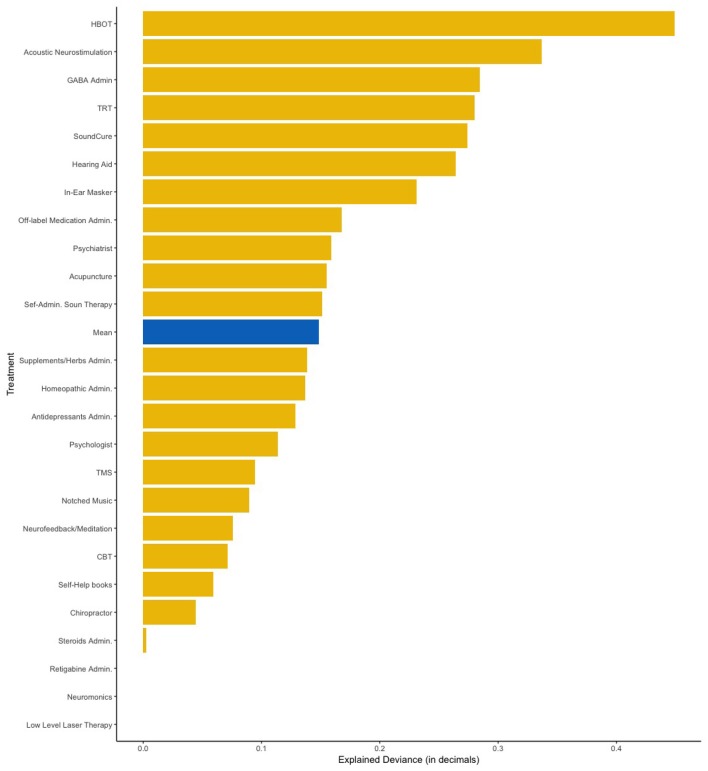
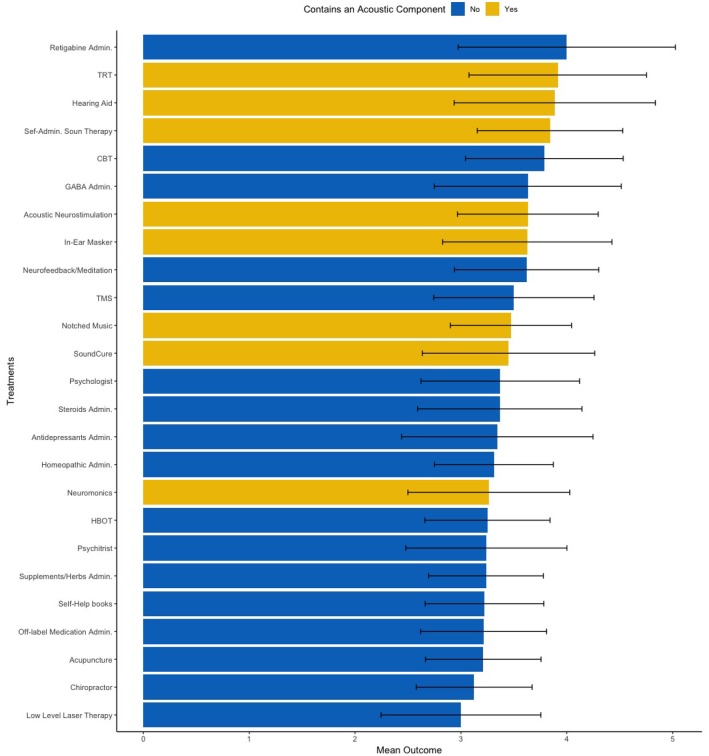
Introduction: Chronic tinnitus is a condition estimated to affect 10-15% of the population. No treatment has shown efficacy in randomized clinical trials to reliably and effectively suppress the phantom perceptions, and little is known why patients react differently to the same treatments. Tinnitus heterogeneity may play a central role in treatment response, but no study has tried to capture tinnitus heterogeneity in terms of treatment response. Research Goals: To test if the individualized treatment response can be predicted using personal, tinnitus, and treatment characteristics. Methods: A survey conducted by the web platform Tinnitus Hub collected data of 5017 tinnitus bearers. The participants reported which treatments they tried and the outcome of the given treatment. Demographic and tinnitus characteristics, alongside with treatment duration were used as predictors of treatment outcomes in both an univariate as well as a multivariate regression setup. First, simple linear regressions were used with each of the 13 predictors on all of 25 treatment outcomes to predict how much variance could be explained by each predictor individually. Then, all 13 predictors were added together in the elastic net regression to predict treatment outcomes. Results: Individual predictors from the linear regression models explained on average 2% of the variance of treatment outcome. "Duration of treatment" was the predictor that explained, on average, most of the variance, 6.8%. When combining all the predictors in the elastic net, the model could explain on average 16% of the deviance of treatment outcomes. Discussion: By demonstrating that different aspects predict response to various treatments, our results support the notion that tinnitus heterogeneity influences the observed variability in treatment response. Moreover, the data suggest the potential of personalized tinnitus treatment based on demographic and clinical characteristics.
Keywords: crowdsensing; heterogeneity; personalized treatment; smart device; tinnitus.
Figures


References
LinkOut - more resources
Full Text Sources
