Review
. 2019 Apr 1;26(4):R195-R209.
doi: 10.1530/ERC-19-0009.

ErbB-2 signaling in advanced prostate cancer progression and potential therapy

Affiliations
Review

ErbB-2 signaling in advanced prostate cancer progression and potential therapy

Dannah R Miller et al. Endocr Relat Cancer. .

Abstract

Currently, prostate cancer (PCa) remains the most commonly diagnosed solid tumor and the second leading cause of cancer-related deaths in US men. Most of these deaths are attributed to the development of castration-resistant (CR) PCa. ErbB-2 and ErbB family members have been demonstrated to contribute to the progression of this lethal disease. In this review, we focus on updating the role of ErbB-2 in advanced PCa progression and its regulation, including its regulation via ligand activation, miRNAs and protein phosphorylation. We also discuss its downstream signaling pathways, including AKT, ERK1/2 and STATs, involved in advanced PCa progression. Additionally, we evaluate the potential of ErbB-2, focusing on its protein hyper-phosphorylation status, as a biomarker for aggressive PCa as well as the effectiveness of ErbB-2 as a target for the treatment of CR PCa via a multitude of approaches, including orally available inhibitors, intratumoral expression of cPAcP, vaccination and immunotherapy.

Keywords: ErbB-2; castration-resistant prostate cancer; ErbB-2-targeting therapies; ErbB-2 regulation.


Conflict of interest statement

Conflict of Interest

The authors declare that there is no conflict of interest regarding the publication of this article.

Figures
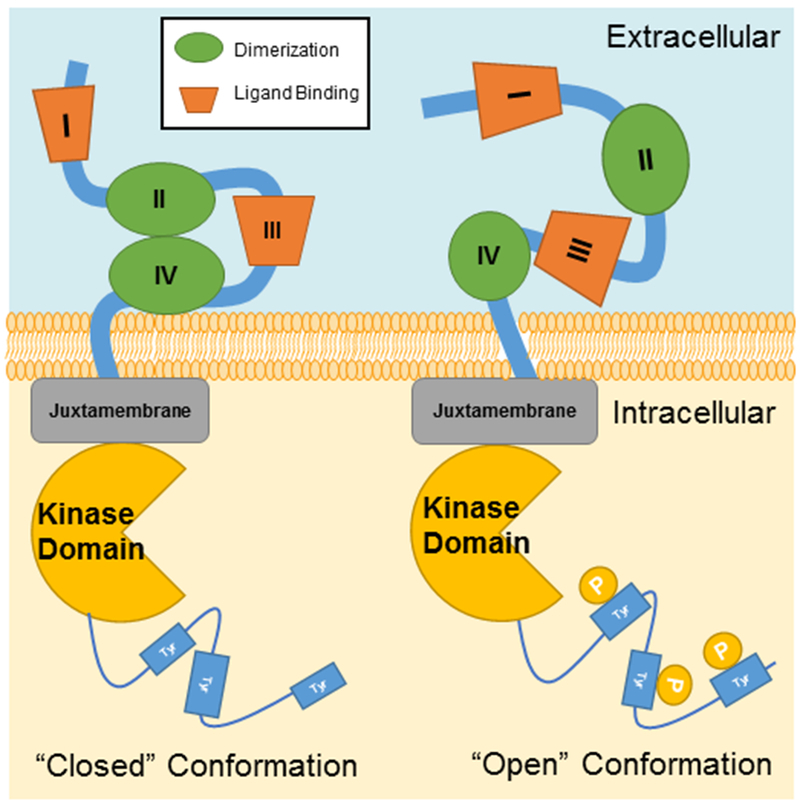
Figure 1.
Figure 1.. Structure of the ErbB Receptor
ErbB receptors transmembrane proteins with both intracellular and extracellular domains. The extracellular domain is composed of four sub-domains, including two leucine-rich sub-domains (I and III) for ligand binding and two cysteine-rich sub-domains (II and IV) for dimerization with activated ErbB members. Inactivated ErbB receptors remain in the ‘closed’ conformation, while ErbB-2 is constitutively in the ‘open’ confirmation. The dimerization with other ligand-bound ErbB family members will lead to activate ErbB-2 for signaling. Intracellularly, ErbB receptors have a juxtamembrane region, a kinase domain, and a cytoplasmic tail that is regulated by tyrosine phosphorylation.
Figure 2.
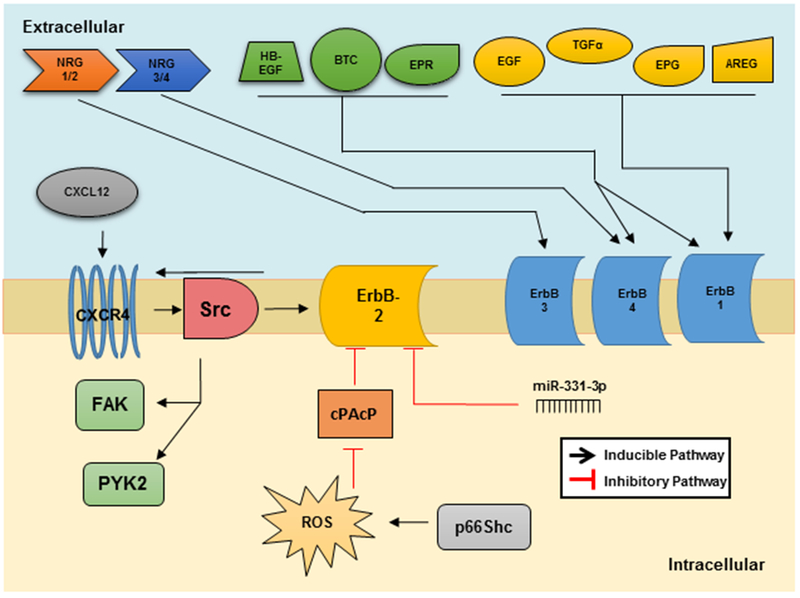
Figure 2.. ErbB-2 Regulation by Ligands and Proteins
There are numerous ligands that can activate ErbB-1/3/4. ErbB-3 can only be activated by NRG1/2, while ErbB-4 is activated upon binding of NRG3/4, HB-EGF, EPR and BTC. ErbB-1 has the most numerous known ligands including HB-EGF, BTC, EPR, EGF, TGF-α, EPG, and AREG. ErbB-2 can be activated via CXCR4 when this protein is bound to its ligand, CXCL12, via Src kinase. Interestingly, ErbB-2 can also promote the activation of CXCR4 as well. Negative regulators of ErbB-2 include microRNA miR-331-3p and cPAcP. PAcP, like other protein tyrosine phosphatases, can be inactivated by ROS and is a downstream of oxidase p66Shc.
Figure 3.
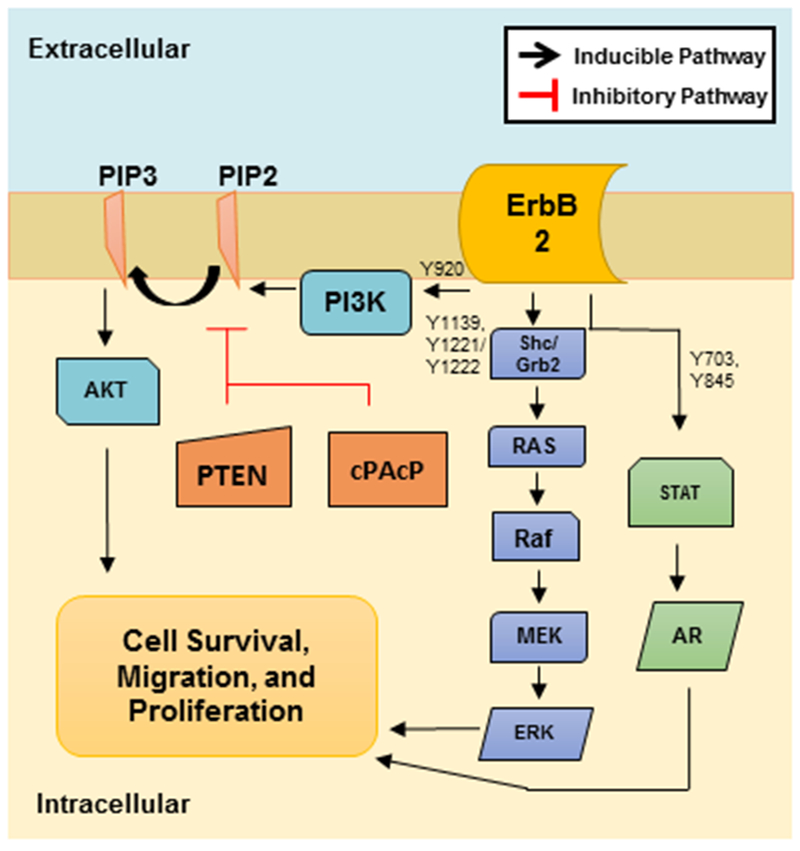
Figure 3.. ErbB-2 Downstream Targets to Promote PCa Tumorigenicity
ErbB-2 can regulate numerous signaling pathways in the cell to positively influence cell survival, migration and proliferation. ErbB-2 tyrosine phosphorylation of Y703 or Y845 can activate STATs, which promote AR nuclear translocation and transcription of survival and proliferative genes. ErbB-2 can also activate the Ras-Raf-MEK-ERK pathway upon Y1139 or Y1221/Y1222 phosphorylation to promote proliferation and migration via Grb2 or Shc, respectively. Additionally, ErbB-2 Y920 phosphorylation can induce phosphorylation of PI3K to promote AKT activation via phosphorylation of PIP2 to PIP3 to enhance PCa proliferation and survival. The PI3K/AKT pathway can be inhibited by both PTEN and cPAcP.

References

    1. Agus DB, Scher HI, Higgins B, Fox WB, Heller G, Fazzari M, Cordon-Cardo C, Golde DW 1999. Response of prostate cancer to anti-HER-2/neu antibody in androgen-dependent and –independent human xenograft model. Cancer Research 59(19) 4761–4764. (PMID: ) - PubMed
    1. Agus DB, Akita RW, Fox WD, Lewis GD, Higgins B, Pisacane PI, Lofgren JA, Tindell C, Evans DP, Maiese K, Scher HI 2002. Targeting ligand-activated ErbB-2 signaling inhibits breast and prostate tumor growth. Cancer Cell 2(2) 127–137. ( 10.1016/S1535-6108(02)00097-1) - DOI - PubMed
    1. Agus DB, Sweeney CJ, Morris MJ, Mendelson DS, McNeel DG, Ahmann FR, Wang J, Derynck MK, Ng K, Lyons B, et al. 2007. Efficacy and safety of single-agent pertuzumab (rhuMAb 2C4), a human epidermal growth factor receptor dimerization inhibitor, in castration-resistant prostate cancer after progression from taxane-based therapy.Journal of Clinical Oncology 25(6) 675–681. (doi: 10.1200/JCO.2006.07.0649) - DOI - PubMed
    1. Alam SM, Rajendran M, Ouyang S, Veeramani S, Zhang L, Lin MF 2009. A novel role of Shc adaptor proteins in steroid hormone-regulated cancers. Endocrine Related Cancer 16(1) 1. (doi: 10.1677/ERC-08-0179) - DOI - PMC - PubMed
    1. Azevedo A, Cunha V, Teixeira AL, Medeiros R 2011. IL-6/IL-6R as a potential key signaling pathway in prostate cancer development. World Journal of Clinical Oncology 2(12) 384–396. (doi: 10.5306/wjco.v2.i12.384) - DOI - PMC - PubMed

Publication types

MeSH terms

Substances