


A Descriptive Analysis of an Ambulatory Kidney Palliative Care Program
- PMID: 31295050
- PMCID: PMC6987731
- DOI: 10.1089/jpm.2018.0647
A Descriptive Analysis of an Ambulatory Kidney Palliative Care Program
Abstract
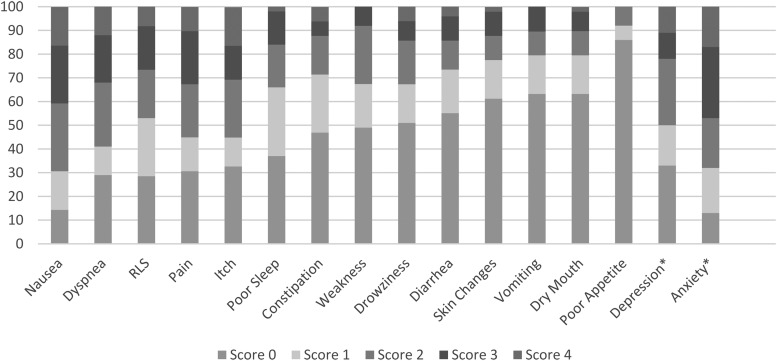
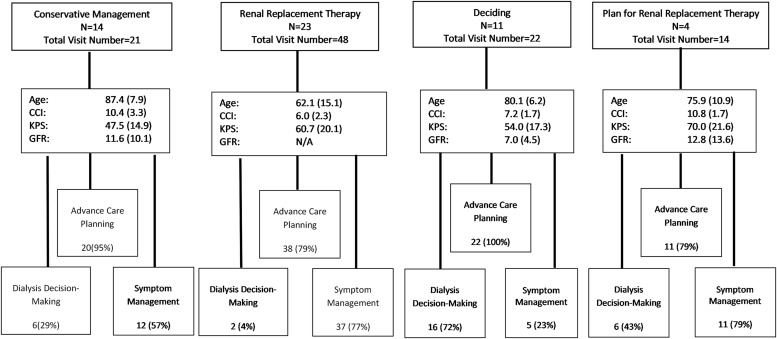
Background: Many patients with serious kidney disease have an elevated symptom burden, high mortality, and poor quality of life. Palliative care has the potential to address these problems, yet nephrology patients frequently lack access to this specialty. Objectives: We describe patient demographics and clinical activities of the first 13 months of an ambulatory kidney palliative care (KPC) program that is integrated within a nephrology practice. Design/Measurements: Utilizing chart abstractions, we characterize the clinic population served, clinical service utilization, visit activities, and symptom burden as assessed using the Integrated Palliative Care Outcome Scale-Renal (IPOS-R), and patient satisfaction. Results: Among the 55 patients served, mean patient age was 72.0 years (standard deviation [SD] = 16.7), 95% had chronic kidney disease stage IV or V, and 46% had a Charlson Comorbidity Index >8. The mean IPOS-R score at initial visit was 16 (range = 0-60; SD = 9.1), with a mean of 7.5 (SD = 3.7) individual physical symptoms (range = 0-15) per patient. Eighty-seven percent of initial visits included an advance care planning conversation, 55.4% included a medication change for symptoms, and 35.5% included a dialysis decision-making conversation. Overall, 96% of patients who returned satisfaction surveys were satisfied with the care they received and viewed the KPC program positively. Conclusions: A model of care that integrates palliative care with nephrology care in the ambulatory setting serves high-risk patients with serious kidney disease. This KPC program can potentially meet documented gaps in care while achieving patient satisfaction. Early findings from this program evaluation indicate opportunities for enhanced patient-centered palliative nephrology care.
Keywords: ambulatory palliative care; kidney disease; nephrology; palliative care; symptom burden.
Conflict of interest statement
All authors have no conflict of interest that would influence this article.
Figures
References
-
- Murtagh FE, Addington-Hall J, Higginson IJ: The prevalence of symptoms in end-stage renal disease: A systematic review. Adv Chronic Kidney Dis 2007;14:82–99 - PubMed
-
- United States Renal Data System: 2018 USRDS annual data report: Epidemiology of kidney disease in the United States. Bethesda, MD: National Institutes of Health, National Institute of Diabetes and Digestive and Kidney Diseases, 2018
-
- Williams AW, Dwyer AC, Eddy AA, et al. : Critical and honest conversations: The evidence behind the “Choosing Wisely” campaign recommendations by the American Society of Nephrology. Clin J Am Soc Nephrol 2012;7:1664–1672 - PubMed
Publication types
MeSH terms
Grants and funding
LinkOut - more resources
Full Text Sources
Medical
