


A Phase 2 Study of Galunisertib (TGF-β1 Receptor Type I Inhibitor) and Sorafenib in Patients With Advanced Hepatocellular Carcinoma
- PMID: 31295152
- PMCID: PMC6708671
- DOI: 10.14309/ctg.0000000000000056
A Phase 2 Study of Galunisertib (TGF-β1 Receptor Type I Inhibitor) and Sorafenib in Patients With Advanced Hepatocellular Carcinoma
Abstract
Introduction: Inhibition of tumor growth factor-β (TGF-β) receptor type I potentiated the activity of sorafenib in preclinical models of hepatocellular carcinoma (HCC). Galunisertib is a small-molecule selective inhibitor of TGF-β1 receptor type I, which demonstrated activity in a phase 2 trial as second-line HCC treatment.
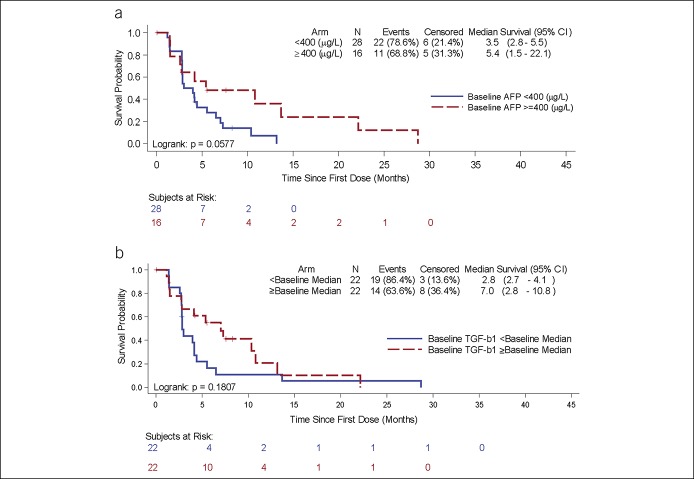
Methods: The combination of galunisertib and sorafenib (400 mg BID) was tested in patients with advanced HCC and Child-Pugh A liver function without prior systemic therapy. Galunisertib dose was administered 80 or 150 mg b.i.d. orally for 14 days every 28 days in safety lead-in cohorts; in the expansion cohort, all patients received galunisertib 150 mg b.i.d. Objectives included time-to-tumor progression, changes in circulating alpha fetoprotein and TGF-β1, safety, overall survival (OS), response rate, and pharmacokinetics (PK).
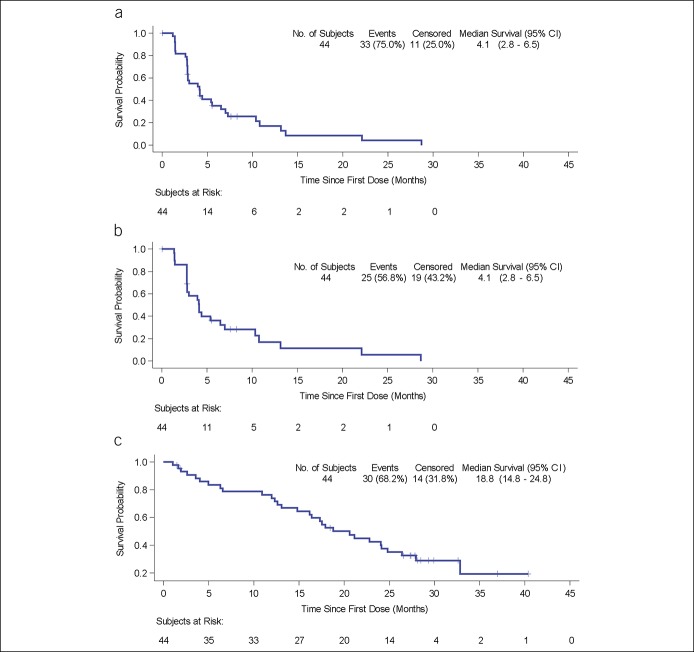
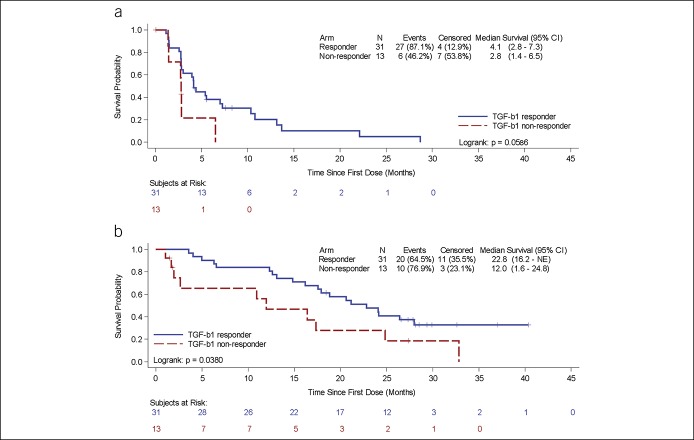
Results: Patients (n = 47) were enrolled from 5 non-Asian countries; 3 and 44 patients received the 80 mg and 150 mg b.i.d. doses of galunisertib, respectively. The pharmacokinetics and safety profiles were consistent with monotherapy of each drug. For the 150 mg b.i.d. galunisertib cohort, the median time-to-tumor progression was 4.1 months; the median OS was 18.8 months. A partial response was seen in 2 patients, stable disease in 21, and progressive disease in 13. TGF-β1 responders (decrease of >20% from baseline) vs nonresponders had longer OS (22.8 vs 12.0 months, P = 0.038).
Discussion: The combination of galunisertib and sorafenib showed acceptable safety and a prolonged OS outcome.
Figures
References
-
- International Agency for Research on Cancer, World Health Organization GLOBOCAN 2012: Estimated Cancer Incidence, Mortality and Prevalence Worldwide in 2012. (http://globocan.iarc.fr/Pages/fact_sheets_cancer.aspx). Accessed October 30, 2017.
-
- Finn RS, Zhu AX, Farah W, et al. Therapies for advanced stage hepatocellular carcinoma with macrovascular invasion or metastatic disease: A systematic review and meta-analysis. Hepatology 2018;67(1):422–35. - PubMed
-
- Llovet JM, Ricci S, Mazzaferro V, et al. Sorafenib in advanced hepatocellular carcinoma. N Engl J Med 2008;359(4):378–90. - PubMed
-
- Cheng AL, Kang YK, Chen Z, et al. Efficacy and safety of sorafenib in patients in the Asia-Pacific region with advanced hepatocellular carcinoma: A phase III randomised, double-blind, placebo-controlled trial. Lancet Oncol 2009;10(1):25–34. - PubMed
Publication types
MeSH terms
Substances
LinkOut - more resources
Full Text Sources
Other Literature Sources
Medical
Miscellaneous
