


Metabolomic approach to the exploration of biomarkers associated with disease activity in rheumatoid arthritis
- PMID: 31295280
- PMCID: PMC6622493
- DOI: 10.1371/journal.pone.0219400
Metabolomic approach to the exploration of biomarkers associated with disease activity in rheumatoid arthritis
Abstract
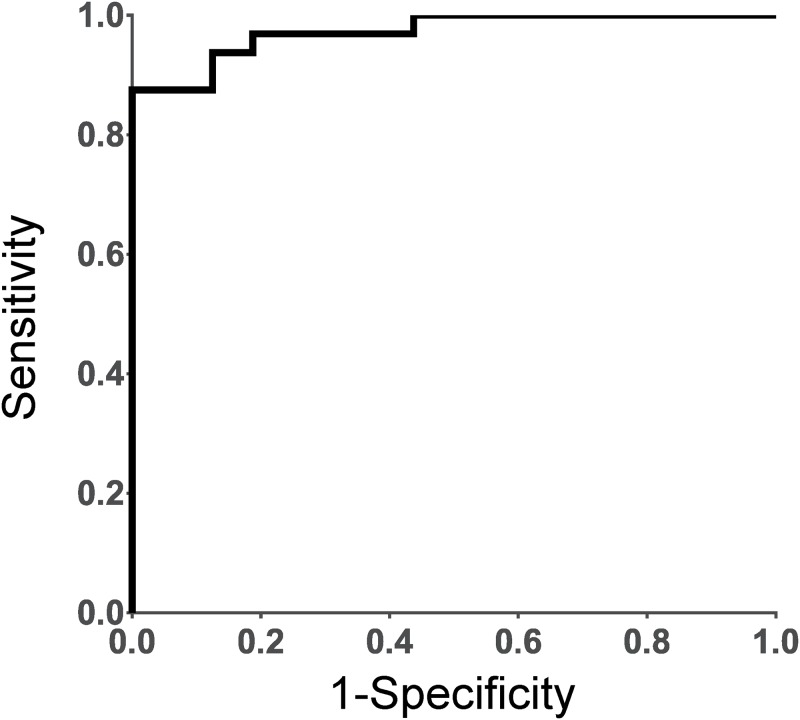
We aimed to investigate metabolites associated with the 28-joint disease activity score based on erythrocyte sedimentation rate (DAS28-ESR) in patients with rheumatoid arthritis (RA) using capillary electrophoresis quadrupole time-of-flight mass spectrometry. Plasma and urine samples were collected from 32 patients with active RA (DAS28-ESR≥3.2) and 17 with inactive RA (DAS28-ESR<3.2). We found 15 metabolites in plasma and 20 metabolites in urine which showed a significant but weak positive or negative correlation with DAS28-ESR. When metabolites between active and inactive patients were compared, 9 metabolites in plasma and 15 in urine were found to be significantly different. Consequently, we selected 11 metabolites in plasma and urine as biomarker candidates which significantly correlated positively or negatively with DAS28-ESR, and significantly differed between active and inactive patients. When a multiple logistic regression model was built to discriminate active and inactive cohorts, three variables-histidine and guanidoacetic acid from plasma and hypotaurine from urine-generated a high area under the receiver operating characteristic (ROC) curve value (AUC = 0.8934). Thus, this metabolomics approach appeared to be useful for investigating biomarkers of RA. Combination of plasma and urine analysis may lead to more precise and reliable understanding of the disease condition. We also considered the pathophysiological significance of the found biomarker candidates.
Conflict of interest statement
I have read the journal’s policy and the authors of this manuscript have the following competing interests: CS, TH, TO, KO, KS, IA and YH are employees of Astellas Pharma Inc. MH received research grant and/or speaker fee from Astellas Pharma Inc, Eisai Co. Ltd., Mitsubishi Tanabe Pharma Co., and Brystol-Meyers Squibb Co., Ltd., for other unrelated work. HI received a grant from Bristol-Myers Squibb Co., Ltd., and Asahi-kasei for other unrelated work. Department of Advanced Medicine for Rheumatic Diseases, Graduate School of Medicine, Kyoto University is supported by Nagahama City, Shiga, Japan and four pharmaceutical companies (Mitsubishi Tanabe Pharma Co., Chugai Pharmaceutical Co. Ltd, UCB Japan Co. Ltd, and AYUMI Pharmaceutical Co.). KURAMA cohort study is supported by grant from Daiichi Sankyo Co., Ltd. This does not alter our adherence to PLOS ONE policies on sharing data and materials.
Figures

References
Publication types
MeSH terms
Substances
LinkOut - more resources
Full Text Sources
Medical
Miscellaneous
