


Introductory Biology in Social Context: The Effects of an Issues-Based Laboratory Course on Biology Student Motivation
- PMID: 31298623
- PMCID: PMC6755311
- DOI: 10.1187/cbe.18-07-0110
Introductory Biology in Social Context: The Effects of an Issues-Based Laboratory Course on Biology Student Motivation
Abstract
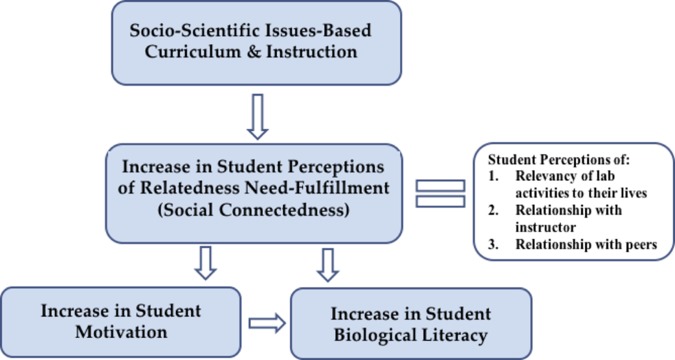
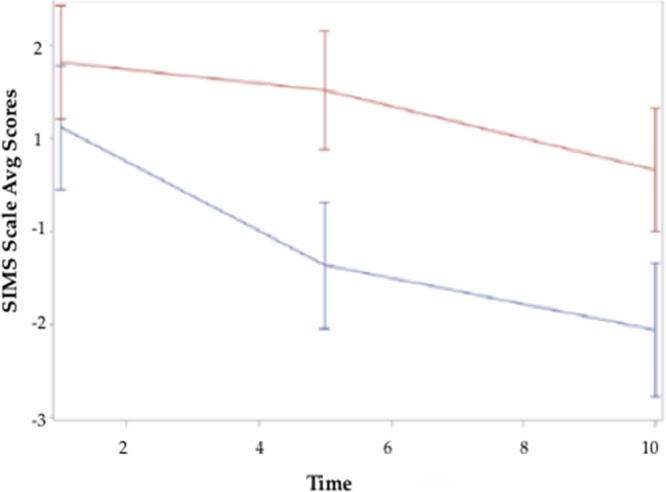
We investigated the effects of a laboratory curriculum developed using the socio--scientific issues (SSI) framework to contextualize scientific and socially relevant issues for students. Using self-determination theory and hierarchical linear modeling, we examined the effects of the SSI curriculum relative to a control curriculum on student motivation in a large introductory biology course for life science majors. The SSI group had a significant increase in motivation for engaging in the laboratory work relative to motivation of the control group. Additionally, the SSI group showed higher levels of more autonomous forms of regulation concerning participation in laboratory tasks compared with the control group. Interestingly, the SSI-based curriculum seemed to have a buffering effect on typically observed decreases in student motivation over the course of a term. This buffering effect could potentially indicate greater self-determination in students experiencing an SSI-based curriculum, which could lead to greater student success and persistence. Qualitative data suggest that this increased motivation of the SSI group relative to the control group is due to enhanced feelings of relatedness experienced by students, likely due to the SSI.
Figures
References
-
- Albe V. (2008). When scientific knowledge, daily life experience, epistemological and social considerations intersect: Students’ argumentation in group discussion on a socio-scientific issue. Research in Science Education, , 67–90.
-
- Amabile T. M. (1993). Motivational synergy: Toward new conceptualizations of intrinsic and extrinsic motivation in the workplace. Human Resource Management Review, , 185–201. 10.1016/1053-4822(93)90012-S - DOI
-
- American Association for the Advancement of Science (AAAS). (1989). Science for all Americans. New York: Oxford University Press.
-
- Auerbach C. F., Silverstein L. B. (2003). Qualitative data: An introduction to coding and analysis. New York: NYU Press.
MeSH terms
LinkOut - more resources
Full Text Sources
