


A flexible design for advanced Phase I/II clinical trials with continuous efficacy endpoints
- PMID: 31298770
- PMCID: PMC6899762
- DOI: 10.1002/bimj.201800313
A flexible design for advanced Phase I/II clinical trials with continuous efficacy endpoints
Abstract
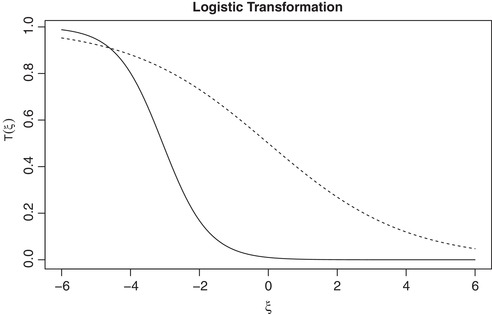
There is growing interest in integrated Phase I/II oncology clinical trials involving molecularly targeted agents (MTA). One of the main challenges of these trials are nontrivial dose-efficacy relationships and administration of MTAs in combination with other agents. While some designs were recently proposed for such Phase I/II trials, the majority of them consider the case of binary toxicity and efficacy endpoints only. At the same time, a continuous efficacy endpoint can carry more information about the agent's mechanism of action, but corresponding designs have received very limited attention in the literature. In this work, an extension of a recently developed information-theoretic design for the case of a continuous efficacy endpoint is proposed. The design transforms the continuous outcome using the logistic transformation and uses an information-theoretic argument to govern selection during the trial. The performance of the design is investigated in settings of single-agent and dual-agent trials. It is found that the novel design leads to substantial improvements in operating characteristics compared to a model-based alternative under scenarios with nonmonotonic dose/combination-efficacy relationships. The robustness of the design to missing/delayed efficacy responses and to the correlation in toxicity and efficacy endpoints is also investigated.
Keywords: Phase I/II clinical trial; combination trial; continuous endpoint; nonmonotonic efficacy.
© 2019 The Authors. Biometrical Journal Published by WILEY-VCH Verlag GmbH & Co. KGaA, Weinheim.
Conflict of interest statement
The authors have declared no conflict of interest.
Figures


References
-
- Bekele, B. , & Shen, Y. (2005). A Bayesian approach to jointly modeling toxicity and biomarker expression in a Phase I/II dose‐finding trial. Biometrics, 61, 343–354. - PubMed
-
- Cheung, Y. K. (2005). Coherence principles in dose‐finding studies. Biometrika, 92, 863–873.
-
- Hirakawa, A. (2012). An adaptive dose‐finding approach for correlated bivariate binary and continuous outcomes in Phase I oncology trials. Statistics in Medicine, 31, 516–532. - PubMed
Publication types
MeSH terms
Grants and funding
LinkOut - more resources
Full Text Sources
