Fear of Cancer Recurrence: A Model Examination of Physical Symptoms, Emotional Distress, and Health Behavior Change
- PMID: 31298966
- PMCID: PMC6743221
- DOI: 10.1200/JOP.18.00787
Fear of Cancer Recurrence: A Model Examination of Physical Symptoms, Emotional Distress, and Health Behavior Change
Abstract
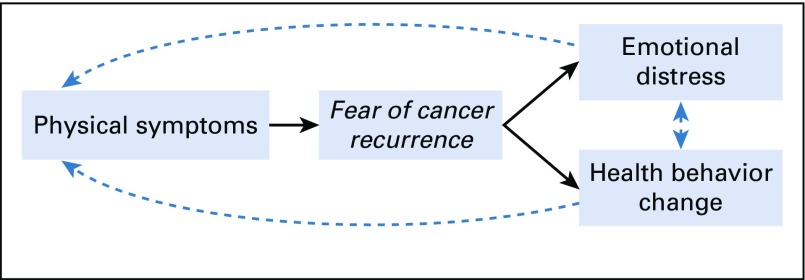
Purpose: Fear of cancer recurrence is highly prevalent among adult survivors of cancer. The role of fear of recurrence in the emotional distress of survivors of cancer, as well as health behaviors that may directly affect their health, remains unclear. To advance oncology practice, this study sought to examine the extent to which fear of recurrence stemming from physical symptoms accounts for emotional distress in a large sample of adult survivors of cancer and to extend the model to explain postdiagnosis self-reported health behavior change.
Methods: In 2016, 258 survivors of cancer at an academic hospital completed a survey of psychosocial needs. Items assessed physical symptoms (checklist), fear of cancer recurrence (Assessment of Survivor Concerns), emotional distress (anxiety and depressed mood), and health behaviors (current alcohol use, physical activity, diet, and sunscreen use, as well as changes after cancer diagnosis) informed by National Comprehensive Cancer Network survivorship guidelines. Indirect effects regression models accounting for relevant covariates (age and treatment history) used 5,000-iteration bootstrapping.
Results: Higher fear of cancer recurrence was associated with greater number of physical symptoms (P < .001), greater emotional distress (P < .05), lower moderate or vigorous physical activity (P < .05), higher sunscreen use (P < .05), and postdiagnosis increases in alcohol use (P < .01) and reductions in physical activity (P < .01). Fear of cancer recurrence models accounted for almost half of the variance in distress of survivors of cancer (R2 = 0.44, P < .001) and, to a lesser yet significant extent, changes in alcohol consumption (R2 = 0.09, P < .001) and physical activity (R2 = 0.06, P = .003).
Conclusion: Fear of cancer recurrence plays a central role in the emotional distress and key health behaviors of survivors of cancer. These findings support fear of cancer recurrence as a potential target for emotional health and health behavior change interventions.
Figures
References
-
- Crist JV, Grunfeld EA. Factors reported to influence fear of recurrence in cancer patients: A systematic review. Psychooncology. 2013;22:978–986. - PubMed
-
- Savard J, Ivers H. The evolution of fear of cancer recurrence during the cancer care trajectory and its relationship with cancer characteristics. J Psychosom Res. 2013;74:354–360. - PubMed
-
- Thewes B, Butow P, Zachariae R, et al. Fear of cancer recurrence: A systematic literature review of self-report measures. Psychooncology. 2012;21:571–587. - PubMed
-
- Gil KM, Mishel M, Belyea M, et al. Triggers of uncertainty about recurrence and long-term treatment side effects in older African American and Caucasian breast cancer survivors. Oncol Nurs Forum. 2004;31:633–639. - PubMed
-
- Hilton BA. The phenomenon of uncertainty in women with breast cancer. Issues Ment Health Nurs. 1988;9:217–238. - PubMed
Publication types
MeSH terms
Grants and funding
LinkOut - more resources
Full Text Sources
Medical