Review
. 2019 Aug;11(4):559-581.
doi: 10.1007/s12551-019-00570-x. Epub 2019 Jul 12.

Protein-protein interaction modulators: advances, successes and remaining challenges

Affiliations
Review

Protein-protein interaction modulators: advances, successes and remaining challenges

Lloyd Mabonga et al. Biophys Rev. 2019 Aug.

Abstract

Modulating disease-relevant protein-protein interactions (PPIs) using small-molecule inhibitors is a quite indispensable diagnostic and therapeutic strategy in averting pathophysiological cues and disease progression. Over the years, targeting intracellular PPIs as drug design targets has been a challenging task owing to their highly dynamic and expansive interfacial areas (flat, featureless and relatively large). However, advances in PPI-focused drug discovery technology have been reported and a few drugs are already on the market, with some potential drug-like candidates already in clinical trials. In this article, we review the advances, successes and remaining challenges in the application of small molecules as valuable PPI modulators in disease diagnosis and therapeutics.

Keywords: Drug-like; Macrocycles; Modulators; Protein-protein interactions; Small molecules; Small-molecule inhibitors.


Conflict of interest statement

Lloyd Mabonga declares that he has no conflict of interest. Abidemi Paul Kappo declares that he has no conflict of interest.

Figures
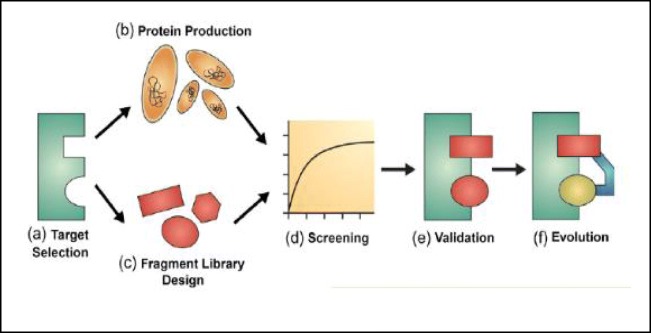
Fig. 1
Fig. 1
Fragment-based drug discovery strategy. a Selection of a target compatible with the biophysical screening technique. b Production and purification of the target protein. c The fragment library design. d Biophysical screening of the fragment library. e Validation of hits to identify the fragment binding mode. f Development of the fragment(s) into a lead molecule (figure taken from Robson-Tull 2018)
Fig. 2
Fig. 2
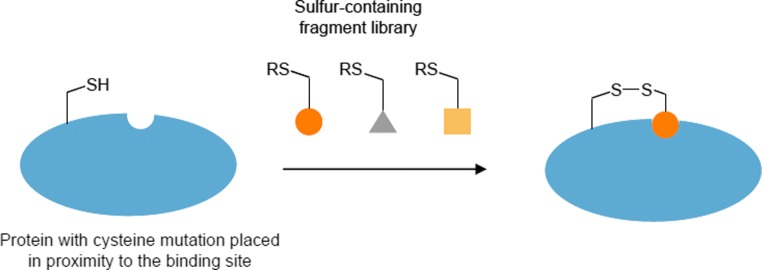
The application of tethering in identifying leads in fragment-based drug design. Protein mutant forms with the cysteine mutation near a domain involved in PPIs are constructed. The mutant is exposed to a fragment library of disulphide moiety-linked organic compounds of less than 200 Da and compounds that bind weakly to the PPIs’ binding site near a native or engineered cysteine residue are selected (figure taken from Haberman 2012)
Fig. 3
Fig. 3
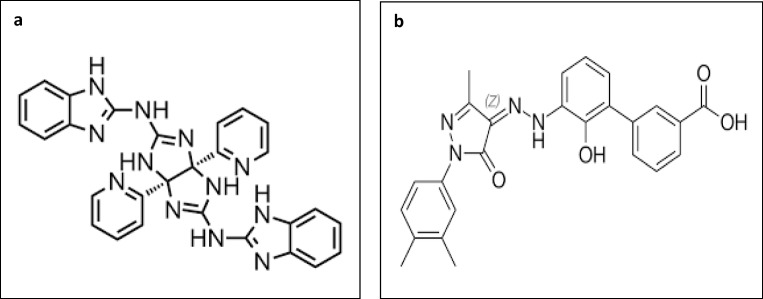
Chemical structure of a SB-247464—a small-molecule cytokine non-peptide mimetic agonist of murine G-CSF developed using the proprietary cellular screening assay, STATs technology (figure taken from Grosdidier et al. 2009); and b eltrombopag—a synthetic small-molecule TPO agonist approved for the treatment of idiopathic thrombocytopenic purpura (figure taken from Susanto 2015)
Fig. 4
Fig. 4
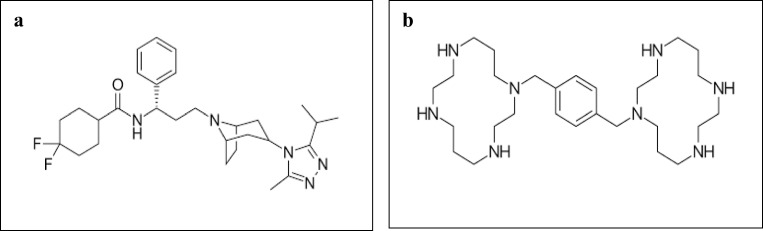
Chemical structure of a maraviroc—a small-molecule allosteric CCR5 chemokine antagonist used for the treatment of HIV/AIDS (figure taken from Xu et al. 2014); and b plerixafor—a partial antagonist of the chemokine receptor CXCR4 and an allosteric agonist of CXCR7. It is used for autologous transplantation in patients with non-Hodgkin lymphoma and multiple myeloma (figure taken from Venkata Narasimha Rao et al. 2017)
Fig. 5
Fig. 5
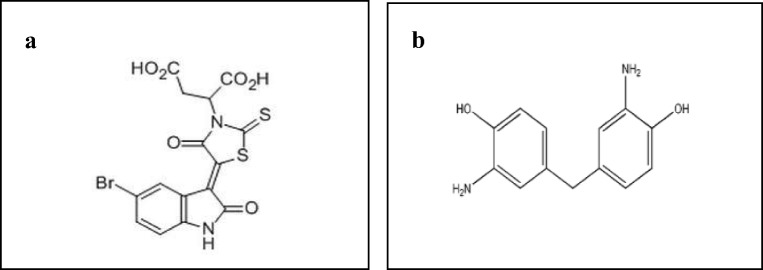
Chemical structure of a ‘79-6’ (PubChem CID5721353)—a target-specific lead compound known to kill BCL6-positive lymphoma cell lines and BCL6-positive tumour cells in xenograft models (figure taken from Yasui et al. 2017) and b FMP-API-1—a 3′,3-diamino-4,4′-dihydroxydiphenylmethane ‘drug-like’ compound identified to disrupt the AKAP18δ/PKA PPIs via an allosteric mechanism with a micromolar dissociation constant (figure taken from Christian et al. 2011)
Fig. 6
Fig. 6
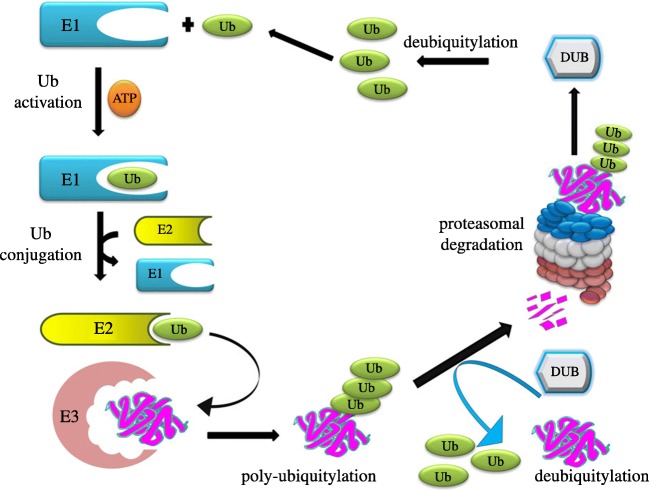
A schematic illustration of the Ubiquitin-proteasome pathway (UPP). Ub is conjugated to proteins that are destined for degradation by an ATP-dependent process that involves three enzymes. A chain of five Ub molecules attached to the protein substrate is sufficient for the complex to be recognised by the 26S proteasome. In addition to ATP-dependent reactions, Ub is removed and the protein is linearised and fed into the central core of the proteasome, where it is digested to peptides. The peptides are degraded to amino acids by peptidases in the cytoplasm or used in antigen presentation (figure taken from Haq and Ramakrishna, 2017)
Fig. 7
Fig. 7
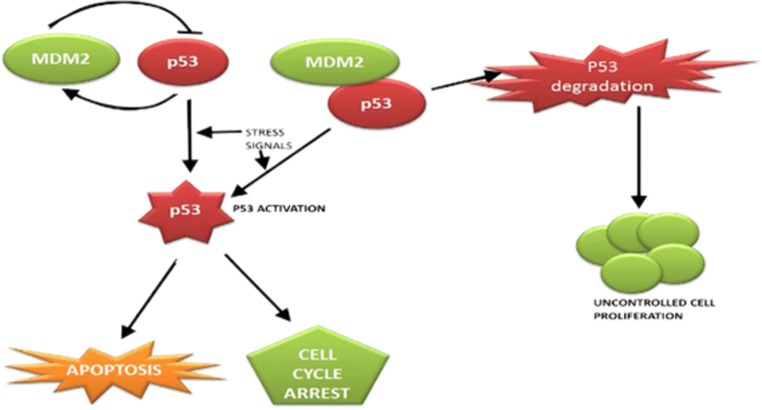
A schematic diagram showing HDM2/p53 PPI. MDM2 and p53 form an auto-regulatory feedback channel. p53 stimulates the expression of MDM2; MDM2 in turn inhibits p53 activity because it stimulates its degradation in the nucleus and the cytoplasm, blocks its transcriptional activity and promotes its nuclear export. A broad range of DNA-damaging agents or deregulated oncogenes induces p53 activation (figure taken from Carry and Garcia-Echeverria 2013)
Fig. 8
Fig. 8
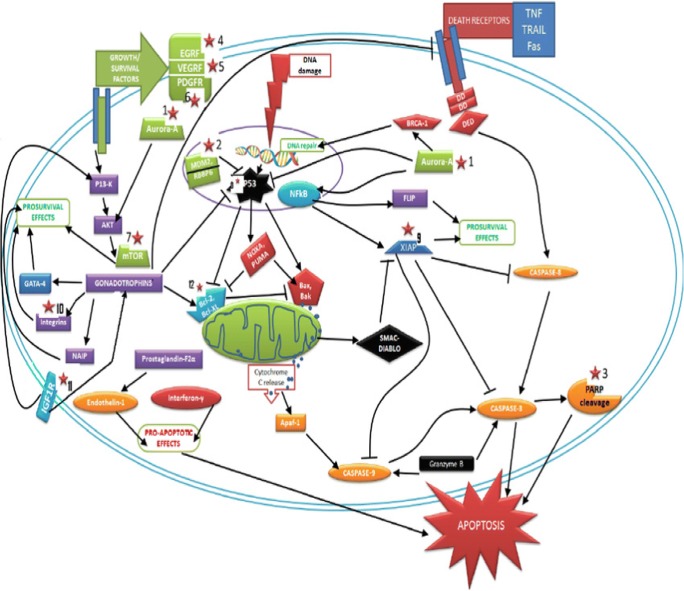
A schematic mechanism of apoptosis in ovarian cancer and some current targeted molecular therapeutic approaches. Two main pathways of apoptosis have been elucidated: the death receptor (extrinsic) pathway and the mitochondrial (intrinsic) pathway. Targeted molecular therapeutic approaches include angiogenesis inhibitors, inhibitors of the epidermal growth factor receptor (EGFR), aurora kinase inhibitors, poly ADP Ribose Polymerase (PARP) inhibitors, platelet-derived growth factor (PDGF) receptor inhibitors, MTOR inhibitors, targeting Bcl-2 family in ovarian cancer and apoptosis, minimising expression of inhibitors of apoptosis (IAP) as target for ovarian cancer, therapeutic potential of TNF family members, wild-type p53: the genomic guardian target, interferons (IFN), integrins and insulin-like growth factor (IGF) (figure taken from Ubanako et al. 2015)
Fig. 9
Fig. 9
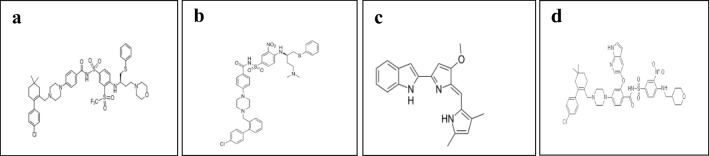
Chemical structure of a ABT-263 (navitoclax)—an orally active anticancer drug which does not have off-target effects (figure taken from Tse et al. 2008). b ABT-737—an orally bioavailable, selective small molecule B cell lymphoma 2 (Bcl-2) homology 3 (BH3) mimetic, with potential pro-apoptotic and antineoplastic activities (figure taken from Tse et al. 2008). c Obatoclax mesylate (GX15-070)—an experimental drug for the treatment of various types of cancer which include leukaemia, myelofibrosis, Hodgkin’s lymphoma and mantle-cell lymphoma among others (figure taken from Goard and Schimmer 2013). d ABT-199 (venetoclax)—a BH3-mimetic Bcl-2 inhibitor, does not cause Ca2+-signalling dysregulation or toxicity in pancreatic acinar cells (figure taken from Souers et al. 2013)
Fig. 10
Fig. 10
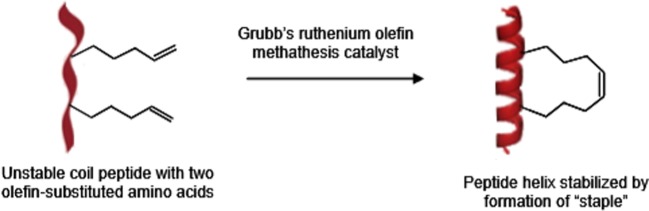
Construction of a stapled peptide. A ‘staple’ is formed between two non-natural amino acids by using Grubb’s ruthenium-mediated ring-closing olefin metathesis. The staple forms a macrocyclic ring with the amino acid residues (figure taken from Haberman 2012)

References

    1. Adams JM, Cory S. The Bcl-2 apoptotic switch in cancer development and therapy. Oncogene. 2007;26:1324–1337. doi: 10.1038/sj.onc.1210220. - DOI - PMC - PubMed
    1. Albert L, Peñalver A, Djokovic N. Modulating protein-protein interactions with visible-light responsive peptide backbone photoswitches. ChemBioChem. 2019;20:1–14. doi: 10.1002/cbic.201800737. - DOI - PubMed
    1. Ali AM, Atmaj J, Oosterwijk NV. Stapled peptides inhibitors: a new window for target drug discovery. Comput Struct Biotechnol J. 2019;17:263–281. doi: 10.1016/j.csbj.2019.01.012. - DOI - PMC - PubMed
    1. Alihodžić Sulejman, Bukvić Mirjana, Elenkov Ivaylo J., Hutinec Antun, Koštrun Sanja, Pešić Dijana, Saxty Gordon, Tomašković Linda, Žiher Dinko. Progress in Medicinal Chemistry. 2018. Current Trends in Macrocyclic Drug Discovery and beyond -Ro5; pp. 113–233. - PubMed
    1. Allison M. Bristol-Myers Squibb swallows last of antibody pioneers. Nat Biotechnol. 2009;27:781–783. doi: 10.1038/nbt0909-781. - DOI - PubMed

LinkOut - more resources