. 2019 Jun 25:857:139-162.
doi: 10.3897/zookeys.857.30302. eCollection 2019.

Amphibians of Santa Teresa, Brazil: the hotspot further evaluated

Affiliations

Amphibians of Santa Teresa, Brazil: the hotspot further evaluated

Rodrigo Barbosa Ferreira et al. Zookeys. .

Abstract

A checklist of the amphibians of Santa Teresa municipality, in southeastern Brazil is presented based on fieldwork, examination of specimens in collections, and a literature review. This new amphibian list of Santa Teresa includes 108 species, of which 106 (~98%) belong to Anura and two (~2%) to Gymnophiona. Hylidae was the most represented family with 47 species (43%). Compared to the previous amphibian lists for Santa Teresa, 14 species were added, 17 previously reported species were removed, and 13 species were re-identified based on recent taxonomic rearrangements. Of the 14 species added, 11 (79%) were first recorded during our fieldwork and specimen examination. It is also the first list of caecilians for Santa Teresa. This list suggests that Santa Teresa has 0.16 species per km2 (i.e., 108 species/683 km2), one of the highest densities of amphibian species in the world at a regional scale. This richness represents 78% of the 136 anurans from Espírito Santo state and 10% of the 1,080 amphibians from Brazil. We highlight the need for long-term monitoring to understand population trends and develop effective conservation plans to safeguard this remarkable amphibian richness.

Keywords: Anura; Atlantic Forest; Caecilians; Diversity; Espírito Santo; Inventory.


Figures
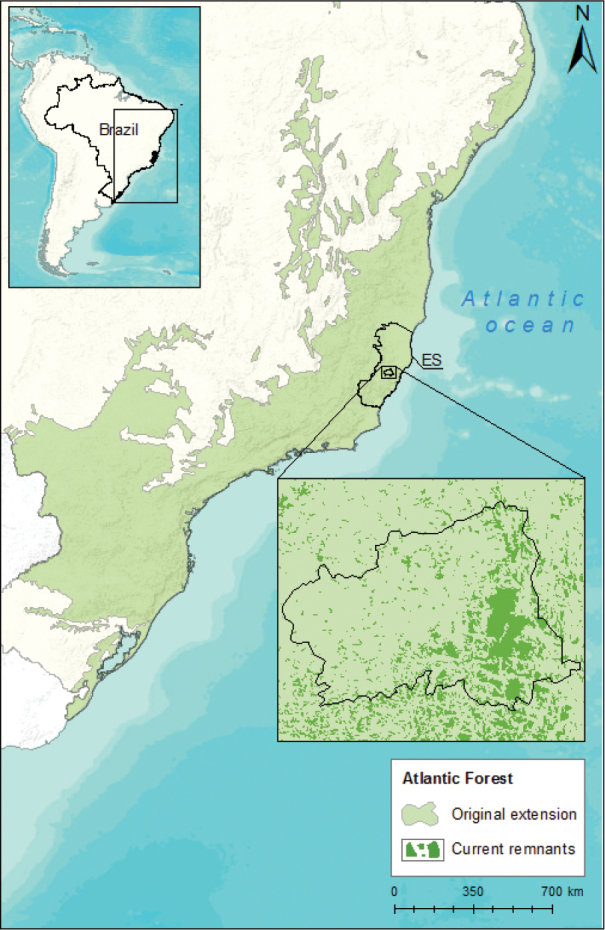
Figure 1.
Figure 1.
Location of the municipality of Santa Teresa, southeastern Brazil. Forest remnants from SOS Mata Atlântica (2014).
Figure 2.
Figure 2.
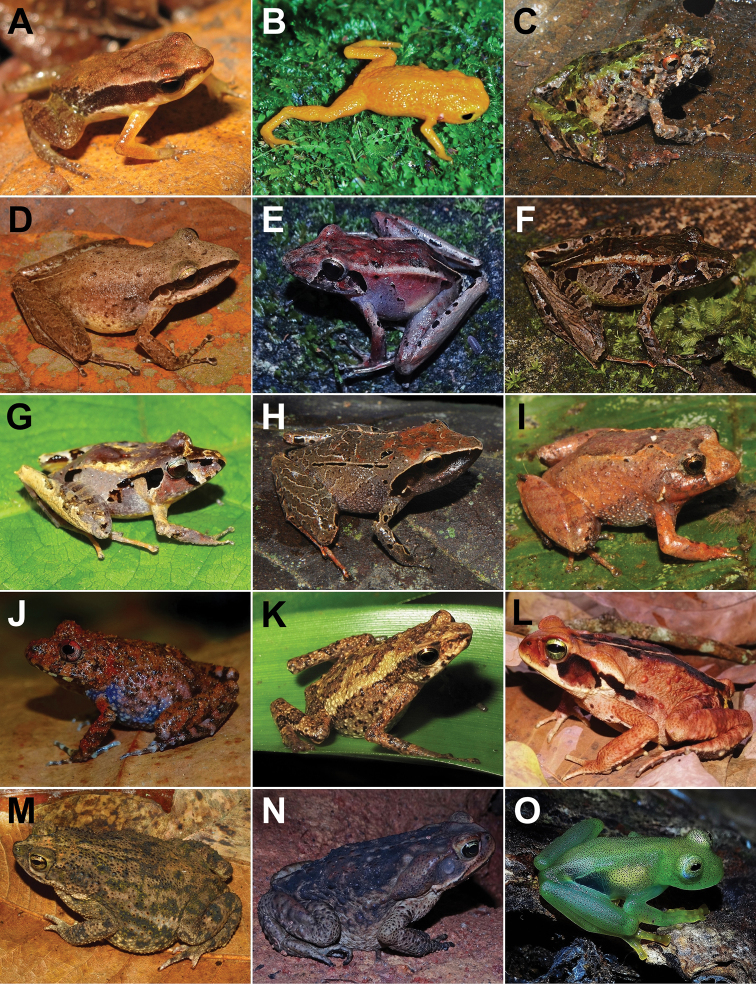
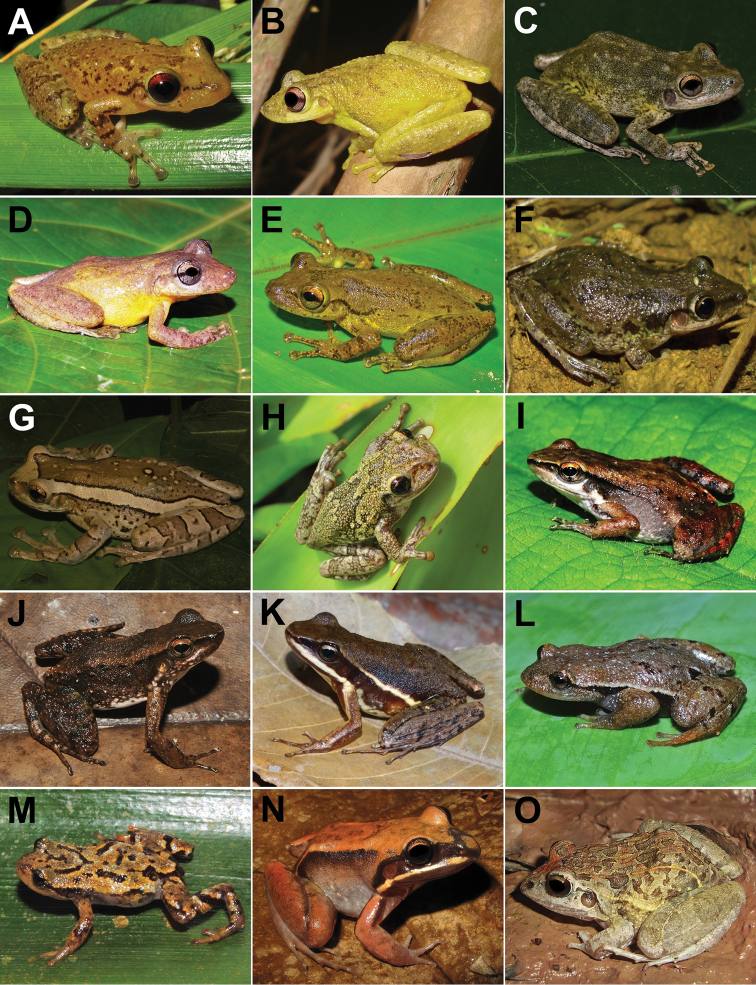
Amphibians from Santa Teresa: AAllobatescapixabaBBrachycephalusalipioiCIschnocnemaabditaDIschnocnemacolibriEIschnocnemacf.nasutaFIschnocnemaaff.guentheriGIschnocnemaoeaHIschnocnemagr.parva sp. new 1 IIschnocnemagr.parva sp. new 2 JIschnocnemaverrucosaKDendrophryniscuscarvalhoiLRhinellacruciferMRhinellagranulosaNRhinelladiptychaOVitreoranaaff.eurygnatha. Photographs by JFR Tonini (A), CN Fraga (B), RB Ferreira (C, D, H, I, K), AT Mônico (E, G, J, K, L, M, N, O), T Silva-Soares (F).
Figure 3.
Figure 3.
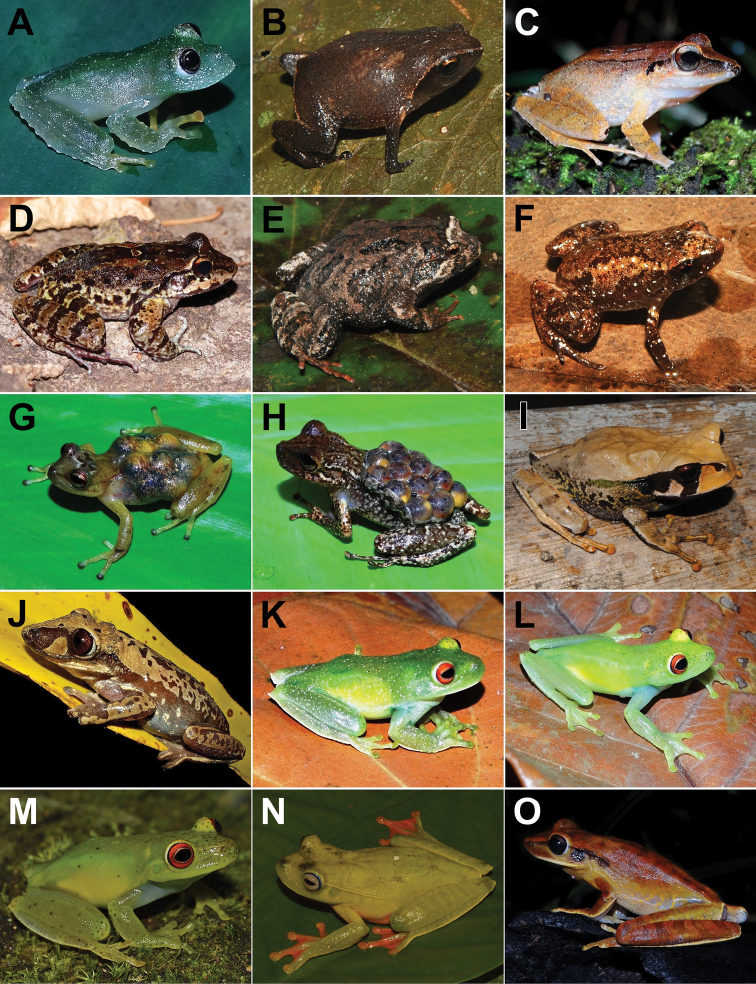
Amphibians from Santa Teresa: AVitreoranauranoscopaBEuparkerellatridactylaCHaddadusbinotatusDThoropamiliarisEZachaenuscarvalhoiFAdelophryneglandulataGFritzianaaff.fissilisHFritzianatonimiIGastrothecamegacephalaJAparasphenodonbrunoiKAplastodiscuscavicolaLAplastodiscusaff.eugenioiMAplastodiscusweygoldtiNBoanaalbomarginataOBoanaalbopunctata. Photographs by AT Mônico (A, C, D, G, H, K, L, O), RB Ferreira (B, E, F, I, N), C Zocca (J), T Silva-Soares (M).
Figure 4.
Figure 4.
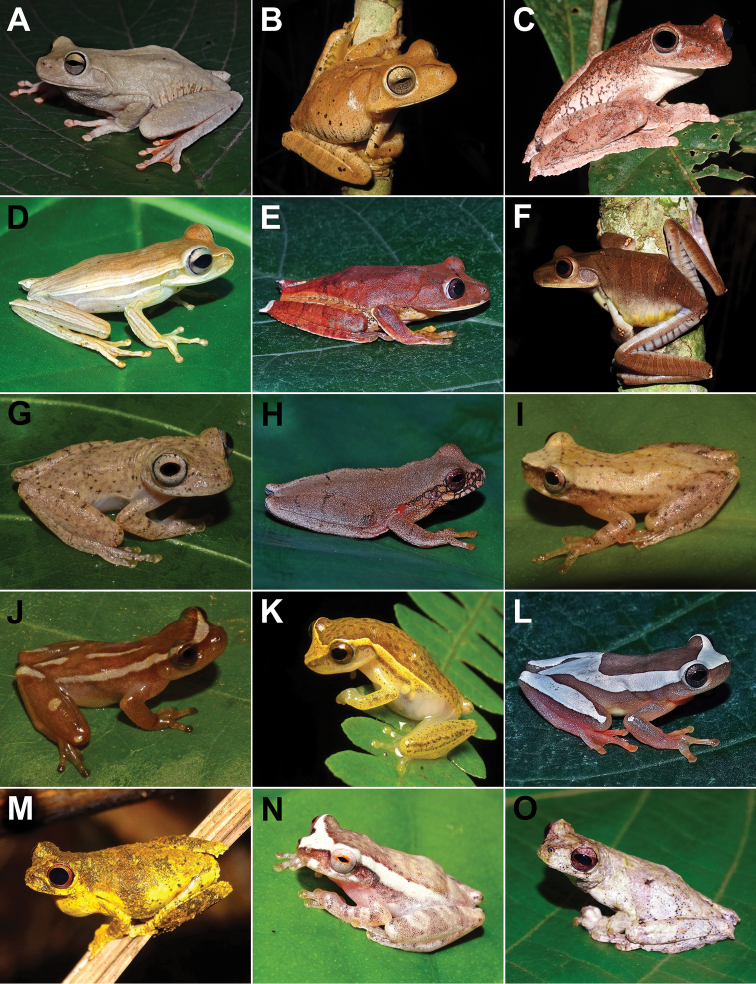
Amphibians from Santa Teresa: ABoanacrepitansBBoanafaberCBoanapardalisDBoanapolytaeniaEBoanasemilineataFBokermannohylacaramaschiiGDendropsophusberthalutzaeHDendropsophusbipunctatusIDendropsophusbranneriJDendropsophusbromeliaceusKDendropsophusdecipiensLDendropsophuselegansMDendropsophusgiesleriNDendropsophushaddadiODendropsophusmicrops. Photographs by AT Mônico (A, C, D, E, F, H, L, M, N, O), RB Ferreira (B, G, I, J), ET Silva (K).
Figure 5.
Figure 5.
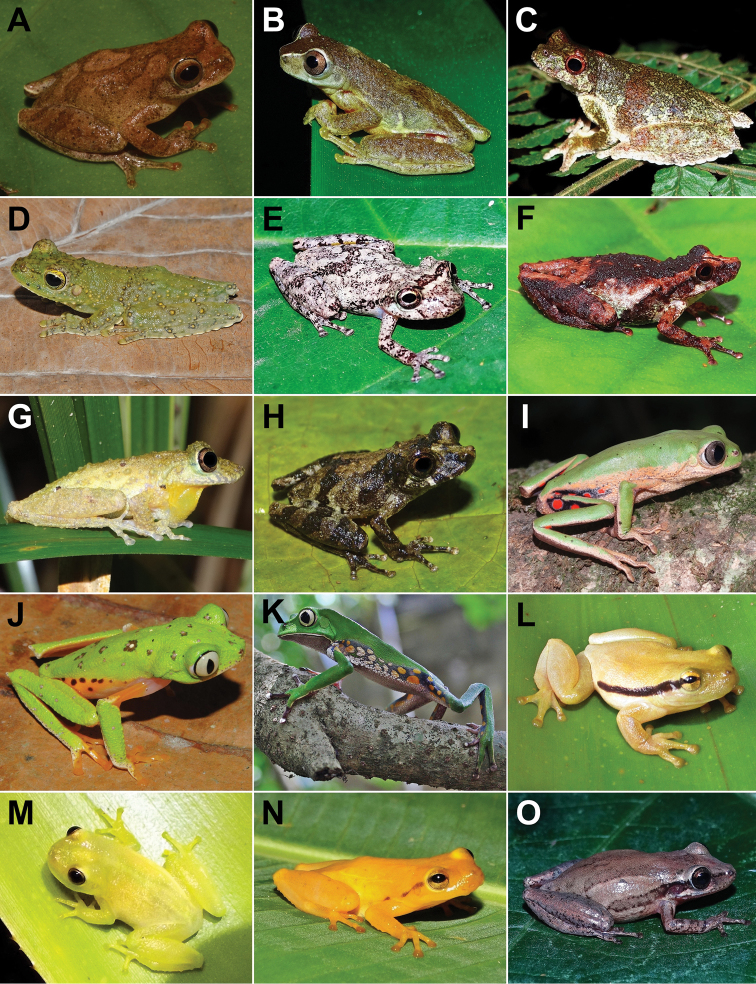
Amphibians from Santa Teresa: ADendropsophusminutusBDendropsophusruschiiCDendropsophusseniculusDItapotihylalangsdorffiiEOlolygonarduousFOlolygonargyreornataGOlolygonheyeriHOlolygonkautskyiIPithecopusaff.rohdeiJPhasmahylaexilisKPhyllomedusaburmeisteriLPhyllodyteskautskyiMPhyllodytesluteolusNPhyllodytesaff.luteolusOScinaxalter. Photographs by RB Ferreira (A, D, J), AT Mônico (B, C, E, F, G, I, K, N, O), T Silva-Soares (H), CZ Zocca (L, M).
Figure 6.
Figure 6.
Amphibians from Santa Teresa: AScinaxcuspidatusBScinaxeurydiceCScinaxfuscovariusDScinaxhayiiEScinaxaff.pererecaFScinaxcf.x-signatusGTrachycephalusmesophaeusHTrachycephalusnigromaculatusICrossodactylusaff.gaudichaudiiJCrossodactylustimbuhyKHylodeslateristrigatusLCrossodactylodesbokermanniMCrossodactylodesizecksohniNLeptodactyluscupreusOLeptodactylusfuscus. Photographs by ET Silva (A, E, F), CZ Zocca (B, O), T Silva-Soares (C), AT Mônico (D, I, K, L), RB Ferreira (G, H, J, M), JFR Tonini (N).
Figure 7.
Figure 7.
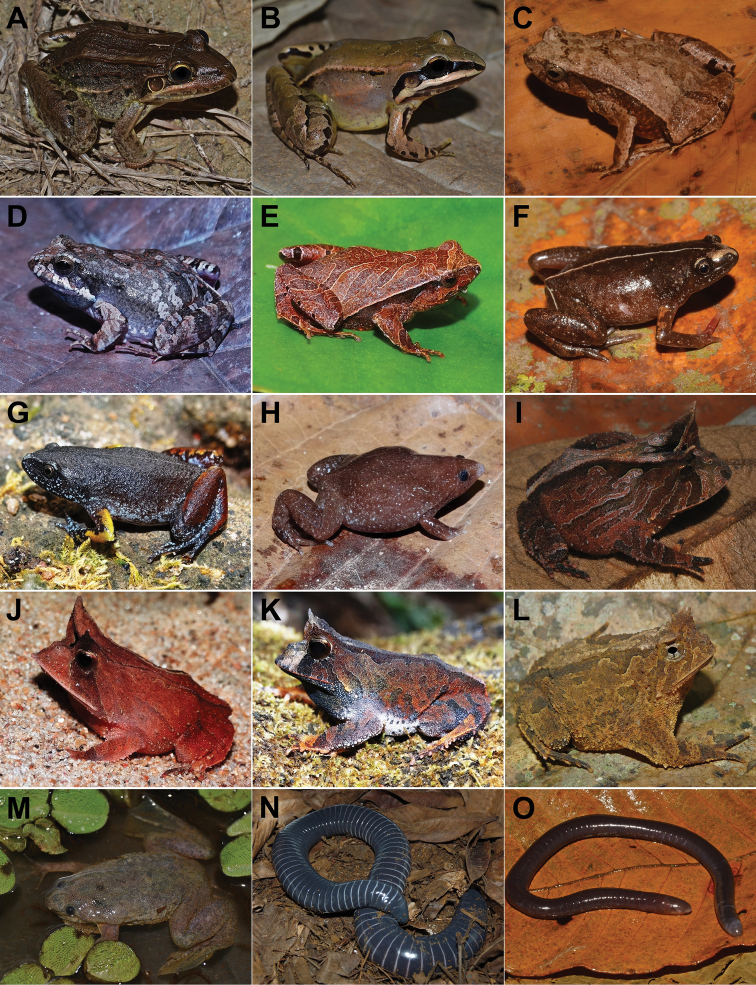
Amphibians from Santa Teresa: ALeptodactylusaff.latransBLeptodactylusaff.spixiCPhysalaemuscrombieiDPhysalaemuscuvieriEPhysalaemusmaculiventrisFChiasmocleiscapixabaGChiasmocleisschubartiHMyersiellamicropsIProceratophrysboieiJProceratophryslaticepsKProceratophryspaviotiiLProceratophrysschirchiMPipaaff.carvalhoiNSiphonopsannulatusOSiphonopshardyi. Photographs by T Silva-Soares (A, B, L, M, N), AT Mônico (C, D, E, G, H, J, K), RB Ferreira (F, I, O).

References

    1. Almeida AP, Gasparini JL, Peloso PLV. (2011) Frogs of the state of Espírito Santo, southeastern Brazil – The need for looking at the coldspots. CheckList 7(4): 542–560. 10.15560/7.4.542 - DOI
    1. Alvares CA, Stape JL, Sentelhas PC, Gonçalves JLM, Sparoveck G. (2013) Koppen’s climate classification map for Brazil. Meteorologische Zeitschrift 22: 711–728. 10.1127/0941-2948/2013/0507 - DOI
    1. American and Veterinary Medical Association (2013) Guidelines for the euthanasia of animals. AVMA, Schaumberg, IL.
    1. AmphibiaWeb (2019) University of California, Berkeley, CA. http://amphibiaweb.org [Accessed on 20 May 2019]
    1. Bass MS, Finer M, Jenkins CN, Kreft H, Cisneros-Heredia DF, McCracken SF, Pitman NCA, English PH, Swing K, Villa G, Fiore AD, Voigt CC, Kunz TH. (2010) Global Conservation Significance of Ecuador’s Yasuní National Park. PloS ONE 5: e8767. 10.1371/journal.pone.0008767 - DOI - PMC - PubMed

LinkOut - more resources