


Cystoscopic removal of a migrated intrauterine device to the bladder; a case report
- PMID: 31304041
- PMCID: PMC6600896
- DOI: 10.1186/s40834-019-0089-x
Cystoscopic removal of a migrated intrauterine device to the bladder; a case report
Abstract
Background: An intrauterine device (IUD) is a well-accepted means of reversible contraception. Migration of IUD to the bladder through partial or complete perforation has been rarely reported. This phenomenon could be strongly associated with history of prior cesarean sections (C-section) or early insertion of the device in the postpartum period.
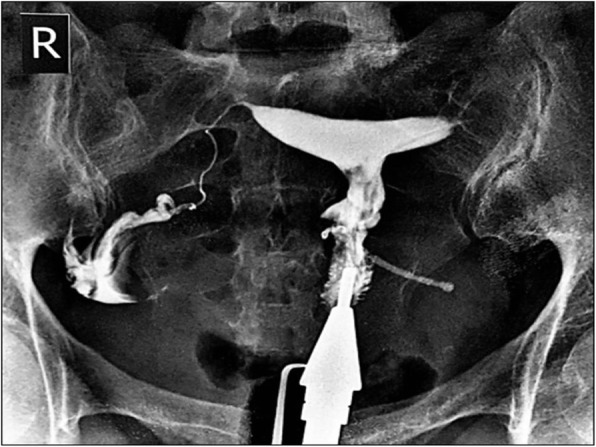
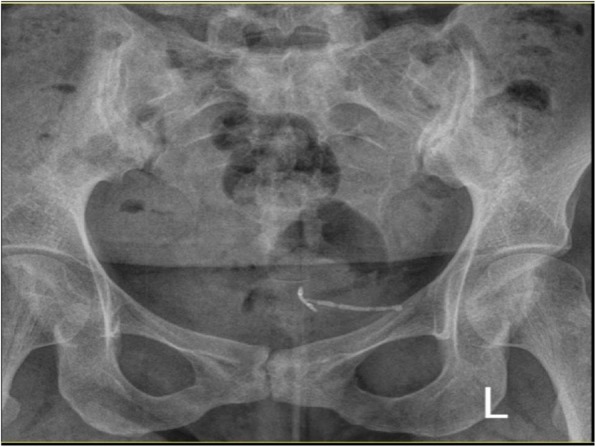
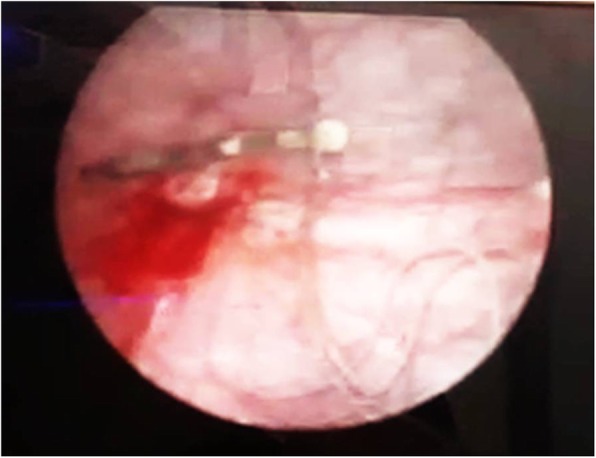
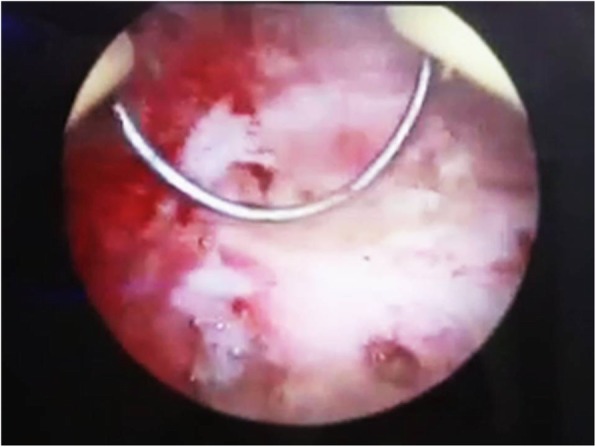
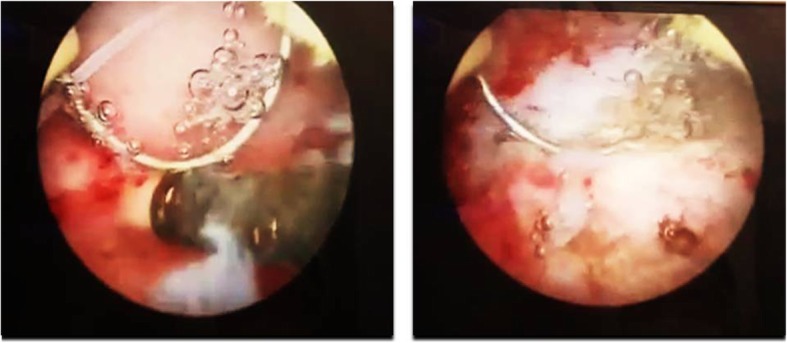
Case presentation: In this study, a case of copper IUD migration through cesarean scar defect is presented, in such a way that was successfully managed by cystoscopic removal. A 31-year-old female with a history of lower urinary symptoms referred to the clinic for her secondary infertility work-up. A copper IUD outside the uterus in the bladder was found using hysterosalpingraphy. A plain abdominal radiography also confirmed the presence of a T-shaped IUD in the pelvis. According to ultrasound, the copper IUD was partly in the bladder lumen and within the bladder wall. The patient had a history of an intrauterine device insertion eight years ago followingher second cesarean delivery. Three years later, her IUD was expelled, and another copper IUD was inserted. Thesecond copper IUD was alsoremoved while she decided to be pregnant. The patient finally underwent a hysteroscopic cystoscopy. The intrauterine device with its short arms embedded in the bladder wall was successfully extracted through the urethra.
Conclusions: IUD insertion seems to be more challenging in women with prior uterine incisions and requires more attention. Cystoscopic removal should be considered as a safe and effective minimally invasive approach tomanage a migrated intrauterine device in the bladder.
Keywords: Bladder; Cystoscopy; Intrauterine device; Migration.
Conflict of interest statement
Competing interestsThe authors declare that they have no competing interests.
Figures
References
-
- Wang L, Li Y, Zhao XP, Zhang WH, Bai W, He YG. Hydronephrosis caused by intrauterine contraceptive device migration: three case reports with literature review. Clin Exp Obstet Gynecol. 2017;44:301–304. - PubMed
Publication types
LinkOut - more resources
Full Text Sources
