


Using data science to diagnose and characterize heterogeneity of Alzheimer's disease
- PMID: 31304232
- PMCID: PMC6603309
- DOI: 10.1016/j.trci.2019.05.002
Using data science to diagnose and characterize heterogeneity of Alzheimer's disease
Abstract
Introduction: Despite the availability of age- and education-adjusted standardized scores for most neuropsychological tests, there is a lack of objective rules in how to interpret multiple concurrent neuropsychological test scores that characterize the heterogeneity of Alzheimer's disease.
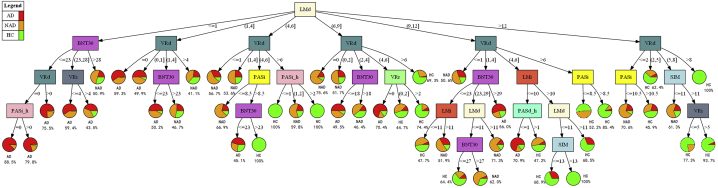
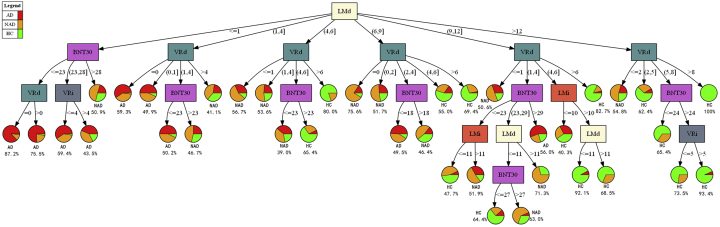
Methods: Using neuropsychological test scores of 2091 participants from the Framingham Heart Study, we devised an automated algorithm that follows general diagnostic criteria and explores the heterogeneity of Alzheimer's disease.
Results: We developed a series of stepwise diagnosis rules that evaluate information from multiple neuropsychological tests to produce an intuitive and objective Alzheimer's disease dementia diagnosis with more than 80% accuracy.
Discussion: A data-driven stepwise diagnosis system is useful for diagnosis of Alzheimer's disease from neuropsychological tests. It demonstrated better performance than the traditional dichotomization of individuals' performance into satisfactory and unsatisfactory outcomes, making it more reflective of dementia as a spectrum disorder. This algorithm can be applied to both within clinic and outside-of-clinic settings.
Keywords: Alzheimer's disease; Decision tree; Dementia; Dementia screening; Machine-learning; Neuropsychological assessment.
Figures
References
-
- Burns A., Iliffe S. Alzheimer's disease. BMJ. 2009;5:b158. - PubMed
-
- Towards a dementia plan: a WHO guide. Geneva: World Health Organization; 2018. Licence: CC BY-NC-SA 3.0 IGO.
-
- Elias M.F., D'Agostino R.B., Elias P.K., Wolf P.A. Neuropsychological test performance, cognitive functioning, blood pressure, and age: the Framingham Heart Study. Exp Aging Res. 1995;21:369–391. - PubMed
-
- Elias M.F., Beiser A., Wolf P.A., Au R., White R.F., D'agostino R.B. The preclinical phase of Alzheimer disease: a 22-year prospective study of the Framingham Cohort. Arch Neurol. 2000;57:808–813. - PubMed
Grants and funding
LinkOut - more resources
Full Text Sources